


What Is Saudi Aramco? Ownership, Leadership and Production


Last updated: September 24, 2026
Saudi Aramco (formally the Saudi Arabian Oil Company) is the national oil company of Saudi Arabia and the world’s largest crude oil producer by output. It holds a maximum sustainable production capacity of 12 million barrels per day, a level CEO Amin H. Nasser said in 2026 the company can maintain for a full year if required. Aramco is majority-owned by the Saudi state, with the remainder held by the Public Investment Fund (PIF) and public shareholders following its 2019 partial IPO.
What Is Saudi Aramco?
Aramco explores for, produces, refines and markets crude oil and natural gas, and is also a major producer of petrochemicals. Its core asset is Saudi Arabia’s enormous, low-cost conventional oil reserve base, concentrated in a handful of supergiant fields in the Eastern Province. Because Saudi Arabia is OPEC’s largest producer and de facto leader, Aramco’s output decisions and spare capacity are central to global oil-market stability.
Ownership
Aramco was fully state-owned until its December 2019 IPO on the Saudi Tadawul exchange, which sold a small public float. As of December 31, 2025, the Saudi government directly owned about 81.5% of Aramco, with a further roughly 16% held by the Public Investment Fund, Sanabil Investments and other PIF-owned entities (following share transfers to the PIF completed in 2022–2024), leaving around 2.5% in public and treasury shares. The PIF is chaired by Crown Prince Mohammed bin Salman; Yasir Al-Rumayyan serves as PIF Governor and as Aramco’s Chairman.
Leadership
Amin H. Nasser has served as President and Chief Executive Officer of Saudi Aramco since 2015 and has led the company through its IPO and subsequent capacity-expansion and diversification strategy. Yasir Al-Rumayyan chairs Aramco’s board. Nasser has been a prominent public voice arguing for continued investment in oil and gas capacity alongside a “multiple energy pathways” approach to the energy transition, rather than rapid divestment from hydrocarbons.
History
Aramco traces its roots to a 1933 concession agreement between Saudi Arabia and Standard Oil of California (SoCal), which formed California-Arabian Standard Oil Company. Commercial oil was discovered at the Dammam field in 1938. The company was renamed the Arabian American Oil Company (ARAMCO) in 1944 as additional US oil majors took stakes. The Saudi government progressively nationalized the company between 1973 and 1980, completing full state ownership, and it was renamed Saudi Aramco in 1988. The company remained privately held by the state for decades before its landmark 2019 IPO, at the time the largest in history.
Main Business
Aramco’s operations span upstream oil and gas production, midstream pipelines and shipping, downstream refining and petrochemicals (including through joint ventures and international refining stakes), and a growing gas business tied to domestic power generation and industrial feedstock needs. The company has also been investing in lower-carbon ventures, including carbon capture and hydrogen pilot projects, while stating that oil and gas will remain its core business for decades.
Production and Capacity
| Metric | Value | As of |
|---|---|---|
| Maximum sustainable crude capacity | 12 million barrels per day | 2026 (CEO statement, reaffirming the January 2024 target) |
| Government direct ownership | ~81.5% | December 31, 2025 |
| PIF and PIF-linked ownership | ~16% | December 31, 2025 |
| Public/treasury shares | ~2.5% | December 31, 2025 |
| IPO date | December 2019 (Tadawul) | — |
Sources: Saudi Aramco Annual Report 2025; company and CEO statements reported by Energy Intelligence, OilPrice.com and EnergyNow.com, 2026; Public Investment Fund (pif.gov.sa).
Major Assets
Aramco’s production is anchored by supergiant fields in Saudi Arabia’s Eastern Province, most notably Ghawar — the largest conventional oil field ever discovered — along with Safaniya (the world’s largest offshore oil field) and Abqaiq, which also hosts one of the company’s largest crude stabilization and processing complexes. Ras Tanura is Aramco’s principal crude oil export terminal and one of the largest oil ports in the world.
Countries
Aramco’s upstream production is concentrated in Saudi Arabia, but its downstream and petrochemicals footprint is global, including refining joint ventures and equity stakes in China, South Korea, the United States, Malaysia and elsewhere, part of a stated strategy to secure long-term demand for Saudi crude in growing markets, particularly in Asia.
Subsidiaries and Related Entities
- Saudi Arabia: Aramco is the state’s principal source of oil revenue and a central instrument of national economic policy, including funding for Vision 2030 diversification projects via dividends to the state and PIF.
- OPEC: Aramco is not itself an OPEC member (member states are countries, not companies), but as Saudi Arabia’s national oil company it implements the country’s OPEC and OPEC+ production quotas.
- Public Investment Fund (PIF): Saudi Arabia’s sovereign wealth fund, a major Aramco shareholder and the recipient of large share transfers from state ownership since 2022.
- Upstream, Midstream and Downstream: Aramco is a fully integrated oil and gas company, operating across exploration and production (upstream), pipelines and shipping (midstream), and refining and petrochemicals (downstream).
Recent Developments
Through 2025 and into 2026, Aramco’s public statements have focused on defending its 12 million bpd maximum sustainable capacity target — reaffirming, as CEO Amin Nasser put it, that the company could reach that level “in three weeks if required” and sustain it for a year without new investment — while continuing to invest in gas, petrochemicals and selective low-carbon projects. In September 2026, oilfield-services provider SLB won four contracts to deliver more than 450 wells for Saudi Aramco, underscoring the scale of drilling activity supporting the company’s 12 million bpd capacity target. In October 2026, CEO Amin Nasser warned that global oil inventories were “scarily thin,” a comment markets read as a signal of confidence in near-term oil demand and prices.
FAQ
Is Saudi Aramco government-owned?
Yes, predominantly. As of end-2025 the Saudi government owned about 81.5% directly, with a further roughly 16% held by the Public Investment Fund and PIF-linked entities; a small public float trades on the Tadawul exchange since the 2019 IPO.
Who is the CEO of Saudi Aramco?
Amin H. Nasser has been President and CEO since 2015.
What is Saudi Aramco’s maximum oil production capacity?
12 million barrels per day, a target the company reaffirmed in 2026 as sustainable for a full year.
Is Saudi Aramco part of OPEC?
No — OPEC members are countries, not companies. Saudi Arabia is an OPEC member, and Aramco is the company through which it produces oil and implements its OPEC quota.
Related The Daily Energy Pages
Sources
- Saudi Aramco, Annual Report 2025 (aramco.com)
- Public Investment Fund, ownership disclosures (pif.gov.sa)
- Energy Intelligence, OilPrice.com and EnergyNow.com reporting on CEO statements, 2025–2026
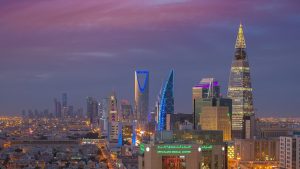
Illustrative image. Photo: B.alotaby, CC BY-SA 4.0, via Wikimedia Commons — source


[…] Saudi Aramco — a major oil and gas company whose gas strategy overlaps with the LNG market […]
[…] Saudi Aramco — regional peer and fellow OPEC+ national oil company […]
[…] What Is Saudi Aramco? Ownership, Leadership and Production — background on Aramco’s production capacity and role in Saudi oil policy. […]
[…] What Is Saudi Aramco? Ownership, Leadership and Production — Aramco’nun üretim kapasitesi ve Suudi petrol politikasındaki rolü hakkında bilgi. […]
[…] What Is Saudi Aramco? Ownership, Leadership and Production – خلفية عن الطاقة الإنتاجية لأرامكو ودورها في السياسة النفطية السعودية. […]
[…] Saudi Aramco — the world’s largest oil producer by output, and ExxonMobil’s state-owned counterpart in Saudi Arabia […]
[…] two different numbers that get conflated in casual conversation: capacity is what Saudi Arabia and Saudi Aramco say the country’s oil fields and infrastructure could sustain if run flat out […]
[…] fuel retail, and a growing renewables and energy-solutions business. Unlike Gulf majors such as Saudi Aramco or ADNOC, Shell has no state or controlling […]
[…] Saudi Aramco — the national oil company of OPEC’s largest producer, Saudi Arabia […]
[…] a commercial, Tadawul-listed company — distinct from a fully state-owned national champion like Saudi Aramco or a federal entity like […]
[…] constituent rather than a founder- or state-controlled firm, unlike national oil companies such as Saudi Aramco or […]
[…] Arabia’s energy system is built around Saudi Aramco, the state oil company that holds essentially all of the kingdom’s crude production and most […]
[…] Saudi Aramco — ownership, leadership and operations of the world’s largest oil producer. […]
[…] constituent rather than a founder- or state-controlled firm, unlike national oil companies such as Saudi Aramco. One shareholder has mattered more than its stake size alone suggests: activist fund Elliott […]
[…] Saudi Aramco company profile […]
[…] structure distinguishes TotalEnergies from state-controlled national oil companies such as Saudi Aramco or […]
[…] Saudi Aramco: Ownership, Leadership and Projects […]
[…] Saudi Aramco company profile […]
[…] H. Nasser is a Saudi petroleum engineer and the President and Chief Executive Officer of Saudi Aramco, a position he has held since 2015. He also sits on Aramco’s Board of Directors. Over a […]
[…] vs. independent companies. “Integrated” oil majors — such as Saudi Aramco, ExxonMobil, Shell, BP, Chevron and TotalEnergies — operate across all three segments, which […]
[…] What Is Saudi Aramco? Ownership, Leadership and Production […]