How Does a Nuclear Power Plant Work?

How does a nuclear power plant work? It uses the heat released when uranium atoms split to make steam, and the steam spins a turbine connected to an electrical generator. The process is the same basic steam cycle used in coal and gas plants, with one difference: the heat comes from a controlled nuclear chain reaction instead of burning fuel. This guide walks through the steps, the main reactor types, the costs and the limits of the technology.
What Is a Nuclear Power Plant? A Simple Definition
A nuclear power plant is a thermal power station in which the heat source is a nuclear reactor. Inside the reactor, neutrons strike the nuclei of fissile atoms, mainly uranium-235, and split them. Each split, called fission, releases energy as heat and frees more neutrons, which can split further atoms. When this chain reaction is held at a steady rate, the reactor produces a constant flow of heat that can run for months between refuelling stops.
The scale of energy involved explains why the technology exists. A single uranium fuel pellet about the size of a fingertip contains as much energy as a very large quantity of coal, which is why a plant needs only a small volume of fuel compared with fossil plants.
How a Nuclear Power Plant Works Step by Step
Although designs differ, most plants follow the same sequence.
- Fuel: uranium is enriched so that a few percent of it is uranium-235. It is pressed into ceramic pellets, stacked into long metal tubes called fuel rods and grouped into fuel assemblies.
- Fission in the core: the assemblies sit in the reactor core, where fission releases heat.
- Control: control rods made of neutron-absorbing materials are lowered or raised to keep the chain reaction steady, and they can be inserted fully to shut the reactor down.
- Heat transfer: a coolant, usually water, carries the heat away from the fuel.
- Steam: the heat turns water into high-pressure steam.
- Turbine and generator: the steam drives a turbine, and the turbine rotates a generator that produces electricity.
- Condensing: used steam is cooled back into water in a condenser, using a nearby river, sea or cooling towers, and the water is reused.
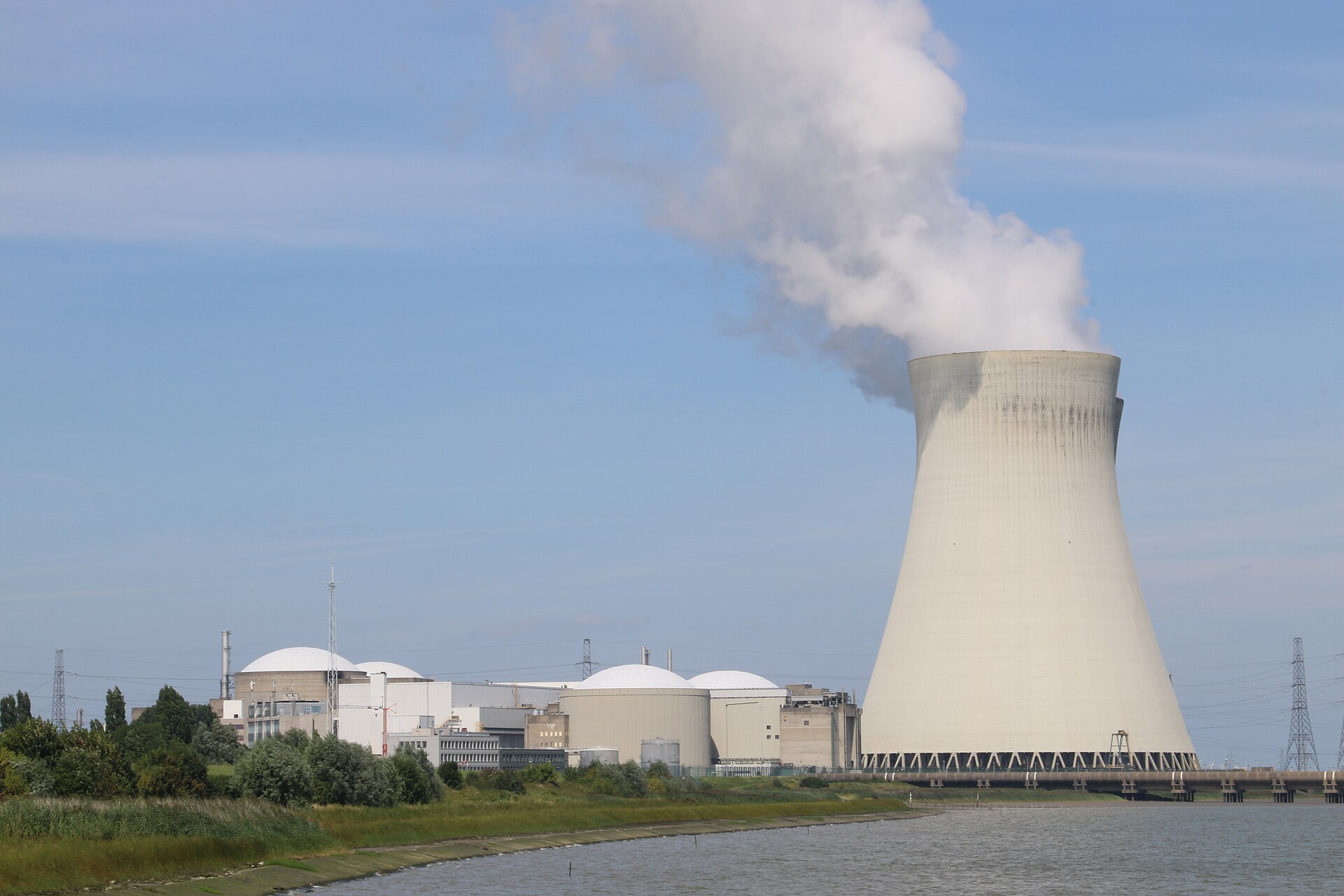
The white plumes above many plants are water vapour from the cooling towers, not smoke. In pressurised water reactors, the water that touches the fuel stays in a closed primary loop and passes its heat to a separate secondary loop through a steam generator, so the turbine steam does not contact the reactor core water.
Key Types of Nuclear Reactors and Technologies
Reactors differ in coolant, moderator (the material that slows neutrons so they split more atoms) and fuel. The main commercial types are:
| Type | Coolant and moderator | Key feature |
|---|---|---|
| Pressurised water reactor (PWR) | Light water for both | The most common design; pressure keeps primary water liquid at high temperature |
| Boiling water reactor (BWR) | Light water for both | Water boils inside the reactor vessel and steam goes to the turbine |
| Pressurised heavy water reactor (PHWR, such as CANDU) | Heavy water | Can run on natural, unenriched uranium |
| Gas-cooled reactors | Carbon dioxide gas, graphite | Used in older UK fleets |
| Fast reactors | Liquid metal such as sodium | Use fast neutrons and can make more fissile material |
Newer designs include small modular reactors (SMRs), which are built in factories in smaller units, and advanced reactors that use high-temperature gas, molten salt or liquid metal. Many SMR designs are still in development or early deployment, and their real costs are not yet proven at scale.
Main Advantages and Limitations
Advantages
- Low-carbon, firm power: a plant produces electricity around the clock with very low greenhouse gas emissions over its life cycle, according to assessments by bodies such as the IPCC.
- High capacity factors: well-run plants often operate at around 90 percent of their potential output, higher than most other sources.
- Small fuel footprint: a plant needs a small volume of fuel, which makes storage of fuel supplies easy.
- Long life: many reactors are licensed to run for 40 to 60 years, and some are extended further after safety reviews.
Limitations
- High upfront cost and long builds: construction takes years, and cost overruns have affected projects in several countries.
- Used fuel and waste: used fuel stays radioactive for a long time. It is stored first in cooling pools and then in dry casks. Permanent disposal in deep geological repositories is under way, with Finland’s Onkalo facility often cited as the most advanced.
- Safety and public acceptance: accidents at Three Mile Island in 1979, Chernobyl in 1986 and Fukushima Daiichi in 2011 shaped regulation and public opinion. Modern designs add several independent safety systems and passive cooling features.
- Inflexibility: plants prefer steady output and are less suited to rapid ramping, though some designs can follow load.
Costs, Efficiency and Market Role
A nuclear plant converts roughly one-third of the heat it produces into electricity, a figure similar to many steam plants. The rest is released through the cooling system, which is why plants sit near large water sources.
Economics are dominated by construction and financing. Once built, fuel is a small share of operating cost, so the cost of electricity depends mostly on how cheaply the plant was financed and how many years it runs. That is why interest rates, regulatory stability and construction management matter so much. The IEA and the OECD Nuclear Energy Agency publish cost comparisons that show wide differences between countries.
Nuclear power provides roughly a tenth of global electricity, according to IEA and World Nuclear Association data, and it is one of the largest sources of low-carbon electricity worldwide. In grids that need steady supply, it complements wind and solar rather than competing with them directly.
Leading Countries and Companies
The United States has the largest nuclear fleet by output. France gets the largest share of its electricity from nuclear power among major economies, and China has the most reactors under construction. Other major users include Russia, South Korea, Canada, Japan and several European states. The IAEA’s Power Reactor Information System (PRIS) lists more than 400 operable reactors worldwide.
Reactor vendors include Westinghouse, EDF and Framatome in the West, Rosatom in Russia, KEPCO and KHNP in South Korea, and CNNC and CGN in China. Suppliers of enrichment and fuel, such as Urenco, Orano and Centrus, form an important part of the chain.
Future Outlook for Nuclear Power
Interest in nuclear energy has grown because countries want firm, low-carbon electricity and greater energy security. Several governments have extended reactor lifetimes, restarted shut-down units or announced new builds, and a group of countries has declared an aim of tripling global nuclear capacity by mid-century. The sector faces real tests, including financing, supply chains for enriched fuel, skilled workforce and delivery of first-of-a-kind SMRs on budget. Fusion remains a research effort and is not yet a commercial source.
Frequently Asked Questions About How a Nuclear Power Plant Works
Is a nuclear power plant the same as a nuclear bomb?
No. Reactor fuel is enriched to a few percent uranium-235, while weapons need far higher concentrations and a very different design. A reactor cannot explode like a bomb.
What is the white cloud from cooling towers?
It is water vapour from the cooling system. It carries no radioactive smoke.
How long does fuel last in a reactor?
Fuel assemblies typically stay in the core for several years, with part of the core replaced during refuelling outages every 12 to 24 months.
What happens if the power fails?
Control rods can drop into the core to stop the chain reaction. Emergency generators, batteries and in newer designs passive systems keep removing decay heat afterwards.
Why do reactors need so much water?
Water cools the steam in the condenser and, in most designs, also acts as coolant and moderator in the reactor.
Conclusion
So, how does a nuclear power plant work? It splits uranium atoms in a controlled chain reaction, uses the heat to make steam and turns a turbine to produce electricity, with layers of safety systems around the process. The technology delivers steady, low-carbon power but demands heavy upfront investment, careful waste management and strong regulation. Understanding the steps and the trade-offs makes it easier to judge claims about its role in future energy systems.
Sources and further reading
- International Atomic Energy Agency, Power Reactor Information System (iaea.org)
- International Energy Agency, nuclear power analysis (iea.org)
- OECD Nuclear Energy Agency, cost and technology reports (oecd-nea.org)
- World Nuclear Association, reactor and fuel-cycle information (world-nuclear.org)
- U.S. Energy Information Administration, nuclear explained (eia.gov)
- U.S. Nuclear Regulatory Commission, reactor basics (nrc.gov)