


How Much Oil Does Saudi Arabia Produce?


Last updated: 2026-10-22
Saudi Arabia produced approximately 6.24 million barrels per day (mb/d) of crude oil in August 2026, according to secondary-source estimates in OPEC’s Monthly Oil Market Report — the kingdom’s lowest monthly output since the 1990–91 Gulf War. That is well below Saudi Aramco’s stated maximum sustainable production capacity of 12.0–12.3 mb/d, and roughly 4 mb/d below the ~10.1 mb/d the kingdom was pumping in January 2026, before the regional war that began with Israeli and U.S. strikes on Iran in late February 2026.
Saudi Arabia’s Crude Production, 2026: The Numbers
| Period | Crude Production | Context | Source |
|---|---|---|---|
| Maximum sustainable capacity (2026) | 12.0–12.3 mb/d | Aramco’s stated ceiling, not a current output figure | Saudi Aramco corporate disclosures |
| January 2026 | ~10.1 mb/d (OPEC); ~8.96 mb/d (JODI) | Last full pre-war month; sources disagree – see note below | OPEC Secretariat; JODI |
| April 2026 | 6.316 mb/d | Early-war low as Hormuz tanker traffic collapsed | OPEC Monthly Oil Market Report |
| July 2026 | ~8.14 mb/d (implied) | Derived from the reported 1.897 mb/d August decline | OPEC Monthly Oil Market Report |
| August 2026 | 6.238 mb/d | Lowest since 1990–91; Petroline shut for most of the month | OPEC Monthly Oil Market Report (September 2026 issue) |
| August 2026 (JODI, cross-check) | 6.24 mb/d production; 4.451 mb/d exports (5-month high) | Production figure closely matches OPEC’s 6.238 mb/d; exports rose on Red Sea/Gulf-coast loading flexibility | JODI via Reuters, October 2026 |
Table: The Daily Energy, compiled from OPEC Monthly Oil Market Report (September 2026 issue) and JODI data. Figures are secondary-source estimates unless noted; OPEC’s own figures for Saudi Arabia can differ from JODI’s by more than 1 mb/d for the same month.
Why Production Has Collapsed
Two separate disruptions are stacked on top of each other. The first is the war itself: after Israeli and U.S. strikes on Iran in late February 2026, tanker transit through the Strait of Hormuz fell from roughly 20 mb/d of combined crude and products before the war to a fraction of that, and Gulf producers including Saudi Arabia cut back output rather than accumulate crude they could not ship. That is the main driver of the drop from ~10.1 mb/d in January to the 6.3 mb/d range by April.
The second disruption came later and hit a different piece of infrastructure: on September 11, 2026, drone strikes damaged multiple pumping stations on Saudi Arabia’s East-West Crude Oil Pipeline (Petroline), the roughly 1,200-kilometer line that lets the kingdom move crude from its eastern fields to the Red Sea port of Yanbu – bypassing Hormuz entirely. Riyadh has blamed the attack on Iran-backed militias operating from Iraq. With Petroline down for most of August, one of the last large-volume alternatives to Hormuz was unavailable too, which is why OPEC’s data show a further 1.897 mb/d monthly decline in August even though the war itself was already five months old. Saudi Arabia and Aramco reportedly restarted Petroline on September 22 and are targeting a ramp toward roughly 4 mb/d of throughput, though multiple outlets describe the restart as gradual rather than immediate. Update, September 29: Reuters reports Yanbu crude loadings are running at roughly 2 mb/d – about half the pipeline’s design capacity – with around 40 tankers and close to 10 million barrels backlogged at the Yanbu and Al Muajjiz terminals; Aramco has notified customers of October loading schedules, a sign it expects the partial restart to hold even as full-capacity restoration remains untimetabled. See Saudi Arabia Restarts Red Sea Crude Loadings After Pipeline Attack.
Capacity vs. Actual Output
It’s worth separating two different numbers that get conflated in casual conversation: capacity is what Saudi Arabia and Saudi Aramco say the country’s oil fields and infrastructure could sustain if run flat out (12.0–12.3 mb/d, a figure Aramco has reaffirmed through 2026), while production is what actually came out of the ground in a given month (6.24 mb/d in August). The gap between the two – nearly half of stated capacity – is unusually wide by historical standards and reflects the war and pipeline outage described above, not a change in the size of Saudi Arabia’s reserves or fields. Before the war, Saudi Arabia was also holding back some capacity voluntarily under OPEC+ production-quota agreements, which had set the kingdom’s target near 10.2 mb/d for April 2026 as OPEC+ began unwinding some of its earlier voluntary cuts.
Data Caveats: Why the Numbers Don’t Always Match
Saudi Arabia’s crude output is tracked by more than one methodology, and they don’t always agree. OPEC’s Monthly Oil Market Report blends “secondary source” estimates (from firms such as S&P Global Commodity Insights and Argus Media) with figures countries report directly; for January 2026, OPEC’s secondary-source figure of roughly 10.1 mb/d ran well above the ~8.96 mb/d that JODI (the Joint Organisations Data Initiative, backed by OPEC, IEA and other bodies) recorded for the same month. Reporting on the September 2026 OPEC Monthly Oil Market Report also noted that the August figure for Saudi Arabia appeared in a footnote rather than the main production table – a presentation choice that outside analysts have flagged as unusual given how sensitive the number is. Readers should treat single-month, single-source figures for Saudi Arabia in 2026 as estimates rather than precise counts, and expect them to be revised as more shipping and satellite data become available. Update, October 22: JODI’s own August 2026 production figure, reviewed by Reuters, came in at 6.24 mb/d – the lowest in JODI’s series dating back to 2002, and this time closely matching OPEC’s secondary-source estimate of 6.238 mb/d for the same month, a rare instance of the two series nearly converging during the 2026 crisis.
Exports Rebounded Even as Production Fell
Production and exports are not the same measure, and JODI’s August 2026 data show them moving in opposite directions. Saudi crude exports climbed to 4.451 mb/d in August – a five-month high, up roughly 7.9% from July’s 4.125 mb/d and the strongest monthly reading since March’s 4.974 mb/d – even as production fell to the record low described above. UBS commodity analyst Giovanni Staunovo attributed the divergence to Saudi Arabia’s ability to load crude from terminals on both its Red Sea and Persian Gulf coasts, a flexibility that lets Riyadh keep barrels moving even when one coastline faces disruption from the Hormuz crisis. Kpler tanker-tracking data supports that reading: Gulf exporters’ loadings surpassed pre-war levels on 14 separate days in September, and Saudi crude-and-condensate loadings averaged 9.1 mb/d in the week of September 21 – the highest weekly average Kpler has recorded since before the COVID-19 pandemic. Refinery throughput eased 181,000 b/d to 2.297 mb/d over the same month, and crude burned directly for power generation – typically a summer phenomenon in Saudi Arabia as air-conditioning demand peaks – rose 43,000 b/d to about 604,100 b/d. Neither JODI nor the reporting built on it offers an official explanation for the scale of the production drop; it lands in the same window as a marked escalation in regional hostilities, including Houthi attacks on Riyadh and on Aramco infrastructure, though no confirmed causal link has been established. The pattern – a producer raising shipments even as wellhead output slips, by drawing down stored barrels, shifting crude that would otherwise go to domestic refineries onto export tankers, or timing mismatches between loadings and output – means a kingdom reallocating available barrels rather than one simply producing and shipping less of everything at once. Read more.
What Data Comes Next
The U.S. Energy Information Administration’s September 2026 Short-Term Energy Outlook assumes Middle East oil flows stay constrained through the fourth quarter of 2026, with regional shut-in production averaging around 5.7 mb/d over that period, before a gradual recovery pushes regional output back toward pre-conflict levels by around the second quarter of 2027 as Hormuz flows normalize and alternative export routes such as Petroline are restored. The next real-world checkpoints for Saudi Arabia specifically are: OPEC’s October 2026 Monthly Oil Market Report (which should show whether the Petroline restart moved the needle in September); further Reuters/Bloomberg reporting on Petroline’s ramp-up toward its roughly 4 mb/d target; and any new IEA Oil Market Report figures on Gulf tanker traffic through Hormuz.
Frequently Asked Questions
How much oil can Saudi Arabia produce at full capacity?
Saudi Aramco states a maximum sustainable production capacity of 12.0–12.3 million barrels per day, a figure reaffirmed in 2026 corporate disclosures. Actual output in August 2026 was roughly half of that.
Is Saudi Arabia’s oil production down because of low demand or because it can’t export?
Available reporting points to supply-side constraints – restricted Strait of Hormuz tanker transit and, since September 2026, the East-West pipeline outage – rather than a deliberate demand-driven cutback beyond the kingdom’s existing OPEC+ quota commitments.
Is the 6.24 mb/d figure for August 2026 official?
It is a secondary-source estimate published in OPEC’s Monthly Oil Market Report, not a figure Saudi Arabia has publicly confirmed in a standalone government statement. JODI and OPEC estimates for Saudi Arabia have differed by more than 1 mb/d in the same period in 2026.
When will Saudi Arabia’s oil production return to normal?
No official timeline exists. The EIA’s September 2026 outlook assumes only a gradual regional recovery through 2027, contingent on Hormuz traffic normalizing and pipeline routes like Petroline returning to full capacity.
Why did Saudi Arabia’s oil exports rise in August 2026 even as production hit a record low?
JODI data show Saudi crude exports reached a five-month high of 4.451 mb/d in August 2026 even as production fell to a record-low 6.24 mb/d. Analysts attribute the divergence to Saudi Arabia’s ability to load from both its Red Sea and Persian Gulf coast terminals, plus possible drawdowns of stored crude and a production-to-refining timing mismatch, rather than a single confirmed cause.
Related The Daily Energy Pages
- What Is Saudi Aramco? Ownership, Leadership and Production
- What Is OPEC? Members, History and How It Sets Oil Policy
- Strait of Hormuz: Oil Flows, Chokepoint Risk and Alternative Routes
- Saudi Arabia Restarts East-West Pipeline as Yanbu Exports Set to Resume
- SLB Wins Four Contracts to Deliver More Than 450 Wells for Saudi Aramco
- Saudi Arabia’s Oil Output Hits Record Low Even as Exports Rebound
- Saudi Arabia’s Renewable Energy Target: Progress Tracker
Sources
- OPEC, Monthly Oil Market Report, September 2026 issue (data for August 2026, published September 2026)
- OPEC Secretariat, direct-communication production data, January 2026
- JODI (Joint Organisations Data Initiative), Saudi Arabia crude oil production data, January 2026
- U.S. Energy Information Administration, Short-Term Energy Outlook, September 2026
- Saudi Aramco, corporate disclosures on maximum sustainable capacity, 2026
- Reuters and Bloomberg reporting on the East-West Pipeline (Petroline) shutdown and restart, September 2026
- JODI, Saudi Arabia crude production, export, refinery-throughput and direct-burn data for August 2026, via Reuters, October 22, 2026
- UBS commodity analyst Giovanni Staunovo, and Kpler tanker-tracking data, via Reuters, October 22, 2026
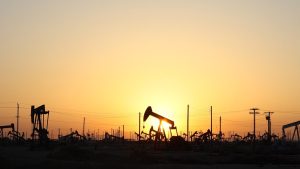
Illustrative image. Photo: B.alotaby, CC BY-SA 4.0, via Wikimedia Commons — source




[…] Novoshakhtinsk nor the Perm plant ranks among Russia’s largest refineries, and neither strike is being described by officials as catastrophic to national output. But the […]
[…] pressure on central banks already managing inflation. It has also forced Gulf producers such as Saudi Arabia to lean harder on alternative export routes, including the East-West pipeline it restarted to keep Yanbu exports flowing. Araghchi’s […]
[…] How Much Oil Does Saudi Arabia Produce? […]
[…] than one simply producing and shipping less of everything at once. Aramco has long cited roughly 12 million bpd as its maximum sustainable production capacity, a figure that leaves meaningful headroom above August’s 6.24 million bpd — though how much […]
[…] How Much Oil Does Saudi Arabia Produce? […]