Why Copper Matters to Both Electrification and Defence

Last updated: November 15, 2026
Copper does not usually get the attention that rare earths, lithium or uranium get in energy-and-defence coverage, but it sits underneath almost everything both sectors are trying to build. The same red metal that has to run through a new high-voltage transmission corridor or a data-centre substation also has to run through a brass cartridge casing or a defense-grade printed circuit board — and both demand streams are now colliding with a supply side that is not growing fast enough to keep up.
Why Copper Demand Is Suddenly a Strategic Question
Copper’s demand story in 2026 is overwhelmingly a civilian electrification story. Grid operators, EV makers and data-centre builders are the three biggest sources of incremental demand, and all three are accelerating at once.
| Demand driver | Figure | Data year / horizon | Source |
|---|---|---|---|
| Global power-grid investment | Record $390bn spent in 2024; tracking above $400bn in 2026 | 2024–2026 | IEA grid-investment data, cited via metals-market analysts |
| Grid copper demand | Projected to rise from 12.52 million tonnes currently to 14.87 million tonnes by 2030 | 2026–2030 outlook | Benchmark Mineral Intelligence (BMI) |
| Data-centre copper demand | Projected to exceed 650,000 tonnes by 2030; Wood Mackenzie separately estimates roughly 1 million tonnes of added demand against a ~40-million-tonne refined market | 2026–2030 outlook | CRU; Wood Mackenzie |
| EV copper demand | Projected to reach 2.2 million tonnes by 2030, up from about 1.2 million tonnes in 2025 | 2025–2030 outlook | Benchmark Mineral Intelligence (BMI) |
| Global refined copper deficit | Forecast at roughly 330,000 tonnes for 2026, as refined output grows only about 0.9% against 2–3% underlying demand growth | 2026 forecast | J.P. Morgan; International Copper Study Group (ICSG) |
None of that demand is defence-driven. It is grid reinforcement, EV adoption and the physical buildout behind the AI data-centre boom — the same forces already reshaping transmission investment, as in India’s $7.3 billion ultra-high-voltage line to move solar and wind power east. Defence enters this picture not as the driver of the shortage, but as a buyer now competing for a metal that is already tight.
Where Defence Manufacturing Needs the Same Metal
Copper’s defence uses are mundane compared with rare earth magnets or enriched uranium, which is exactly why they are easy to overlook. Brass — a copper-zinc alloy — is the standard material for small-arms cartridge casings, and copper or copper-alloy components recur across printed circuit boards, radar and radio-frequency systems, and electromagnetic shielding used throughout military electronics. None of this requires exotic metallurgy; it requires a reliable, security-vetted domestic supply of a specific grade of the metal.
That narrow requirement is what made a small manufacturing site in South Carolina a live case study in 2026.
| Company / site | What happened | Amount | Status as of Nov. 2026 |
|---|---|---|---|
| Principal Mineral Company – Camden Copper (Camden, South Carolina) | US Department of War award, funded through its Industrial Base Analysis and Sustainment program, to sustain production of defense-grade electrodeposited (ED) copper foil at the former Denkai America Inc. plant, which Principal Mineral acquired in April 2025 | $37.2 million, 30-month contract (dated April 27, 2026), bringing total Department of War investment in the site to $74.9 million | Contract active; facility described by the Department of War as the nation’s sole remaining source of defense-grade ED copper foil |
| Pentagon / Defense Industrial Base Consortium | Outreach to more than 1,500 defense-industrial-base companies requesting proposals for domestic mining projects covering a list of critical minerals | Solicitation, not a funding award | Issued March 2026; copper’s inclusion among the named minerals is not confirmed in public summaries |
The Camden Copper award is useful precisely because it is small and specific: defense-grade ED copper foil, used in printed circuit boards, RF systems and electromagnetic shielding, is a product with almost no other confirmed US manufacturer, so a plant that was reportedly at risk of closure before Principal Mineral’s acquisition became a de facto single point of failure for part of the defense electronics supply chain.
A Genuine but Modest Slice of Total Demand
It is worth being precise about scale here, because copper is not a case like rare earth magnets, where defence and energy draw on the same narrow bottleneck in comparable volumes. Wood Mackenzie, which tracks the metal closely, describes defence as “a quiet but meaningful source of incremental copper demand” and puts direct European defence-related copper demand at only about 25,000–40,000 tonnes a year over the coming decade — a rounding error next to the multi-million-tonne grid, data-centre and EV demand streams above. Separate commentary citing rising global defence budgets alongside AI buildout as joint demand drivers should be read with that scale difference in mind: defence is a contributing factor in a tight market, not the reason the market is tight.
What makes copper a genuine energy-x-defence story, then, is not the size of military demand but the fact that both sectors are drawing on the same constrained supply chain at the same time, and that a handful of specialty products — like defense-grade ED copper foil — have no slack capacity to absorb a disruption.
The Supply Squeeze Behind Both Stories
Mining concentration compounds the tightness. S&P Global estimates that roughly six countries account for about two-thirds of global copper mine production, and the United States, despite operating multiple domestic mines, has only two copper smelters — a processing bottleneck conceptually similar to the refining chokepoint that has made rare earth supply chains a policy concern, as covered in our look at why rare earths matter to energy and defence. Forecasts on the exact size of the looming shortfall vary by bank and methodology — J.P. Morgan’s 330,000-tonne 2026 deficit estimate sits alongside more cautious outlooks — but the directional signal across analysts is the same: supply growth is not keeping pace with demand growth, and that gap exists independent of anything the defence sector is doing.
It is also a different shape of problem from the one China’s rare earth export controls created, which our coverage of China’s grip on critical minerals for energy and defence describes as a licensing and geopolitics story. Copper’s bottleneck is mostly geological and industrial: mining concentration, permitting timelines for new mines and smelters, and years-long lead times to add capacity, with policy playing a smaller role than it does in the rare earth case.
Where the Technology Is Used in Civilian Energy
Copper’s civilian energy uses are the baseline, not the exception:
- Grid transmission and distribution: overhead and underground cabling, transformer windings and substation equipment all use copper for its conductivity; new high-voltage corridors built to move renewable power from generation sites to demand centres are large, lumpy sources of copper demand.
- EV motors and charging infrastructure: traction motor windings, battery interconnects and charging-station wiring all scale with EV sales volumes.
- Data-centre power delivery: busbars, backup power systems and the dense internal wiring needed to move large amounts of electricity reliably inside AI-era data centres.
- Renewable generation: wind turbine generators and collector cabling, and solar inverter and array wiring, both use substantial copper per installed megawatt.
Military installations draw on the same grid and generation infrastructure for their own resilience projects, which is one reason base-level energy programs, such as those covered in our analysis of how much energy US military bases consume, ultimately compete for some of the same copper-intensive equipment as civilian utilities.
What This Means for Energy Investors and Policymakers
For companies planning grid, data-centre or EV-charging buildouts, copper is shifting from a background input to a line item with real lead-time and price risk, in a market where defence demand, while small in absolute tonnage, is concentrated in products — like defense-grade ED copper foil — that have essentially no substitute supplier. That combination means a disruption at a single site, such as Camden Copper, carries outsized consequences relative to its tonnage, and it is one reason the Department of War is willing to fund site-specific sustainment contracts rather than relying on the open market. For policymakers, the lesson from the rare earth experience is that waiting until a bottleneck becomes acute is more expensive than building redundancy early — the same logic now showing up, at a much smaller dollar scale, in copper.
Frequently Asked Questions
Is copper classified as a critical mineral in the United States?
No. Unlike rare earths or lithium, copper is not on the US Geological Survey’s official critical minerals list, even though the Pentagon and Department of Energy have both taken steps to secure parts of its supply chain.
Why does the military need its own copper supply instead of buying on the open market?
For most uses, it does buy on the open market. The exception is specialty products like defense-grade electrodeposited copper foil, where only one US manufacturer, Camden Copper, is confirmed to produce the material, making open-market substitution impossible if that single site were disrupted.
How much of global copper demand comes from defence?
A small share. Wood Mackenzie estimates direct European defence-related copper demand at only about 25,000–40,000 tonnes a year over the next decade, compared with multi-million-tonne demand from power grids, data centres and electric vehicles.
What is driving the copper supply deficit, if it isn’t defence spending?
Grid reinforcement, EV adoption and data-centre construction are the largest drivers. On the supply side, mining concentration in a handful of countries and a shortage of smelting capacity — the US has multiple mines but only two smelters — limit how quickly output can respond.
Related reading: see also our overview of defence companies investing in energy technologies and China’s grip on critical minerals for energy and defence.
Sources
- US Department of War, press release on Camden Copper / Principal Mineral Company investment, April 27, 2026
- Benchmark Mineral Intelligence (BMI), grid and EV copper demand forecasts, 2026
- CRU and Wood Mackenzie, data-centre copper demand analysis, 2026
- J.P. Morgan and International Copper Study Group (ICSG), 2026 refined copper supply-demand balance
- Wood Mackenzie, commentary on defence-related copper demand in Europe, 2026
- S&P Global Commodity Insights, copper mining concentration and smelting-capacity analysis, 2026
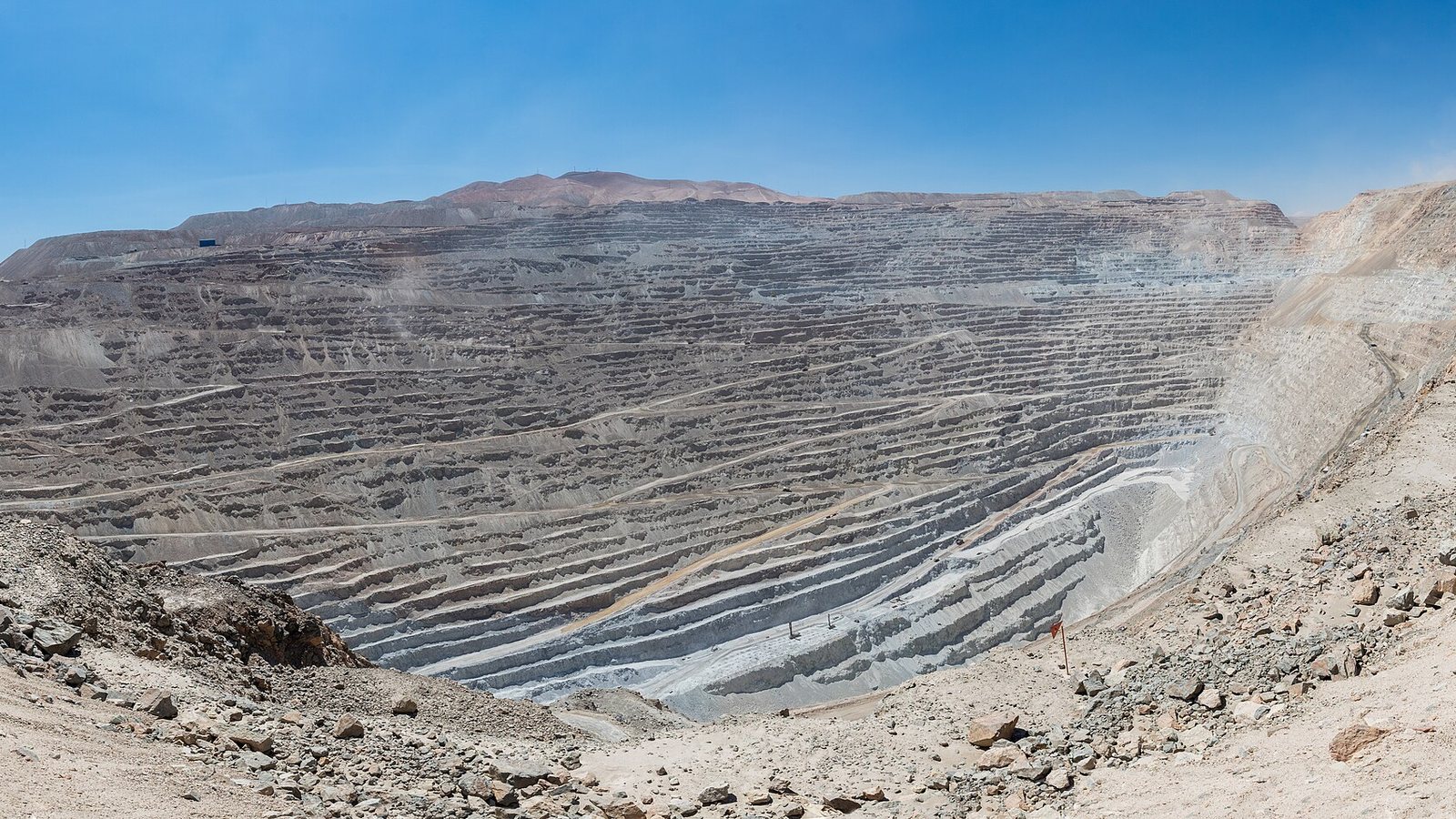
Illustrative image. Photo: Diego Delso, CC BY-SA 4.0, via Wikimedia Commons — source