China’s Grip on Critical Minerals for Energy and Defence

Last updated: October 18, 2026
China controls most of the world’s capacity to turn critical minerals into usable industrial materials — not just mining them, but refining, separating and shaping them into magnets, battery anodes and semiconductor-grade metals. That position touches two industries at once: the energy transition, which needs these materials for wind turbines, EV motors, solar cells and grid electronics, and the defence industrial base, which needs many of the same materials for fighter jets, guided munitions, radar and submarines. When Beijing tightens export rules, both sectors feel it, and governments from Washington to Canberra have spent 2025 and 2026 building alternative supply chains in response.
Where China’s dominance actually sits
The common shorthand — “China controls rare earths” — undersells how the dominance is structured. China’s share of mining is large but not overwhelming; its share of refining and processing is where the real chokepoint is.
| Mineral | Supply-chain stage | China’s share | Year | Source |
|---|---|---|---|---|
| Rare earths | Mine production | ~69% | 2024/2025 | USGS Mineral Commodity Summaries |
| Rare earths | Refining / separation | ~85–90% | 2025 | IEA Global Critical Minerals Outlook 2025 |
| NdFeB magnets | Manufacturing | ~300,000 t produced (2024) | 2024 | CSIS, citing Adamas Intelligence |
| Gallium | Primary production | ~98–99% | 2023–2026 | USGS Mineral Commodity Summaries |
| Germanium | Global supply | ~50–60% | 2023 | USITC; European Critical Raw Materials Alliance |
| Graphite | Mining (flake) | ~62% | 2023 | Benchmark Mineral Intelligence, via S&P Global |
| Graphite | Anode processing | ~91% | 2023 | Benchmark Mineral Intelligence, via S&P Global |
| Cobalt | Refining | ~79–80% | 2025 | Cobalt Institute, Cobalt Market Report 2025 |
IEA Executive Director Fatih Birol has summarised the overall picture bluntly: one country controls somewhere between 70% and 80% of the critical minerals market, which he has called “one of the most serious risks to the global energy system.” The IEA’s own Global Critical Minerals Outlook 2025 found China leads refining in 19 of the 20 strategic minerals it studied, with the combined share of the top three producing countries across cobalt, copper, graphite, lithium, nickel and rare earths rising from about 82% in 2020 to roughly 86% in 2024.
The dual-use link: one magnet, two industries
The clearest overlap is the neodymium-iron-boron (NdFeB) permanent magnet. On the civilian-energy side, these magnets go into EV traction motors and, in far larger quantities per unit, into direct-drive wind turbine generators — industry estimates for a single large offshore turbine generator range from several hundred kilograms up to roughly a tonne of rare-earth-bearing magnet material, depending on turbine design. On the defence side, the same magnet chemistry is used in fighter jet actuators, guided-munition fin controls, radar arrays and submarine systems; the Center for Strategic and International Studies (CSIS) has catalogued rare-earth content across platforms including the F-35, Arleigh Burke-class destroyers and Virginia-class submarines, though estimates of exact quantities vary significantly between analysts depending on what is counted.
Gallium and germanium show the same pattern in semiconductors rather than magnets. Gallium nitride and gallium arsenide are used in civilian power electronics — EV inverters, fast chargers, solar cell substrates, 5G infrastructure — and in military radar and electronic-warfare systems. Germanium goes into solar cells and fibre-optic cable on the civilian side, and into infrared optics for thermal imaging and missile guidance on the defence side. Graphite’s overlap is more about volume than chemistry: China’s near-monopoly on anode-grade processing is a shared chokepoint for EV batteries, grid storage batteries and the batteries inside military vehicles and drones alike.
How Beijing has used export controls
China’s export restrictions have escalated in stages since 2023, each round framed by the Ministry of Commerce (MOFCOM) as a national-security and non-proliferation measure rather than a blanket embargo:
- August 2023: Licensing requirements imposed on gallium and germanium products, following Western chip-equipment restrictions on China. Chinese exports of both metals briefly fell to zero in the following month.
- December 2023: Export permits required for high-purity synthetic and natural flake graphite, triggering a wave of pre-deadline stockpiling followed by a sharp drop in shipments.
- April 2025: Licensing controls extended to seven rare earth elements — including dysprosium, terbium and yttrium — and to magnets containing them, alongside the addition of sixteen US defence and aerospace firms to China’s export control watch list.
- October 2025: A broader set of measures added licensing requirements for rare earth materials, extraction and magnet-making technology, lithium batteries and superhard materials — including an extraterritorial rule requiring a licence for any foreign-made product containing 0.1% or more Chinese-origin rare-earth content by value. MOFCOM said the goal was to curb diversion “to sensitive fields such as the military” and that applications from foreign military end-users would, in principle, not be approved.
- Late October 2025: At a Trump-Xi summit in Busan, China agreed to suspend the expanded October measures for one year in exchange for US tariff reductions, with the arrangement subject to annual review.
Independent industry analysts have disagreed about how disruptive each round has been in practice. Wood Mackenzie’s James Willoughby said after the 2023 graphite controls that “most companies do not see the new licences as a challenge for the market in the short term,” while Benchmark Mineral Intelligence’s Yuan Gu pointed to buyer uncertainty over how strictly licences would actually be approved — a reminder that the controls’ real-world bite depends heavily on administrative implementation, not just the headline rule.
The Western and allied response
Over the past 18 months, several governments have moved from policy papers to funded projects:
| Country / bloc | Mechanism | Scale | Status (as of Oct. 2026) |
|---|---|---|---|
| United States | DoD equity stake + price-floor offtake in MP Materials | $400m equity, $150m separation-plant loan, $1bn private financing commitment | Signed July 2025; 10X magnet plant targets 2028 |
| United States | DoD supply agreement with Lynas Rare Earths | Binding long-term agreement | Signed March 2026 |
| European Union | Critical Raw Materials Act — Strategic Projects list | 47 projects across 13 member states, ~€22.5bn combined investment | Announced March 2025; first output expected 2027–28 |
| Australia | Critical Minerals Strategic Reserve | A$1.2bn initial, within a A$5bn Critical Minerals Facility | Announced April 2025 |
| Japan & Australia | Bilateral critical minerals framework | Up to US$928m (Australia) + ~US$264m (Japan/JOGMEC) | Signed May 2026 |
| United Kingdom | Critical Minerals Strategy “Vision 2035” | Targets: 10% domestic production, 20% recycling, ≤60% reliance on any one supplier | Refreshed November 2025 |
The scale mismatch is still stark. MP Materials expects to produce roughly 1,000 tonnes of NdFeB magnets by the end of 2025 — a fraction of 1% of the roughly 300,000 tonnes China produced in 2024. Western governments are explicit that closing this gap, where it closes at all, will take years rather than months, and the EU’s own tracking shows its Strategic Projects are not expected to start producing material until 2027–28 at the earliest.
Where this matters in civilian energy
Strip away the defence angle and the energy story stands on its own: a handful of minerals that are mostly invisible to consumers — gallium, germanium, graphite, several rare earths — sit underneath wind turbine generators, EV motors, solar cell manufacturing and grid power electronics. The 2023 graphite and gallium/germanium controls caused real, measurable disruption to battery and solar supply chains well before the 2025 rare-earth controls added a sharper defence-adjacent edge to the story. Any buyer of wind turbines, EV drivetrains or advanced solar cells is exposed to the same chokepoints that worry defence planners, whether or not their end product ever touches a weapons system.
FAQ
Why did China restrict rare earth and critical mineral exports?
China’s Ministry of Commerce has framed its 2023–2025 export-licensing rounds as national-security and non-proliferation measures, citing risks that materials or technology could be diverted to military end-uses. Independent analysts also point to the timing relative to US tariff actions and technology restrictions on China.
Which minerals are most affected?
Gallium and germanium (since 2023), graphite (since late 2023), and seven specific rare earth elements plus rare-earth magnet-making technology (since April and October 2025) are currently under Chinese export licensing.
Is China’s dominance mainly in mining or in processing?
Processing and refining. China’s share of mining varies by mineral — around two-thirds for rare earths and flake graphite — but its share of refining and magnet/anode manufacturing is consistently above 85–90% for several of these materials.
Do these minerals matter for renewable energy, not just defence?
Yes. Rare-earth magnets are essential to direct-drive wind turbine generators and EV motors; gallium and germanium are used in solar cell manufacturing and power electronics; graphite is the dominant anode material in virtually all lithium-ion batteries, civilian or military.
How are the US and its allies responding?
Primarily through direct government investment and offtake guarantees rather than market mechanisms alone — equity stakes and price floors (the US-MP Materials deal), subsidised strategic projects (the EU’s Critical Raw Materials Act), and sovereign stockpiling facilities (Australia’s Critical Minerals Strategic Reserve).
Related reading: why Rolls-Royce is building small modular reactors, and how much energy military bases consume — two more places where defence companies and installations are now buying energy technology directly.
Sources
- USGS, Mineral Commodity Summaries 2025/2026 — pubs.usgs.gov
- IEA, Global Critical Minerals Outlook 2025 (via Northern Miner, PBS NewsHour secondary reporting)
- CSIS, “The Consequences of China’s New Rare Earths Export Restrictions,” April 14, 2025 — csis.org
- Mayer Brown, “PRC Announces New Export Controls on Rare Earth and Battery Materials and Technology,” October 2025
- MP Materials, SEC Form 8-K and press release, July 10–15, 2025 — mpmaterials.com
- European Commission, Critical Raw Materials Act Strategic Projects, March 2025
- Australian Department of Industry, Critical Minerals Strategic Reserve, April 2025
- UK Government, Critical Minerals Strategy Technical Annex, November 2025
- Cobalt Institute, Cobalt Market Report 2025
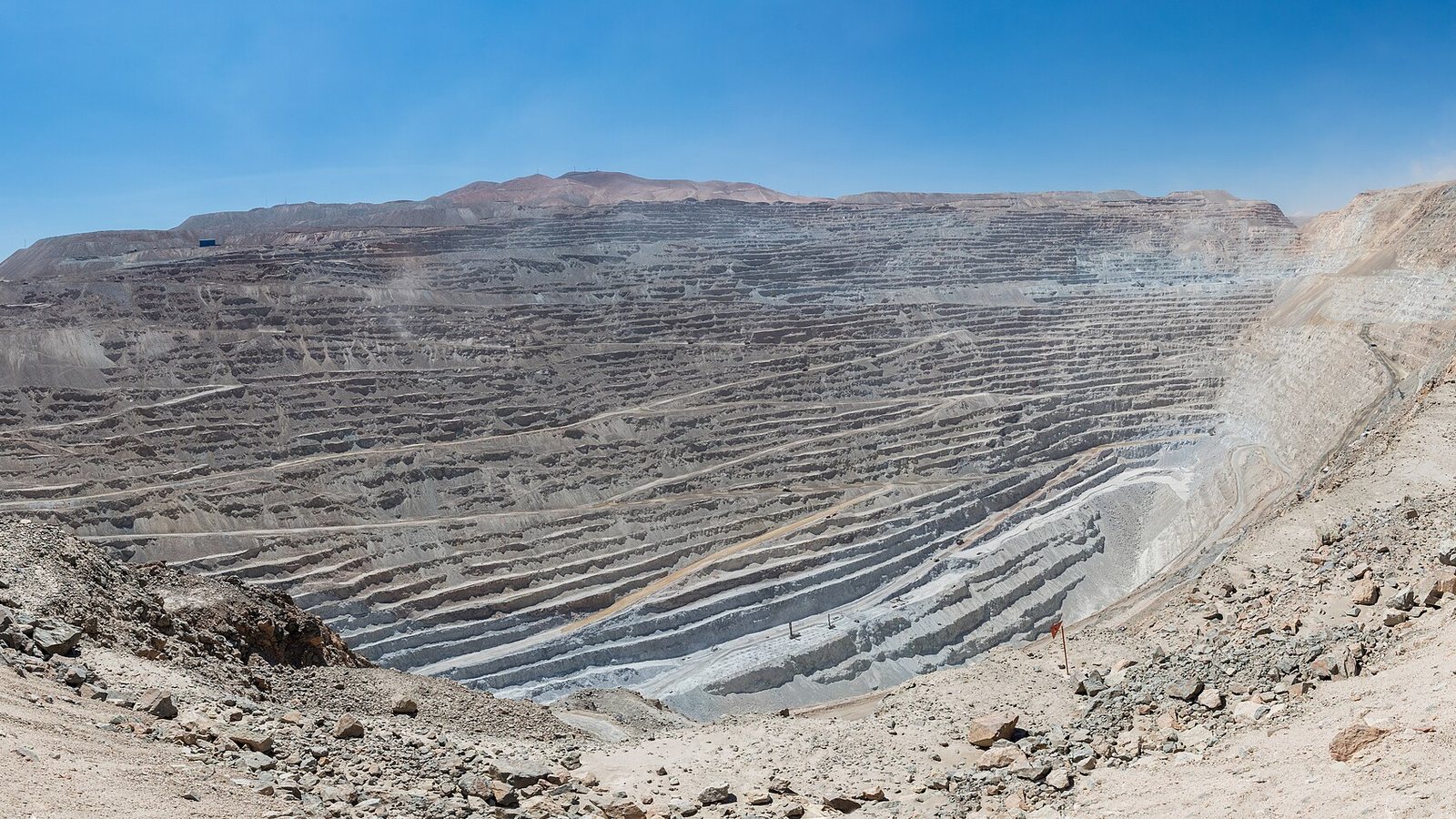
Illustrative image. Photo: Diego Delso, CC BY-SA 4.0, via Wikimedia Commons — source