DOE Picks 14 Hydropower Projects for Second Round of Testing Network Support

The US Department of Energy’s Hydropower and Hydrokinetic office, known as H2O, said on October 5 that it has selected 14 projects from 12 companies and research groups to begin negotiating in-kind technical support through the second round of its Hydropower Testing Network, or HyTN. Rather than cash grants, the chosen developers get matched with one of 21 specialized facilities offering more than 65 testing and modeling capabilities, from hydraulic flumes to techno-economic modeling, to help move their technologies closer to commercial use.
What HyTN Actually Offers
HyTN launched in June 2024 and has grown to three phases, the newest of which — opened for applications on June 16, 2026 — added techno-economic analysis, numerical modeling, simulation and other analytical services to the program’s original physical testing menu. The voucher model means a selected company does not receive a check; instead, it is paired with a national laboratory, university, or private test facility that performs the testing or analysis in kind. H2O funds the program and ENERGYWERX manages it on the department’s behalf, under authority tied to Executive Order 14154, “Unleashing American Energy.” DOE has not disclosed a dollar value for this round’s vouchers, though the first HyTN phase reportedly offered up to $250,000 in services per developer.
Who Made the Cut
The second-round cohort skews toward incremental, unglamorous fixes rather than headline-grabbing new dam construction. Dry Surface Technologies is scaling a non-toxic antifouling coating with Pacific Northwest National Laboratory; Emrgy is testing a low-head turbine for canals and other engineered waterways at Colorado State University; GenH is evaluating low-impact generation for dams that currently have no turbines at all, at the University of Minnesota. Chelan County’s public utility district in Washington state is running two separate projects with PNNL on grease-free wicket-gate bushings and cold-spray repair techniques for turbine components, while Kingsbury is testing a thermoplastic bearing material with Oak Ridge National Laboratory and VBASE Oil is continuing lubricant testing from the program’s first round. A Colorado team is advancing 3D-printed components for an underwater pumped-storage concept, and Ohio-based Radmantis is working on AI-assisted fish-passage sensing.
Why Modernization, Not New Capacity, Is the Point
Hydropower supplies nearly 6% of total US utility-scale electricity generation, a share detailed in The Daily Energy’s US energy profile, but most of that capacity sits in dams built decades ago, long before today’s materials, coatings, and digital monitoring tools existed. DOE’s pitch for HyTN is that modernizing those existing plants — tightening up bearings, reducing fish mortality through better sensors, extending blade and gate life — is a faster and cheaper way to add reliable generation than building new hydropower projects, which face long permitting timelines and, in many of the best US sites, no additional damming potential at all. H2O director Nichole Fitzgerald said the program “accelerates the development of next-generation technologies that keep hydropower reliable and abundant,” language that frames HyTN as grid-reliability support more than a clean-energy expansion program.
What to Watch Next
None of the 14 awards are final: DOE describes the selections as the start of negotiations between each developer and its matched test facility, and some projects may ultimately get access to different capabilities than initially proposed. With two rounds now complete, roughly 26 developers have gone through the HyTN pipeline since mid-2024, a small but steady flow for a sector that, unlike solar or battery storage, rarely produces splashy announcements of new gigawatts. By contrast, countries such as India are still expanding hydropower-linked grid capacity, approving a $19 billion grid upgrade to absorb 135 GW of renewables. The real test for HyTN will be whether any of these 14 technologies make it from a national-lab test bench into a working US dam within the next few years, rather than becoming another entry in a DOE innovation-pipeline tally.
Sources
- US Department of Energy, “Energy Department Selects 14 Hydropower Projects for Testing Support to Accelerate…,” October 5, 2026. energy.gov
- Power Engineering, “DOE selects second round of hydropower projects for technical support, with modernization in mind,” October 7, 2026. power-eng.com
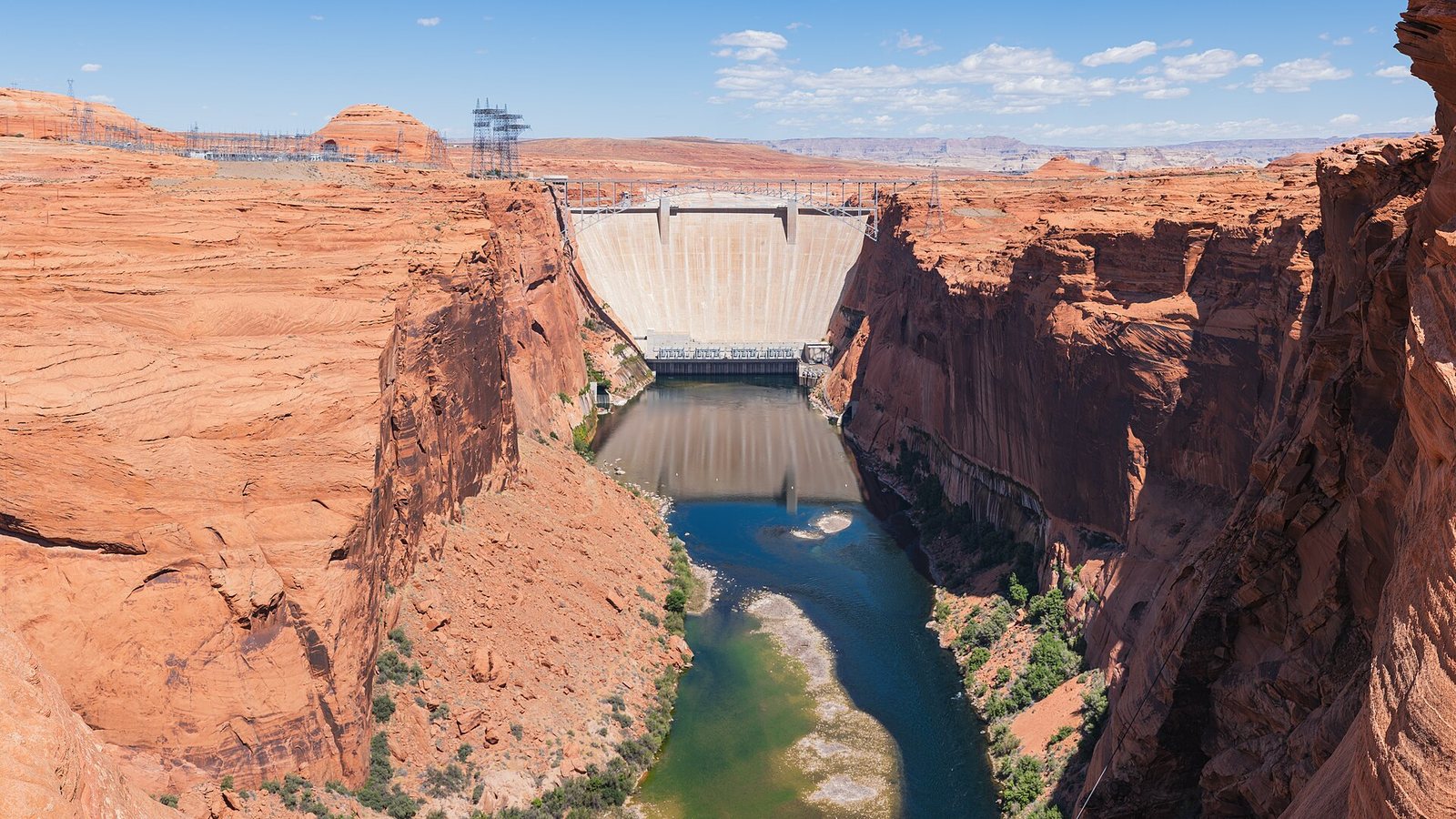
Illustrative image. Photo: Christian David, CC BY-SA 4.0, via Wikimedia Commons — source