


Cuba’s Solar Capacity Tops 1.4 GW as Island Races to Fix Its Grid

Cuba’s installed solar capacity has reached 1.42 gigawatts across 144 photovoltaic plants, President Miguel Díaz-Canel said on state radio on September 30, as the island continues a rapid solar build-out launched in response to its worst power crisis in decades. Díaz-Canel said the government expects total capacity to pass 1.5 GW by the end of the year, with renewables now covering 21.4% of national electricity generation.
From blackout island to solar sprint
The push traces back to 2024, when a collapse in subsidized Venezuelan crude shipments — worsened by US sanctions pressure on Caracas — left Cuba’s aging, Soviet-era thermoelectric plants without enough fuel to keep the grid running. Cuba’s generation and transmission system, much of it decades old, has since been meeting only 50–70% of demand on a given day, producing near-daily blackouts and at least one nationwide collapse. Outside energy researchers have estimated that fully fixing the island’s power sector would take three to five years and up to $8 billion in investment that Havana does not have.
Unable to finance new baseload thermal capacity, the government instead accelerated a state solar-park program that had been moving slowly for years. Cuba had just under 300 MW of solar installed at the end of 2024; the 1.42 GW figure Díaz-Canel cited implies the country has now installed roughly five times that capacity in under two years, largely through fast-build utility-scale parks financed and engineered mostly by Chinese contractors, a supply chain that has also driven the module-cost swings covered in our report on US solar panel tariffs.
Storage and distributed solar fill the gaps
Alongside the utility-scale parks, Díaz-Canel said Cuba has installed 50 MW of battery storage, with a further 100 MW scheduled to come online in October — a first step toward smoothing solar output on an island grid with little flexible backup generation. On-site and rooftop solar, much of it installed by state enterprises and private businesses rather than the grid operator, now totals more than 563 MW and is estimated to cover about a fifth of electricity consumption in the non-state sector.
The government has also targeted essential public services: it says 99% of polyclinics, 97% of radio stations, 72% of banks and 47% of hospitals now have renewable back-up systems, part of an effort to keep critical services running through blackouts rather than waiting for the wider grid to stabilize. A separate solar-pumping program has installed 646 public water-supply pumps and more than 1,000 agricultural and livestock pumps, with a target of 200 MW more pumping capacity by early 2027. To draw private and household investment, the state is offering a feed-in tariff of 90 Cuban pesos (about $0.37) per kilowatt-hour for solar power supplied back to the grid, alongside bank financing for panel purchases.
Still short of what the island needs
Even at 1.5 GW, solar remains a fraction of the roughly 3 GW of generating capacity Cuba’s grid operator says it needs to meet demand reliably, and the new capacity does nothing to fix a transmission and distribution network that Cuban officials themselves describe as deteriorated. Solar’s arithmetic is also uneven: panels generate only in daylight, while Cuba’s worst blackouts have often hit in the evening peak, which is why the government is now racing to add storage rather than more panels alone. The build-out nonetheless marks one of the fastest solar transitions attempted by a grid this size, comparable in speed, if not in scale, to solar-plus-storage pushes underway in other supply-constrained power systems such as Ukraine’s wartime solar and storage auctions.
Sources
- Miguel Díaz-Canel, remarks on Radio Rebelde’s Criterio Compartido program, September 30, 2026 — capacity, storage and program figures.
- pv magazine, “Cuba’s PV capacity tops 1.4 GW,” September 30, 2026 — reporting and figures confirmation.
- Reuters and oilprice.com reporting on Cuba’s 2024–2025 power crisis — blackout and fuel-supply background.
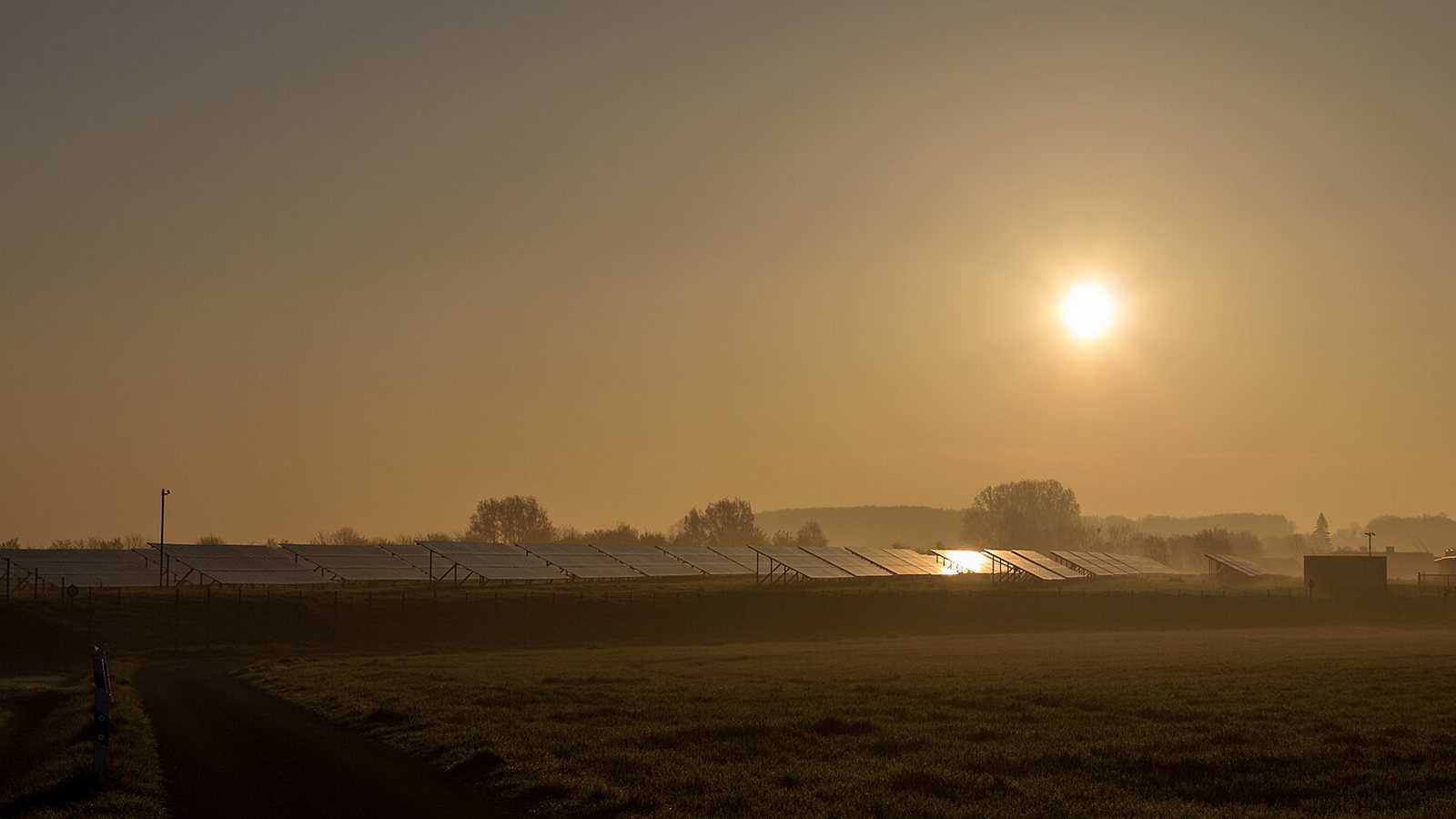
Illustrative image. Photo: Dietmar Rabich, CC BY-SA 4.0, via Wikimedia Commons — source


