OPEC+ Delays 2027 Oil Quota Baselines to June After Iraq Disputes Its Capacity Number


OPEC and its allies ended their most closely watched meeting of the year on Sunday without setting new oil production quotas for 2027, pushing a decision on each member’s maximum output capacity back to June 2027 after Iraq and Kazakhstan challenged the figures an independent auditor assigned them. The 42nd OPEC and non-OPEC Ministerial Meeting, held online and originally scheduled by the group in a June 7 statement, was meant to settle the “maximum sustainable capacity” baselines that will underpin every member’s quota from next year onward. Instead, delegates said the group agreed only to keep talking.
A two-year audit runs into objections
The baselines at stake come from a roughly two-year assessment carried out by US consultancy DeGolyer and MacNaughton, commissioned by OPEC to give the 22-member Declaration of Cooperation group a single, externally verified number for how much crude each country can sustainably pump. OPEC Secretary-General Haitham al-Ghais had described the exercise in mid-November as an “independent and objective process,” and it is the first time the group has used a third-party audit, rather than self-reported figures, to set quotas.
The numbers themselves became the problem. Iraq, OPEC’s second-largest producer, rejected an assessed ceiling below 5 million barrels per day (bpd), arguing its real sustainable capacity is 5.2 million bpd. Oil Minister Bassem Khudair said Baghdad was negotiating to have the figure raised and, according to Reuters, has warned it could leave the organization if its allocation is not increased. Kazakhstan separately argued its own assessed capacity was set too low. With two members contesting their numbers and no consensus on how to resolve the dispute, ministers chose to extend the review rather than lock in figures several delegations rejected.
Decision deferred, not made
According to the group’s statement, carried by AFP and cited by regional outlets including Gulf News, OPEC+ postponed setting the new capacity-based baselines to June 6, 2027, “or earlier, if market conditions may permit.” Some member countries asked for further deliberation, with that process due to conclude by the end of March 2027. Because the Sunday session ended without adopting new production targets, the group’s current quota structure continues by default into next year rather than through any fresh vote.
That is a separate matter from a narrower rollover reported ahead of the meeting. Delegates told Reuters and Bloomberg on Friday, November 27, that the group had agreed in principle to carry existing quotas through the first quarter of 2027, though outlets covering the story were careful to note this was not a formal outcome of Sunday’s ministerial session. A seven-country subgroup — Saudi Arabia, Russia, Iraq, Kuwait, Kazakhstan, Algeria and Oman — issued its own statement Sunday confirming no change to current production levels and said it would keep reviewing the market through the Joint Ministerial Monitoring Committee. That subgroup also flagged concern over attacks on energy infrastructure and said shipping and insurance costs tied to those attacks are at “unprecedented levels.”
Rystad Energy analyst Jorge Leon summed up the outcome as “a decision not to decide.” He said the group will enter 2027 underproducing its combined quotas by more than 2 million bpd, a gap Rystad expects to widen a global supply surplus to around 5 million bpd next year — roughly 5% of world oil demand — even assuming Gulf exports partly recover.
Output lagging targets across the board
Secondary-source estimates for October cited by The National put combined OPEC+ crude output at 41.23 million bpd, up 2.04 million bpd from September but still only about 97% of the 42.72 million bpd the group pumped back in February, before the current round of Gulf disruptions. The same estimates put Saudi Arabia at 9.19 million bpd against a target near 10.5 million bpd for the month — though Riyadh has told the group its own figure was 10.56 million bpd, a gap between self-reported and third-party estimates that is itself part of why an independent audit was commissioned in the first place. Iraq’s October output was estimated at 4.49 million bpd against a roughly 4.43 million bpd target, meaning Baghdad was pumping essentially at or slightly above its current ceiling even as it argues that ceiling should be higher.
Russia presents the starkest case. Jorge Leon put the country’s October output at 8.4 million bpd against a quota of almost 10 million bpd — a shortfall of more than 1.5 million bpd that Leon attributes largely to the effects of the war in Ukraine and sanctions on Russian energy infrastructure and shipping. He has argued Russia’s quota should eventually be adjusted downward to reflect what it can actually export, a position that, if it ever moves from analyst commentary to OPEC+ policy, would itself be a significant shift in how the group treats its largest non-Gulf member.
A group with less room to maneuver
The baseline fight is unfolding against a backdrop that has already eroded OPEC+’s grip on the market this year. The United Arab Emirates left OPEC and the wider OPEC+ framework earlier in 2026, a departure analysts linked to Abu Dhabi’s frustration that its quota did not reflect capacity it had already built. Since February, a US-Iran conflict has disrupted tanker traffic through the Strait of Hormuz, the chokepoint through which roughly a fifth of the world’s seaborne oil moves — a campaign that, as The Daily Energy reported ahead of Sunday’s meeting, had expanded from tankers to tugboats and other support vessels in the weeks before ministers sat down. A separate layer of 2 million bpd in group-wide cuts agreed in 2022 remains in force through the end of 2026, while a 1.65 million bpd round of voluntary cuts from 2023 finished unwinding in September.
Brent crude settled at $95.44 a barrel on Friday, the session before the meeting, a level that reflects the risk premium built into the market by the Hormuz disruptions even as the IEA has forecast a return to global supply surplus in the fourth quarter of 2026. For more on how that chokepoint factors into oil-security calculations generally, see our explainer on the Strait of Hormuz; for background on how Gulf barrels reach global buyers, see our earlier report on who buys Saudi Arabia’s oil.
What to watch next
Two dates now matter more than Sunday’s. Member countries contesting their capacity figures are due to conclude further deliberations by the end of March 2027, which will determine whether Iraq and Kazakhstan secure higher ceilings before the group’s next scheduled decision point on June 6, 2027 — the date by which OPEC+ says it will finally adopt baselines, “or earlier, if market conditions may permit.” Until then, the group’s actual quotas stay where they are, its members keep pumping below or, in Iraq’s case, slightly above what those quotas allow, and the question of how much spare capacity OPEC+ really controls remains open.
Sources
- OPEC, “41st OPEC and non-OPEC Ministerial Meeting” press statement, 7 June 2026, opec.org — scheduling of the 42nd ONOMM for 29 November 2026 and the mandate to complete a maximum sustainable capacity assessment for 2027 baselines.
- MLQ.ai Newsroom, “OPEC+ Puts Off 2027 Quota Baselines Until June as Capacity Row Drags On”, 29 November 2026, mlq.ai — the deferral to June 6, 2027, the seven-country statement, October output estimates, Brent price and the Jorge Leon quotes (citing AFP/Gulf News, Reuters/CNBC, Bloomberg and The National).
- Manila Times (AFP), “OPEC+ facing tricky talks on 2027 output, capacity targets”, 27 November 2026, manilatimes.net — the DeGolyer and MacNaughton assessment, Iraq’s and Kazakhstan’s objections, and the UAE’s earlier exit from OPEC+.
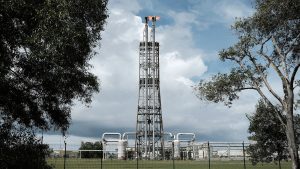
Illustrative image. Photo: Vincent Eisfeld, CC BY-SA 4.0, via Wikimedia Commons — source