The Largest Oil Fields in the World, Ranked

There is no single, universally agreed ranking of the world’s largest oil fields, because “largest” can mean total oil ever discovered, oil still remaining to be produced, or oil actually recovered to date — and several major producing countries, including Kuwait and Russia, do not publish current, field-level reserve figures. By most public estimates, Saudi Arabia’s Ghawar field is the largest ever found, followed by Kuwait’s Burgan field; a separate set of giant offshore fields, led by Saudi Arabia’s Marjan Complex and Safaniya field, rank largest by remaining (not original) reserves.
Why There Isn’t One Clean List
Three different numbers get conflated in most “biggest oil field” rankings circulating online: original (ultimate) recoverable reserves — the total oil a field was ever expected to produce; remaining reserves — what is left to produce today; and cumulative production — what has already been pumped. A field can rank near the top on one measure and much lower on another. Ghawar, for example, is the clear leader on cumulative production (more than 80 billion barrels produced since 1951, per Saudi Vision 2030’s official Ghawar entry) and on original recoverable reserves, but its own 2019 disclosures put remaining reserves at around 48.2 billion barrels — still enormous, but well below the headline 88-billion-barrel figure cited by Saudi officials as recently as 2010. This page separates the two most commonly cited rankings rather than blending them into one table.
Largest Oil Fields by Estimated Original (Ultimate) Recoverable Reserves
These are the legacy “super-giant” fields most often named as the largest ever discovered, ranked by publicly reported estimates of total oil they were expected to ultimately produce (cumulative past production plus remaining reserves). Figures for Kuwaiti and Russian fields in particular are not officially published and vary widely across secondary sources; treat all of the following as public estimates rather than audited reserve statements.
| Rank | Field | Country | Discovered | Estimated ultimate recoverable oil | Notes |
|---|---|---|---|---|---|
| 1 | Ghawar | Saudi Arabia | 1948 | ~80-90+ billion barrels (estimates range up to ~104 billion in some industry compilations) | Largest conventional field ever found; over 80 billion barrels already produced since 1951 |
| 2 | Burgan (Greater Burgan) | Kuwait | 1938 | ~66-70 billion barrels (estimates range 55-72 billion depending on source) | Second-largest conventional field ever found; in production since 1946 under Kuwait Oil Company |
| 3 | Safaniya | Saudi Arabia (offshore, Persian Gulf) | 1951 | ~30-37 billion barrels | World’s largest offshore oil field by original resources; in production since 1957 |
| 4 | Cantarell | Mexico (offshore, Gulf of Mexico) | 1976 | ~18-35 billion barrels (wide published range) | Once among the world’s top producing fields; output has declined sharply since peaking in the mid-2000s |
| 5 | Samotlor | Russia (West Siberia) | 1965 | ~14-16 billion barrels | The Soviet Union’s largest oil field; brought onstream in 1969 |
| 6 | Bolivar Coastal Fields | Venezuela (Lake Maracaibo area) | 1917 | No single clean public figure; the wider Maracaibo Basin is estimated to hold up to ~44 billion barrels of recoverable oil | Actually a complex of several contiguous fields rather than one deposit; among the oldest major oil-producing areas in the world |
Largest Offshore Fields by Remaining Reserves
A different ranking applies if the question is which fields hold the most oil still left in the ground today, rather than the most oil ever discovered. The most detailed public dataset on this comes from Rystad Energy figures reported by Offshore Technology in 2019, which found that four of the world’s five largest offshore fields by remaining reserves sit in the Arabian Gulf.
| Rank | Field | Location | Remaining reserves (boe) | Operator |
|---|---|---|---|---|
| 1 | Marjan Complex | Offshore Saudi Arabia (east coast) | ~17.24 billion | Saudi Aramco |
| 2 | Safaniya | Offshore Saudi Arabia (Persian Gulf) | ~17.14 billion | Saudi Aramco |
| 3 | North Field Expansion | Offshore Qatar | ~11.51 billion (non-associated gas field, listed in boe) | Qatar Petroleum (now QatarEnergy) |
| 4 | Zuluf | Offshore Saudi Arabia (northeast coast) | ~11.37 billion | Saudi Aramco |
| 5 | Upper Zakum | Offshore Abu Dhabi, UAE | ~11.06 billion | Zakum Development Company (ADNOC with ExxonMobil and JODCO as partners) |
Note that this list mixes oil and gas fields measured in barrels of oil equivalent (boe) — North Field Expansion is a non-associated natural gas field, not an oil field in the strict sense, but is included here because it is routinely cited alongside these fields in boe-based reserve rankings. These figures reflect 2019 reporting; Rystad and other analytics firms update such estimates periodically, and no more recent equivalent public dataset was available at the time this page was researched.
What “Giant” and “Super-Giant” Mean
In petroleum geology, a “giant” field is generally defined as one holding 500 million barrels or more of ultimately recoverable oil, while a “super-giant” field holds 5 billion barrels or more. By that standard, every field in the first table above is a super-giant many times over — Ghawar alone is roughly 15-20 times the size of the super-giant threshold. Super-giant fields are rare: most published geological surveys count only a few dozen ever discovered worldwide, and the great majority were found before 1980, concentrated in the Middle East, the former Soviet Union, and the Americas.
Why the Biggest Fields Still Matter
Even as exploration has shifted toward deepwater, shale and other unconventional resources, the handful of super-giant fields named here still account for an outsized share of global supply and of OPEC members’ spare capacity. Ghawar alone has historically supplied a large share of Saudi Arabia’s total crude output, and Gulf offshore fields such as Safaniya and Marjan anchor expansion plans that Aramco and ADNOC continue to invest in. At the other end of the spectrum, fields such as Cantarell show how quickly even a world-class field can decline once past its peak, which is one reason forecasters watch legacy super-giants closely when assessing how fast global conventional oil supply might shrink.
Frequently Asked Questions
What is the largest oil field in the world?
Ghawar in Saudi Arabia is almost universally cited as the largest oil field ever discovered, both by estimated original recoverable reserves and by cumulative production (more than 80 billion barrels produced since 1951).
What is the second-largest oil field in the world?
Kuwait’s Burgan field (sometimes called Greater Burgan) is generally ranked second, with public estimates of ultimate recoverable oil ranging from roughly 55 to 72 billion barrels depending on the source.
What is the largest offshore oil field?
By original recoverable resources, Saudi Arabia’s Safaniya field is usually cited as the largest offshore oil field ever found. By remaining reserves as of 2019 data, Saudi Arabia’s Marjan Complex ranked slightly ahead of Safaniya.
Why do oil field reserve estimates vary so much between sources?
Because “reserves” can refer to original discovered oil, remaining oil still to be produced, or technically versus economically recoverable oil, and because several major producers, including Kuwait and Russia, do not publish current field-level reserve data. Most figures in wide circulation are estimates from industry analysts, not official government or company disclosures.
Related The Daily Energy Pages
- Inside Ghawar, the World’s Largest Oil Field
- What Is Saudi Aramco? Ownership, Leadership and Production
- Saudi Arabia Energy Profile
- Countries With the Largest Oil Reserves
- What Is OPEC?
- What Are Upstream, Midstream and Downstream in Oil and Gas?
- Qatar’s Energy Sector: LNG, North Field and Exports
Sources
- Offshore Technology, “Top five offshore oil fields by remaining reserves” (Rystad Energy data, 2019)
- US Energy Information Administration (EIA) and archived Country Analysis Briefs (Kuwait, Saudi Arabia) for historical reserve ranges
- Saudi Vision 2030 official encyclopedia, Ghawar Field entry
- GeoExpro, “The King of Giant Fields” and related super-giant field summaries
- Financial Times / Dawn, reporting on Saudi Aramco’s 2019 bond prospectus (Ghawar and Safaniya context)
- Industry trade-press compilations of giant and super-giant oil field reserve estimates (Oil & Gas Journal, AAPG-style giant-field surveys), cross-checked against the primary sources above; figures for Burgan, Cantarell, Samotlor and Bolivar Coastal are secondary-source estimates and should be treated as approximate
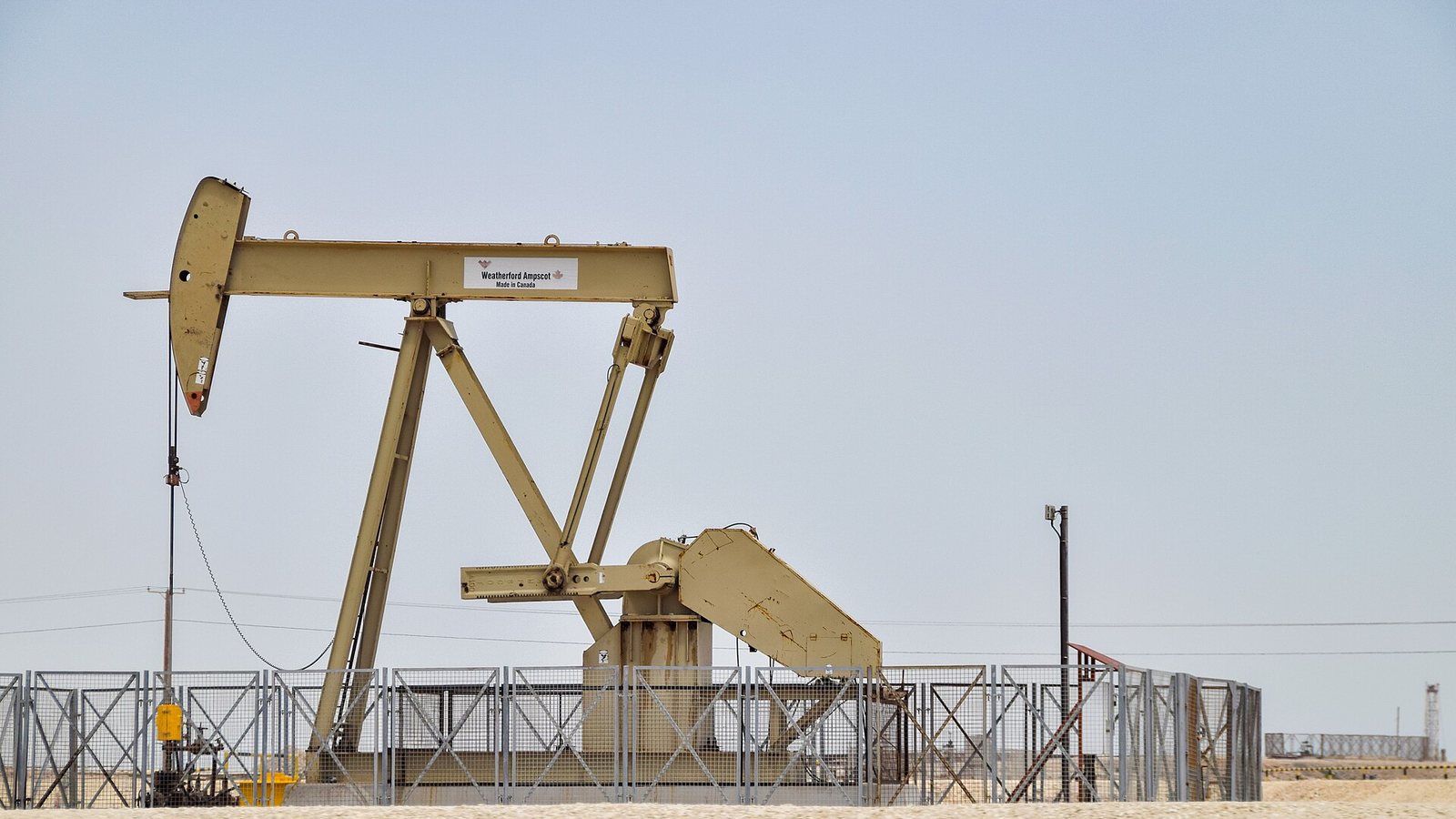
Illustrative image. Photo: Photographer: Mosbatho, CC BY 4.0, via Wikimedia Commons — source