Trump Says South Korea Will Put $54 Billion Into Alaska LNG Pipeline; Seoul Calls It Premature

President Donald Trump said on September 30 that South Korea would invest $54 billion in the long-delayed Alaska LNG project, telling reporters in the Oval Office that the money would help fund an 807-mile pipeline carrying natural gas from Alaska’s North Slope to a liquefaction and export terminal in the southern part of the state. Within hours, a senior official from South Korean President Lee Jae-myung’s ruling party said no such commitment had been finalized and that Seoul would decide only after its own review of the project’s commercial terms.
What the pledge is supposed to cover
The project at the center of the announcement is Alaska LNG, a three-part scheme combining a gas treatment plant at Prudhoe Bay, the 807-mile pipeline to Southcentral Alaska, and a liquefaction terminal at Nikiski for exports to Asia. The U.S. Department of Energy has conditionally approved shipments of up to 20 million tonnes of LNG a year for 30 years once the terminal is built. Alaska Gasline Development Corporation (AGDC), the state-created entity that has pursued the project for more than a decade, handed majority ownership and lead-developer status to Texas-based Glenfarne Group in January 2025, with the state retaining a 25% stake. Engineering firm Worley has since been running front-end engineering and design work that AGDC has said could support a future investment decision. Trump gave no breakdown of how the $54 billion would be split between the pipeline, the treatment plant and the terminal, and the White House did not immediately publish a term sheet.
Framed as part of last year’s tariff deal
Trump tied the figure to the broader investment package South Korea agreed to under last year’s trade deal with Washington, in which Seoul pledged roughly $350 billion in U.S.-bound investment in exchange for a reduction in tariffs on Korean-made cars and parts to 15%. “They have to invest hundreds of billions of dollars,” Trump said of Seoul, framing the Alaska pipeline as one way that money could be spent. Commerce Secretary Howard Lutnick, Interior Secretary Doug Burgum, Energy Secretary Chris Wright and Alaska Senator Dan Sullivan, a longtime advocate for the pipeline, joined Trump for the announcement, which came as Sullivan faces a competitive re-election race next month.
Seoul says the decision is not made
South Korea’s response undercut the certainty of Trump’s framing within hours. Han Jeoungae, secretary-general of the ruling Democratic Party, told reporters in Seoul that the government “will decide whether to invest in the Alaska LNG project only after thoroughly reviewing it,” adding that Trump’s remarks were “intended to emphasize the U.S. position” and that any eventual decision would follow “domestic legal procedures and the principle of commercial viability.” South Korea’s government has not named a company, consortium or investment vehicle that would carry out the pledge, and officials have given no timetable for when a review might conclude.
A pattern of pledges that have not converted into a final investment decision
Thursday’s announcement is the latest in a string of statements tying prospective Asian buyers to Alaska LNG without producing a binding commitment. AGDC and Glenfarne have spent the past two years courting Japanese and South Korean buyers and investors as anchor customers for the Nikiski terminal, but the project has not reached a final investment decision, and the FEED study that would normally precede one has continued through 2026. The pledge also lands the same week that Shell and its four partners took an actual final investment decision on a separate project, the Phase 2 expansion of LNG Canada in Kitimat, British Columbia, underscoring the gap between an FID — a binding commitment of capital — and a political pledge of future investment. Asian buyers have additional reasons to diversify LNG supply this year: Qatar, one of the world’s largest LNG exporters and a major supplier to Northeast Asia, has extended force majeure on some cargoes into December because of disruption linked to the Strait of Hormuz, a dynamic that has pushed several Asian utilities to look for new, geographically diverse sources of gas, including existing long-term Qatari contracts that already supply South Korea and Japan.
What would have to happen next
For the $54 billion figure to turn into construction spending, AGDC and Glenfarne would need South Korean investors to sign binding agreements, likely alongside offtake contracts that give a Korean buyer a contractual right to Alaskan natural gas volumes, and the project as a whole would still need a final investment decision from its backers. None of those steps has occurred. Sullivan’s office and AGDC did not immediately respond to requests for additional detail on the structure of the pledge, and the Korean embassy in Washington referred questions to Seoul.
Sources
- PBS NewsHour, “Trump announces $54 billion South Korean investment in Alaska natural gas pipeline,” September 30, 2026 — for the announcement, pipeline length and timeline, and South Korea’s hedging statement.
- ABC News, “Trump will unveil $54 billion in South Korean investment in Alaska,” September 30, 2026 — for attendees at the Oval Office event and the quote from Han Jeoungae.
- U.S. Department of Energy / Alaska Gasline Development Corporation project filings, via boem.gov and agdc.us — for the 20 mtpa / 30-year conditional export approval and project structure.
- Barchart, “Alaska’s mega-pipeline gets a second chance in the Trump energy era,” 2026 — for AGDC’s transfer of lead-developer status to Glenfarne and FEED study status.
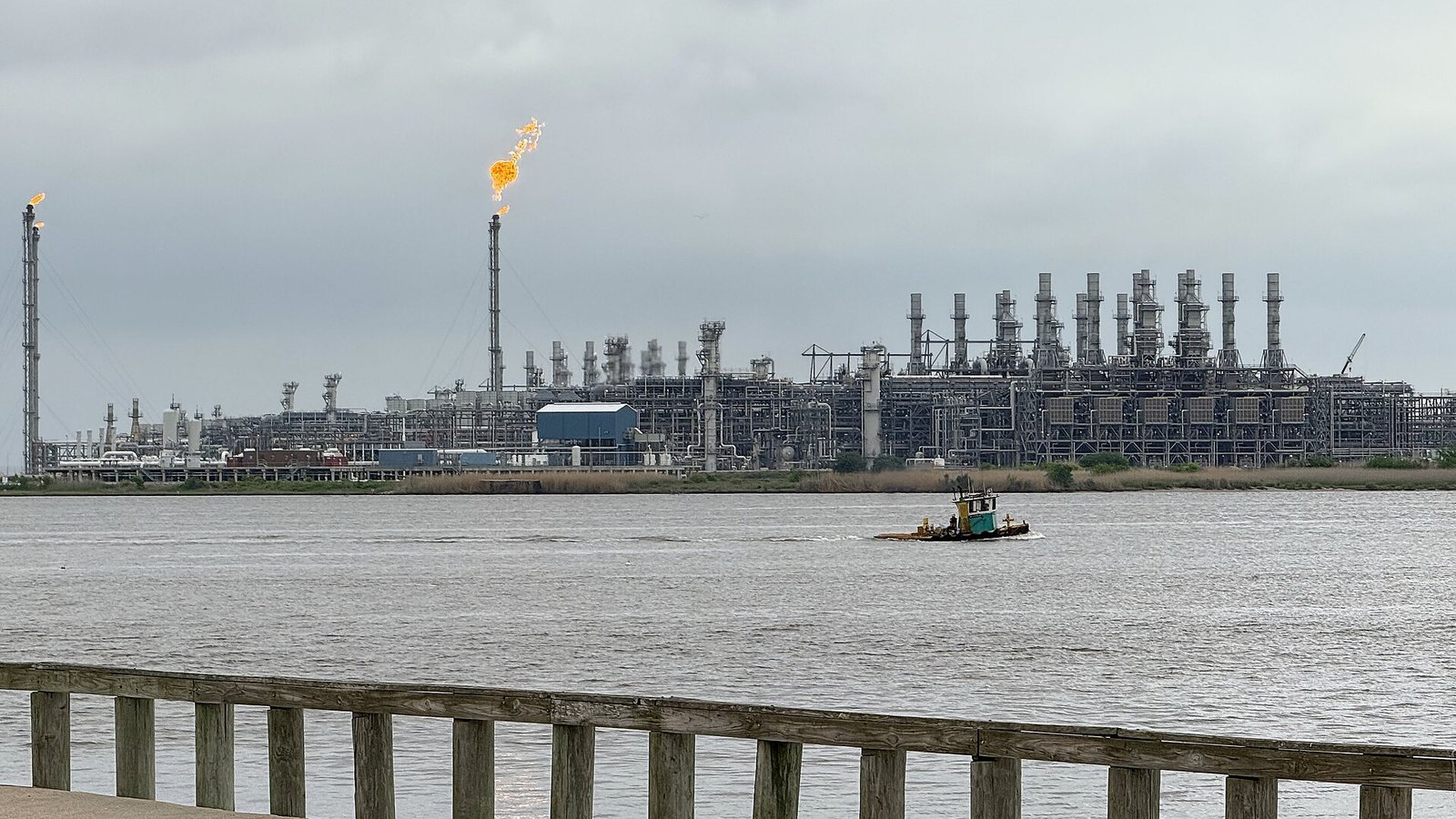
Illustrative image. Photo: Quintin Soloviev, CC BY 4.0, via Wikimedia Commons — source