What Is an FPSO (Floating Production, Storage and Offloading Vessel)?

Last updated: November 23, 2026
FPSO stands for Floating Production, Storage and Offloading vessel — a ship-shaped offshore facility that processes crude oil (and sometimes gas) produced from subsea wells, stores it on board, and periodically offloads it to shuttle tankers for transport to shore. FPSOs let oil and gas companies develop offshore fields, including those in deep or remote waters, without building a fixed platform or a pipeline to land.
Definition
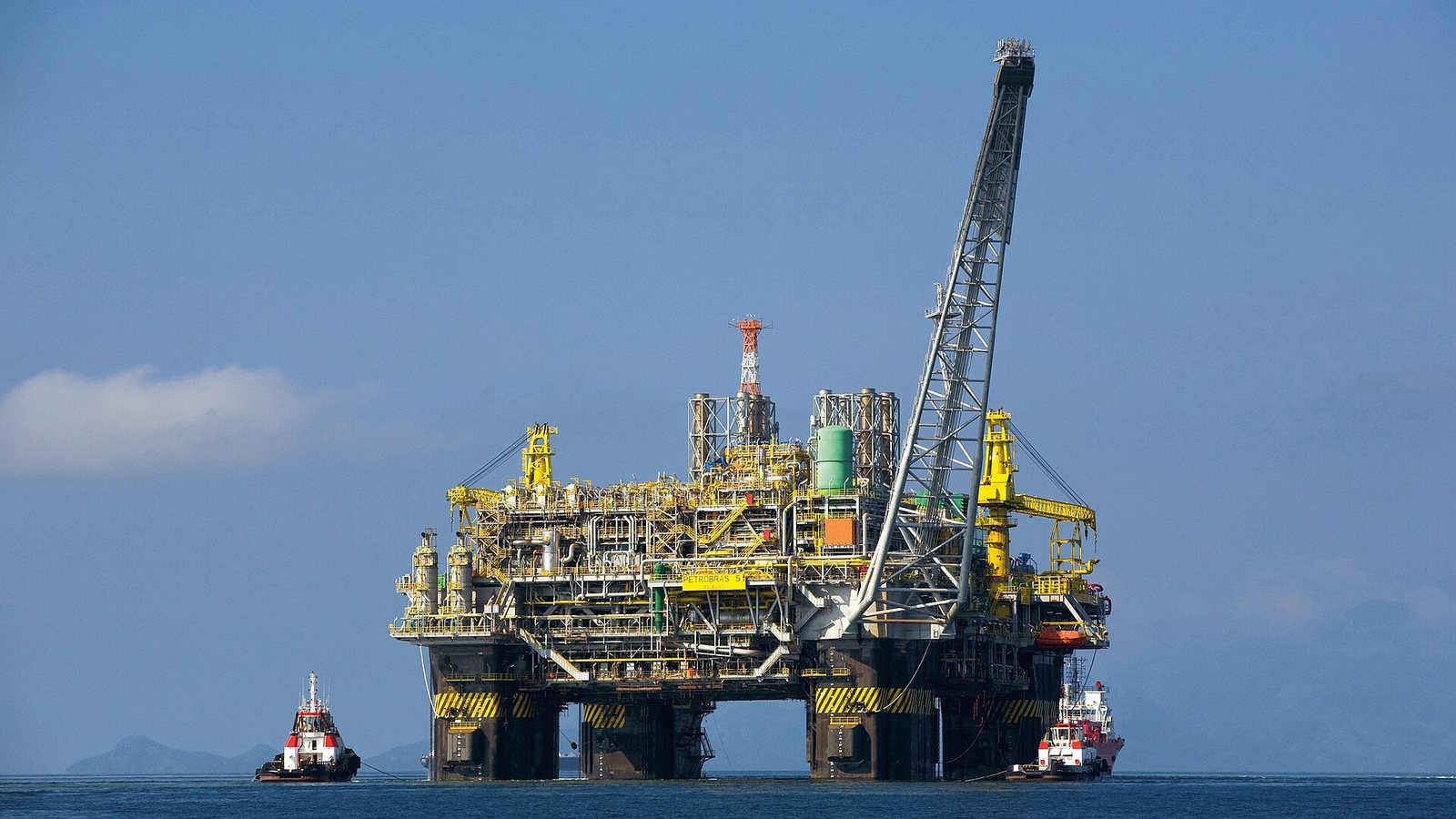
An FPSO is a large vessel, often a converted oil tanker or a purpose-built hull, moored above or near an offshore oil or gas field. It receives unprocessed well fluids through subsea risers, separates oil, gas, and water on its topside processing equipment, stores the stabilized crude in tanks within its hull, and transfers that crude to shuttle tankers for export. A closely related unit, the FSO (Floating Storage and Offloading vessel), performs the storage and offloading functions but without onboard processing capability.
How It Works
Well fluids from subsea wells travel through flexible risers to the FPSO, typically connecting through a rotating turret mooring system that lets the vessel “weathervane” — swing to face the most favorable direction relative to wind, waves, and current while remaining moored in place. Onboard, the fluid stream passes through separators that split it into oil, natural gas, and water. The oil is stabilized and stored in cargo tanks within the hull; associated gas may be used to power the vessel, reinjected into the reservoir, or in some cases exported. Once enough crude has accumulated, it is transferred to a shuttle tanker, either by a tandem offloading hose (the tanker trails behind the FPSO) or side-by-side mooring, depending on sea conditions.
Why It Matters
FPSOs are the dominant production method for deepwater and ultra-deepwater oil fields that are too far from shore, or in water too deep, for a fixed platform or subsea pipeline to be economical. Because an FPSO combines processing, storage, and export in a single mobile unit, it can be redeployed from one field to another once a field is depleted, and does not require a new pipeline to be built for every project. This has made FPSOs central to the development of offshore basins such as Brazil’s pre-salt fields and the Guyana-Suriname basin.
Where It Is Used
Petrobras operates one of the largest FPSO fleets in the world, concentrated in Brazil’s pre-salt basins offshore Rio de Janeiro and São Paulo states, where most of the country’s oil production now comes from FPSO-based developments (see Brazil’s Energy Sector). ExxonMobil has built its entire offshore Guyana development around a series of FPSOs on the Stabroek block, including units supporting the Liza and Uaru projects, with further vessels sanctioned for projects such as Longtail. Specialist owner-operators including SBM Offshore and MODEC lease FPSOs to oil majors and national oil companies on long-term charters rather than operators owning every vessel outright.
Estimates vary on the exact number of FPSOs operating worldwide at any given time — industry trackers have put active or contracted fleets anywhere from roughly 170 to over 260 units as of 2025-2026, with the range reflecting differences in whether idle, under-construction, and FSO units are counted alongside producing FPSOs.
Key Characteristics
- Mobile and field-agnostic — an FPSO can be moved to a new field once production from its original location declines, unlike a fixed platform.
- No pipeline to shore required — oil is exported by shuttle tanker rather than through a subsea export pipeline, which lowers upfront infrastructure costs for remote fields.
- Large onboard storage — cargo capacity varies by design, with some large hulls able to store well over a million barrels of crude.
- Converted or purpose-built — some FPSOs are converted from existing oil tankers (VLCCs), while others are newbuild hulls designed specifically for the role.
- Distinct from FSO and FLNG — an FSO stores and offloads but does not process; a floating LNG (FLNG) facility performs the equivalent role for natural gas, liquefying it on board rather than exporting crude oil.
Related Technologies
FPSOs are part of the broader family of floating production systems that also includes FSOs, semi-submersible production platforms, tension-leg platforms, and FLNG vessels. They connect upstream subsea well infrastructure to downstream crude oil shipping and, ultimately, to onshore refineries.
Real-World Examples
- Guyana’s Stabroek block: ExxonMobil and partners have sanctioned a series of FPSOs — including Liza Destiny, Liza Unity, Prosperity, and Uaru’s host vessel — that together have taken Guyana’s offshore oil output past 1.1 million barrels per day, with additional projects such as Longtail still to come online.
- Brazil’s pre-salt basins: Petrobras relies on a large FPSO fleet to produce from deepwater, high-pressure pre-salt reservoirs off Rio de Janeiro and São Paulo, where most new Brazilian oil production growth has originated over the past decade.
FAQ
What does FPSO stand for?
Floating Production, Storage and Offloading vessel — a ship-shaped offshore facility that processes, stores, and exports crude oil (and sometimes gas) from subsea wells.
What is the difference between an FPSO and an FSO?
An FPSO processes well fluids on board (separating oil, gas, and water) before storage; an FSO (Floating Storage and Offloading vessel) only stores and offloads already-processed oil, without onboard processing equipment.
How does an FPSO offload its oil?
Stabilized crude is transferred from the FPSO’s storage tanks to a shuttle tanker, either through a tandem offloading hose with the tanker trailing behind the FPSO, or via side-by-side mooring, depending on sea conditions.
Can an FPSO be moved to a different oil field?
Yes. Unlike a fixed platform, an FPSO can be disconnected from its mooring and risers and towed or sailed to a new location once a field is developed, redeployed, or depleted.
Related The Daily Energy Pages
- Petrobras: Ownership, Leadership and Major Projects
- Brazil’s Energy Sector: Pre-Salt Oil and Renewables
- ExxonMobil Starts Uaru Production, Lifting Guyana’s Oil Capacity to 1.1 Million Barrels a Day
- ExxonMobil Sanctions Longtail, Its Eighth Project Offshore Guyana
- What Is LPG and How Is It Different From LNG?
Sources
- Rigzone, “How Do FPSOs Work?” and related How It Works explainer series, rigzone.com
- Offshore Magazine / Offshore-mag.com, SBM Offshore fleet and FPSO deployment reporting
Illustrative image. Photo: Divulgação Petrobras / ABr, CC BY 3.0 br, via Wikimedia Commons — source