Which Countries Are Building Nuclear Reactors?


Last updated: 2026-11-28
As of November 25, 2026, 82 nuclear reactors carry an official “under construction” status worldwide, according to World Nuclear Association (WNA) data – but six of those, in Japan, Ukraine, Brazil and Argentina, have been stalled for years. Excluding the suspended units, about 76 reactors are in active construction across 12 countries, led by China (42), India (8) and Russia (7).
How Many Reactors Are Actually Being Built?
Counts of nuclear reactors “under construction” vary by source because trackers differ on whether to include projects that have been formally suspended. The IAEA’s Power Reactor Information System (PRIS) and the World Nuclear Association both maintain reactor-by-reactor databases, and both count a reactor as under construction once first concrete has been poured for the reactor building, until it is connected to the grid – regardless of whether work has since stopped.
The WNA’s database, last updated November 25, 2026, lists 82 reactors under construction (89,673 MWe gross) in 16 countries. Of those, six have been suspended for extended periods and are not seeing active work: two in Japan (halted since the 2011 Fukushima accident), two in Ukraine (Khmelnitski 3 and 4, affected by the war), one in Brazil (Angra 3, repeatedly stalled since the 1980s) and one in Argentina (the small Carem25 demonstration reactor, held up by funding gaps). Removing those leaves roughly 76 reactors in active construction. Other trackers using narrower definitions report lower figures – for example, some PRIS-based summaries have cited numbers in the low-to-mid 60s at different points in 2026 – so readers comparing figures across sources should check what each one excludes before treating the numbers as directly comparable.
Country-by-Country: Reactors Under Construction
| Country | Reactors under construction | Gross MWe | Status notes |
|---|---|---|---|
| China | 42 | 47,640 | All active; mostly Hualong One and CAP1000 designs |
| India | 8 | 6,600 | All active; includes Kudankulam 3–6 and the Kalpakkam fast breeder |
| Russia | 7 | 5,342 | All active; includes two small RITM-200S units and the BREST-OD-300 fast reactor |
| South Korea | 4 | 5,710 | All active; Saeul 3–4 and Shin Hanul 3–4 (APR-1400) |
| Turkey | 4 | 4,800 | All active; Akkuyu 1–4 (VVER-1200) – see TDE’s Akkuyu tracker |
| Egypt | 4 | 4,800 | All active; El Dabaa 1–4 (VVER-1200) |
| United Kingdom | 2 | 3,440 | All active; Hinkley Point C1–2 (EPR) |
| Ukraine | 2 | 2,178 | Both suspended (Khmelnitski 3–4; wartime disruption) |
| Japan | 2 | 2,756 | Both suspended since 2011 (Ohma 1, Shimane 3) |
| Bangladesh | 1 | 1,200 | Active (Roopur 2); Roopur 1 reached first grid connection in 2026 |
| Hungary | 1 | 1,200 | Active (Paks II-1, VVER-1200) |
| Brazil | 1 | 1,405 | Suspended (Angra 3; intermittently stalled since the 1980s) |
| Iran | 1 | 1,057 | Active (Bushehr 2, VVER-1000) |
| Pakistan | 1 | 1,200 | Active (Chashma 5, Hualong One) |
| Canada | 1 | 316 | Active; Darlington SMR 1 (BWRX-300) – first small modular reactor under construction at a G7 utility site |
| Argentina | 1 | 29 | Suspended (Carem25 demonstration SMR; funding gaps) |
| World total | 82 | 89,673 | Includes 6 suspended reactors (2,756 + 2,178 + 1,405 + 29 MWe) |
Data: World Nuclear Association, “Plans for New Reactors Worldwide,” updated November 25, 2026. “Gross MWe” is rated output before subtracting the plant’s own power use; grid-connection years in the underlying WNA table are the latest announced or estimated dates, not guarantees.
Where Nuclear Is Already Built: Top Operating Fleets
Construction activity is concentrated in a different set of countries than today’s largest operating fleets. The world had 444 operating power reactors as of November 27, 2026, totaling about 406,748 MWe and supplying roughly 9% of global electricity, per the World Nuclear Association. The United States (94 reactors), China (65), France (57), Russia (34) and Japan (33, though fewer are actually running than are formally operable) hold the five largest fleets. For the full operating-reactor ranking, methodology notes and nuclear-share-of-electricity figures by country, see TDE’s companion page, Countries With the Most Nuclear Reactors. This page focuses specifically on what is being newly built, not what is already running.
The Planning Pipeline: Who’s Next
Beyond active construction, the WNA tracks two further categories, each with a specific meaning that is easy to conflate with “under construction”:
- Planned – approvals, funding or site commitments are substantially in place, with operation generally expected within about 15 years. The WNA counts 118 planned reactors (106,883 MWe) worldwide, led by China (38), Russia (23), India (14) and Romania (8).
- Proposed – specific programmes or sites have been named, but financing, regulatory approval and timing remain very uncertain. The WNA counts 336 proposed reactors (299,332 MWe), led by China (142), India (26), the United States (25) and Poland (23).
None of these figures should be read as construction: a “planned” or “proposed” reactor has not broken ground, and many proposed projects are never built. Poland, for example, has zero reactors under construction today despite having 7 planned and 23 proposed – its first unit, at Lubiatowo-Kopalino, remains in the pre-construction, financing and licensing stage.
Why Nuclear Construction Is Accelerating Now
The International Energy Agency said in its World Energy Outlook 2026, published in late November 2026, that global nuclear capacity under construction was approaching 90 GW in mid-2026 – the highest level in more than 35 years – and that more than 50 countries now hold some form of nuclear plan or target, including for small modular reactors (see TDE’s coverage of the IEA outlook). The agency linked the acceleration to two forces working together: energy-security concerns following Gulf supply disruptions, and surging electricity demand tied to data centers and artificial intelligence.
That second driver shows up directly in grid-planning data. The North American Electric Reliability Corporation (NERC) found in its 2026–27 winter reliability assessment that batteries and gas-fired plants added about 26.2 GW of peak winter capacity across North America this year – but that data-center-driven demand growth is outpacing those additions in most regions, a gap utilities and regulators cite as part of the case for new nuclear capacity, including reactor restarts such as the one under review at Three Mile Island Unit 1 in Pennsylvania.
Is This a Genuine “Nuclear Comeback”?
The scale is real but should be kept in proportion. The roughly 76 reactors in active construction worldwide amount to about 17% of today’s 444-reactor operating fleet – a meaningful pipeline, and, per the IEA, the largest concurrent construction effort since the 1980s. But it is not yet close to the pace of nuclear’s first boom: in the decade from 1981 to 1990 alone, more than 200 reactors were connected to grids worldwide, versus roughly 76 currently under active construction globally today. Whether the current pipeline turns into a comparable wave depends largely on how many of today’s 118 planned and 336 proposed reactors actually reach groundbreaking – historically, only a fraction of proposed projects do.
What About Taiwan?
Taiwan does not appear in the WNA’s under-construction table at all, and that is worth explaining given renewed attention to the island’s nuclear policy. Taiwan shut down its last operating reactor, Maanshan Unit 2, in May 2025, leaving it with zero operating and zero under-construction nuclear capacity. On November 28, 2026, Taiwanese voters cast ballots in a nationwide referendum on whether to formally abandon the island’s “nuclear-free homeland” policy; results were expected Saturday night local time and were not yet available when this page was last updated (see TDE’s coverage of the referendum). Even if the referendum passes, Taiwan’s Nuclear Safety Commission has said further safety assessments would be required before idled reactors could resume supplying the grid – and a restart of an existing, already-built plant is a different undertaking from the new-build construction tracked on this page.
Frequently Asked Questions
How many nuclear reactors are under construction in the world?
82 reactors carry “under construction” status worldwide, per World Nuclear Association data updated November 25, 2026. Six of those have been suspended for years, leaving about 76 in active construction.
Which country is building the most nuclear reactors?
China, with 42 reactors under construction (47,640 MWe gross) – more than half of the world’s actively building reactors, according to the World Nuclear Association.
Is nuclear power making a comeback?
Construction activity is at its highest level in more than 35 years, according to the International Energy Agency’s World Energy Outlook 2026, driven by energy-security concerns and rising electricity demand from data centers and AI. But it remains well below the pace of nuclear’s 1980s building boom.
Why is nuclear construction increasing now?
The IEA points to two overlapping drivers: countries diversifying energy supply after 2026’s Gulf-related disruptions, and rapid electricity-demand growth from data centers and AI, which grid operators such as NERC say is outpacing new generation capacity in several regions.
Is Taiwan building new nuclear reactors?
No. Taiwan has zero reactors operating or under construction as of late November 2026. A November 28, 2026 referendum asked voters whether to reverse the island’s nuclear-free policy, which could eventually allow a restart of idled plants – a different process from building a new reactor.
Related The Daily Energy Pages
- Countries With the Most Nuclear Reactors
- Akkuyu Nuclear Power Plant Tracker
- What Is Rosatom? Russia’s Nuclear Giant Explained
- Small Modular Reactor (SMR) Explained
- Barakah Nuclear Power Plant
- IEA: 2026 Energy Crisis Is Reinforcing a Global Nuclear Comeback
- Taiwan Votes on Reviving Nuclear Power as AI-Driven Demand Grows
- Why Can’t We Just Build More Solar Power?
- Turkey’s 120 GW Renewable Target: Where Does It Stand?
Sources
- World Nuclear Association – “Plans for New Reactors Worldwide,” updated November 25, 2026
- World Nuclear Association – “Nuclear Power in the World Today,” updated November 27, 2026
- IAEA Power Reactor Information System (PRIS)
- International Energy Agency – World Energy Outlook 2026, via The Daily Energy reporting, November 21, 2026
- North American Electric Reliability Corporation (NERC) – 2026–27 Winter Reliability Assessment, via The Daily Energy reporting, November 27, 2026
- The Daily Energy – “Taiwan Votes on Reviving Nuclear Power as AI-Driven Demand Grows,” November 28, 2026
- Taiwan Central Election Commission; Taiwan Ministry of Economic Affairs; Taiwan Nuclear Safety Commission, as cited in The Daily Energy reporting
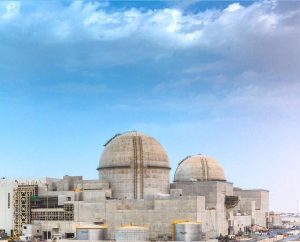
Illustrative image. Photo: Nuclear Regulatory Commission, Public domain, via Wikimedia Commons — source