


Turkey’s 120 GW Renewable Target: Where Does It Stand?

Last updated: 2026-11-27
Turkey had about 43.76 gigawatts (GW) of combined wind and solar capacity installed as of an October 2026 report citing grid operator TEİAŞ data – roughly 36% of the government’s long-standing target of 120 GW by 2035. A newer, more ambitious roadmap unveiled in November 2026, “Milli Enerji 2040,” layers a separate 175 GW by 2040 wind-and-solar goal on top of that 2035 figure. The two targets run on different clocks and should not be read as the same number restated.
The Target: What Was Promised, and By Whom
Turkey’s headline renewable capacity target is 120,000 MW (120 GW) of combined wind and solar power by 2035, first announced by Energy and Natural Resources Minister Alparslan Bayraktar on October 21, 2024, at an energy-transition event in Istanbul, as part of a “Renewable Energy 2035 Road Map” the ministry pegged at roughly $80 billion in investment. The ministry has reaffirmed the figure since, including in a May 2026 ministry article describing it as being “in line with President Erdoğan’s target.”
In early November 2026 the ministry unveiled a broader, longer-dated roadmap called “Milli Enerji 2040” (National Energy 2040), targeting $500 billion in combined public and private investment aimed at ending Turkey’s reliance on imported oil and gas (see TDE’s full coverage of the plan). That roadmap sets a separate, later goal of 175 GW of combined wind and solar capacity by 2040 (112 GW solar + 63 GW wind), within a wider target of 281 GW of total installed power capacity across all sources by 2040. Readers should treat “120 GW by 2035” and “175 GW by 2040” as two separate, sequential targets from the same ministry rather than the same promise expressed two ways – the 2040 figure is newer, more distant and not yet tested against the same years of build-out data as the 2035 one.
Current Progress: The Numbers
| Metric | Value | Period | Source |
|---|---|---|---|
| Combined wind + solar installed capacity | 39,215 MW (24,669 MW solar + 14,546 MW wind) | End-November 2025 | T.C. Enerji ve Tabii Kaynaklar Bakanlığı (enerji.gov.tr), released Dec 22, 2025 |
| Combined wind + solar installed capacity | ~41,000 MW (about one-third of the 120 GW target, per the Minister) | End-January 2026 | Ministry press release; Minister Bayraktar statement |
| Combined wind + solar installed capacity (latest) | 43,762 MW (28,222 MW solar, 22.2% of total + 15,540 MW wind, 12.2% of total) | Reported October 25, 2026 | Anadolu Agency / Foreks, citing TEİAŞ grid data |
| Total installed power capacity (all sources) | 127,355 MW | Same report, October 25, 2026 | Anadolu Agency / Foreks, citing TEİAŞ |
| 2026 YEKA tenders: new wind + solar capacity awarded (not yet operating) | 2,285 MW (785 MW solar + 1,500 MW wind) | Announced Nov 3, 2026 | Ministry of Energy and Natural Resources; see TDE’s YEKA RES/GES-2026 tracker |
| 2035 target (official) | 120,000 MW (120 GW) combined wind + solar | Target year 2035 | Ministry of Energy and Natural Resources, announced Oct 21, 2024; reaffirmed May 2026 |
| 2040 target (newer, separate roadmap) | 175,000 MW (175 GW) combined wind + solar (112 GW solar + 63 GW wind) | Target year 2040 | “Milli Enerji 2040” roadmap, unveiled early November 2026 |
Figures reported by different outlets on different dates are not perfectly reconcilable to a single monthly government statistic – the Ministry and TEİAŞ do not publish one standardized combined-capacity figure every month in English. See Data Caveats below.
How Far Along Is Turkey? A Visual Guide
43.76 GW operating (as reported Oct 25, 2026, citing TEİAŞ) against the official 120 GW target for 2035. Methodology: latest reported combined wind+solar installed capacity ÷ the 120 GW 2035 target; this is not an official government progress metric, and the ministry’s own “about one-third” statement (from January 2026 data) is consistent with this estimate.
The Pace Needed to Get There
Getting from roughly 43.76 GW today to 120 GW by 2035 means adding about 76 GW of wind and solar capacity over the next nine years. Energy think tank Ember estimates Turkey needs to add about 8 GW a year to stay on track – a pace above the 6.5 GW Ember says the country added in 2025, its record year to date. The 2,285 MW awarded in the November 2026 YEKA tenders (see below) is a single year’s competitive-auction slice of that required pace, not the whole annual total, since Turkey also adds capacity outside the YEKA tender mechanism (unlicensed rooftop and distributed solar, for example).
Awarded but Not Yet Built: The 2026 YEKA Tenders
In November 2026, the Ministry allocated 2,285 MW of new wind and solar connection capacity across 18 project sites under its 2026 YEKA RES (wind) and YEKA GES (solar) competitive tenders – 1,500 MW of wind (all seven competitions awarded) and 785 MW of solar (11 of 14 sites awarded; three drew no bids). This capacity is contracted, not yet operating: winners still need to finance, build and commission their plants before this adds to the 43.76 GW figure above. Full site-by-site detail, price bands and reported winning companies are tracked on TDE’s dedicated Turkey Energy Tenders: YEKA RES-2026 and GES-2026 Results page.
Why the Gap: What’s Slowing (and Driving) the Build-Out
1. Grid investment is the bottleneck, not demand for permits. The “Milli Enerji 2040” roadmap itself sets aside roughly $116 billion for transmission and distribution upgrades, alongside about $100 billion earmarked for new solar and wind capacity – an implicit admission that moving power out of new wind and solar sites, not just building them, is a constraint.
2. The YEKA mechanism is working but slow relative to the scale needed. A single YEKA round adds roughly 1.5–2.4 GW of new connection capacity; at that pace, repeated annually, YEKA auctions alone would not close a 76 GW gap by 2035 without either larger rounds or faster non-auction additions (distributed solar, unlicensed generation) filling the rest.
3. Capacity targets and generation-mix targets are different problems. Even as wind and solar approach roughly a third of installed capacity, coal remains Turkey’s single largest source of actual electricity generation (cited at roughly 34% in Ember data referenced in the Milli Enerji 2040 rollout), since solar and wind generate intermittently while coal and gas plants can run around the clock. Reaching 120 GW of installed capacity does not by itself guarantee wind and solar supply 120 GW worth of Turkey’s actual electricity consumption. TDE’s grid-curtailment explainer covers why that gap between installed capacity and usable generation exists in markets well ahead of Turkey on renewables penetration.
Data Caveats
- Turkey’s Ministry of Energy and Natural Resources and TEİAŞ do not publish a single, standardized English-language monthly combined wind+solar figure; the numbers on this page are drawn from a mix of direct ministry releases (enerji.gov.tr) and wire-service reporting (Anadolu Agency, via Foreks) that cites TEİAŞ data, and exact reporting dates sometimes lag the data period by several weeks.
- The 120 GW/2035 and 175 GW/2040 figures are two separate targets announced roughly two years apart by the same ministry; this page treats them as sequential, not interchangeable, and will update if the ministry formally supersedes one with the other.
- The 2,285 MW awarded in the 2026 YEKA tenders is contracted capacity, not yet reflected in the 43.76 GW operating figure; see TDE’s YEKA tracker for site-by-site status as projects move toward construction.
Frequently Asked Questions
What is Turkey’s renewable energy target?
Turkey’s official target, announced by the Ministry of Energy and Natural Resources in October 2024, is 120,000 MW (120 GW) of combined wind and solar capacity by 2035. A newer, separate “Milli Enerji 2040” roadmap unveiled in November 2026 adds a further target of 175 GW of wind and solar by 2040.
How much solar and wind power does Turkey actually have right now?
About 43.76 GW was installed as of an October 2026 report citing TEİAŞ grid data (28,222 MW solar, 15,540 MW wind) – roughly 36% of the 120 GW target for 2035.
Will Turkey hit its 120 GW target by 2035?
It is on an upward trajectory but behind the pace analysts say is needed. Energy think tank Ember estimates Turkey must add about 8 GW of wind and solar capacity a year to reach 120 GW by 2035, above the 6.5 GW added in 2025, its strongest year so far.
What is Turkey’s Milli Enerji 2040 plan?
Milli Enerji 2040 (“National Energy 2040”) is a roadmap unveiled by the Ministry of Energy and Natural Resources in early November 2026, targeting $500 billion in combined public and private investment, 281 GW of total installed power capacity, and 175 GW of combined wind and solar capacity, by 2040.
Related The Daily Energy Pages
- Turkey Energy Tenders: YEKA RES-2026 and GES-2026 Results
- Turkey Unveils $500 Billion Energy Plan to Cut Imports by 2040
- Turkey’s Energy Sector: Mix, Imports and Investments
- Where Does Turkey Get Its Natural Gas?
- Akkuyu Nuclear Power Plant Tracker
- Saudi Arabia’s Renewable Target – Where Does It Stand?
- Solar Incentives in Turkey: YEKDEM to YEKA (2026)
- Why Can’t We Just Build More Solar Power?
Sources
- T.C. Enerji ve Tabii Kaynaklar Bakanlığı (enerji.gov.tr) – renewable installed-capacity release, December 22, 2025 (November 2025 data)
- T.C. Enerji ve Tabii Kaynaklar Bakanlığı (enerji.gov.tr) – wind capacity and 120 GW/2035 target article, May 12, 2026
- Anadolu Agency (AA) / Foreks – “Türkiye’nin elektrik kurulu gücü 127 bin 355 megavata ulaştı,” October 25, 2026, citing TEİAŞ data
- Hurriyet Daily News – “Türkiye targets 120,000 MW in wind and solar by 2035: Minister,” October 2024
- Ember – Türkiye Electricity Review 2026, wind and solar analysis, 2026
- Ministry of Energy and Natural Resources – Milli Enerji 2040 roadmap launch, via TDE reporting and pv magazine, November 2026
- Ministry of Energy and Natural Resources – YEKA RES-2026 / GES-2026 Şartname (Official Gazette No. 33307, July 11, 2026) and Minister Bayraktar statement, November 3, 2026, via TDE’s YEKA tracker
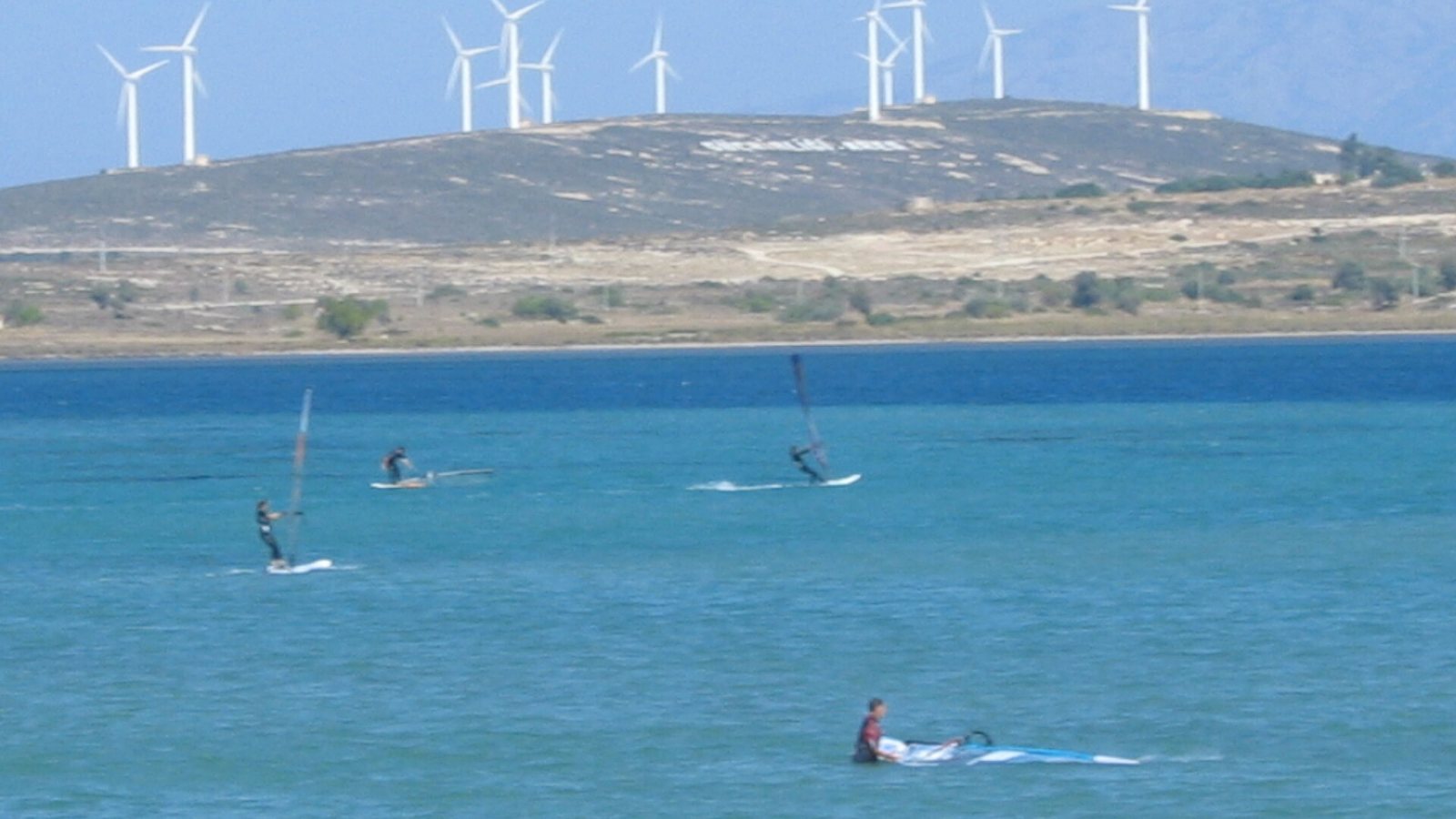
Illustrative image. Photo: 35_egeturk, CC BY-SA 3.0, via Wikimedia Commons — source

_-_panoramio.jpg)