Hornsea Offshore Wind Farm: Capacity, Ownership and Status

Last updated: November 18, 2026
The Hornsea Zone is a cluster of offshore wind farms being developed by Ørsted roughly 89–165 km off the Yorkshire coast in the North Sea. Two phases are already operating, a third is under construction and due in 2027, and a fourth was shelved in 2025. Taken together, Hornsea 1 and Hornsea 2 are already the largest pair of operating offshore wind farms in the world, and Hornsea 3 — at roughly 2.9GW — is on track to become the single largest offshore wind farm ever built once commissioned.
Project Snapshot
| Project | Hornsea Zone (Hornsea 1, 2, 3 and the shelved Hornsea 4) |
| Developer / EPC lead | Ørsted A/S |
| Equity owners (current) | Hornsea 1 — Ørsted and a Brookfield-led institutional group; Hornsea 2 — Ørsted, AXA IM Alts, Crédit Agricole Assurances and the same Brookfield-led group; Hornsea 3 — Ørsted (50%) and Apollo-managed funds (50%) |
| Operator | Ørsted (construction and long-term O&M across all phases, regardless of equity partner) |
| Country / Location | United Kingdom — North Sea, 89–165 km off the Yorkshire coast |
| Technology | Offshore wind; Siemens Gamesa turbines across all built/building phases (7MW for Hornsea 1, 8MW for Hornsea 2, 14MW SG 14-236 DD for Hornsea 3) |
| Combined capacity | Operating: 2.52GW (Hornsea 1: 1.2GW + Hornsea 2: 1.32GW). Under construction: Hornsea 3 at ~2.9GW. Shelved: Hornsea 4 at 2.4GW. |
| Investment | Hornsea 3 alone is reported at roughly £8.5 billion; full-zone cumulative capital spend has not been disclosed as a single figure |
| Offtaker / revenue support | UK Contracts for Difference (CfD) with the Low Carbon Contracts Company — Hornsea 3 holds a 15-year CfD, most of its capacity at £37.35/MWh (2012 prices, AR4) with a smaller re-bid tranche at £54.23/MWh (AR6) |
| Status | Hornsea 1 — Operational (since 2019); Hornsea 2 — Operational (since 2022); Hornsea 3 — Under construction (targeting 2027); Hornsea 4 — Discontinued in its current form (since May 2025) |
Phases at a Glance
| Phase | Capacity | Turbines | Status (as of Nov 2026) | Current equity ownership |
|---|---|---|---|---|
| Hornsea 1 | 1.2GW | 174 × Siemens Gamesa 7MW | Operational since 2019 | Ørsted sold 50% to Global Infrastructure Partners (GIP) in 2018; in January 2025 Ørsted sold a further 12.45-percentage-point minority stake, shared across a four-asset UK portfolio, to Brookfield |
| Hornsea 2 | 1.32GW | 165 × Siemens Gamesa SG 8.0-167 DD (8MW) | Operational since August 2022; was briefly the world’s largest offshore wind farm | Originally 100% Ørsted; in 2022 Ørsted sold 50% to a consortium of AXA IM Alts (25%) and Crédit Agricole Assurances (25%); Ørsted’s remaining share was further reduced by the January 2025 Brookfield portfolio sale |
| Hornsea 3 | ~2.9GW (197 turbines; some sources cite 2,852–2,955MW) | 197 × Siemens Gamesa SG 14-236 DD (14MW) | Under construction; monopile and cable installation under way through 2026; targeting commissioning in 2027 | Ørsted sold 50% to Apollo-managed funds (announced November 2025, completed December 30, 2025); Ørsted retains 50% and full EPC/O&M responsibility |
| Hornsea 4 | 2.4GW (planned) | Not finalized — contracts terminated | Discontinued “in its current form” since May 7, 2025 | 100% Ørsted (development rights retained; no project company equity sold) |
Ownership Structure: A Zone Built on Farm-Downs
Every operating or under-construction phase of the Hornsea Zone follows the same pattern that defines much of Ørsted’s business model: the company develops, builds and operates each wind farm, then sells down part of its equity to infrastructure or insurance-sector investors to recycle capital into its next project. Ørsted itself always remains the operator and, in each case so far, the EPC contractor — it is never Owner, Operator and EPC all at 100%, but it is consistently Operator and EPC regardless of who holds the other half of the equity.
Hornsea 1 was the first to be farmed down: Ørsted agreed in September 2018 to sell 50% of the 1.2GW project to Global Infrastructure Partners (GIP) for a reported £4.46 billion (~£5.8bn/$5.8bn total transaction value, depending on source), completing the sale in November 2018. Ørsted continued to build the project under a full-scope EPC contract and provides long-term operations and maintenance. In January 2025, Ørsted went further, completing the sale of a 12.45-percentage-point minority stake spanning a four-asset UK operating portfolio — Hornsea 1, Hornsea 2, Walney Extension and Burbo Bank Extension — to Brookfield, while retaining a reported 37.55% stake across that same four-asset portfolio and keeping governance and operational control under its existing service agreements.
Hornsea 2 entered service in 2022 as a wholly Ørsted-owned asset. Just months later, in July 2022, Ørsted signed an agreement to sell a 50% stake to a consortium of AXA IM Alts (acting for its clients) and Crédit Agricole Assurances, each taking 25%. Ørsted’s remaining interest in Hornsea 2 was then reduced again by the same January 2025 Brookfield four-asset portfolio transaction described above.
Hornsea 3 is the largest and most recent farm-down. Ørsted announced on November 3, 2025 that it would sell a 50% stake to fund(s) managed by Apollo, and completed the transaction on December 30, 2025. Reported deal values vary by currency and by whether they include committed EPC and transmission-asset funding rather than just the equity price — figures cited in trade press range from roughly $6.1 billion (OE Digital) to over €5 billion and around £4.5 billion elsewhere — so TDE is not asserting a single definitive number here; readers should check Ørsted’s own company announcement for the authoritative figure. Under the deal, Apollo holds 50% equity and has committed to fund half of the payments due under the EPC contract and the offshore transmission assets, while Ørsted continues to construct Hornsea 3 under a full-scope EPC contract and will provide long-term O&M.
Hornsea 4 never reached a farm-down stage: it was discontinued before construction started, so no equity was ever sold. Ørsted retains the development rights.
Location and Scale
The Hornsea Zone sits in the North Sea off the Yorkshire coast of England, with Hornsea 1 around 120 km offshore, Hornsea 2 around 89 km offshore, and Hornsea 3 off the same stretch of coast slightly further north. Hornsea 1 alone covers roughly 407 km² of seabed. Ørsted’s own marketing material states that Hornsea 1 and Hornsea 2 together generate enough electricity for well over 2.5 million UK homes; once Hornsea 3 is fully commissioned, Ørsted states the combined zone could power more than 4.5 million homes. These are company-published estimates based on average household consumption assumptions, not guaranteed or metered figures, and TDE presents them as such.
Technology and Supply Chain
All three built or building phases use Siemens Gamesa turbines, with each generation stepping up in unit size: 7MW units on Hornsea 1 (174 turbines), 8MW SG 8.0-167 DD units on Hornsea 2 (165 turbines), and 14MW SG 14-236 DD units on Hornsea 3 (197 turbines, each with a 236-metre rotor). Hornsea 3’s construction has progressed through 2026 with monopile foundations arriving from Spain (via Haizea) earlier in the year, the first offshore export cable installed by March 2026, a second offshore substation installed by Seaway7’s Sleipnir vessel by September 2026, and the first turbine blade, nacelle and tower components arriving at Able Seaton Port in November 2026 ahead of assembly — a sequence covered by The Daily Energy as it has unfolded.
Financing and Revenue Model
Hornsea 3’s revenue is underpinned by a 15-year UK Contract for Difference (CfD) with the government’s Low Carbon Contracts Company. The bulk of its capacity was awarded in the September 2022 Allocation Round 4 (AR4) at an inflation-indexed strike price of £37.35/MWh (2012 prices) — a historically low price that reflected the cost environment at the time. Under AR4 rules, developers could later re-bid up to 25% of their awarded capacity; Ørsted exercised that option for Hornsea 3, re-bidding roughly 1,080MW at a higher £54.23/MWh (2012 prices) in the September 2024 Allocation Round 6 (AR6), reflecting the sharp rise in offshore wind construction costs between 2022 and 2024. Hornsea 4 was separately awarded an AR6 CfD at £58.87/MWh before the project was shelved, meaning that contract is not being exercised in the project’s current (discontinued) form.
Hornsea 4: Why It Was Discontinued
On May 7, 2025, Ørsted announced it would discontinue the 2.4GW Hornsea 4 project “in its current form,” citing a combination of rising supply chain costs, higher interest rates and increased execution risk that, taken together, made the project’s returns fall short of the threshold needed to proceed. Ørsted said it would stop further spending on the project and terminate related supply chain contracts, at an estimated cost of up to DKK 5.5 billion in break fees and write-downs. Crucially, Ørsted did not relinquish the project: it retained Hornsea 4’s development rights and seabed lease and said it may revisit the project later if the economics improve. The UK government responded at the time that it remained committed to working with Ørsted to try to make a version of Hornsea 4 happen before 2030. As of this update, TDE has found no indication that construction has restarted or that a new investment decision has been taken; the project remains shelved rather than cancelled outright.
Related Entities
- Ørsted A/S — developer, EPC contractor and long-term operator of all four Hornsea phases
- Ofgem’s £3.5bn transmission tender for Hornsea 3 — the separate competitive process for Hornsea 3’s offshore transmission assets
- Seaway7 cable-laying progress at Hornsea 3 — most recent construction milestone as of November 2026
- Dogger Bank Wind Farm — a comparable North Sea CfD-backed UK offshore wind megaproject
- Apollo Global Management — 50% equity partner in Hornsea 3 (profile forthcoming on TDE)
- Global Infrastructure Partners (GIP) — original 50% co-investor in Hornsea 1 (profile forthcoming on TDE)
- TDE Investments hub
- TDE Companies hub
Sources
- Ørsted UK — Hornsea 1 project page
- Hornsea Projects — official Ørsted zone overview site
- OffshoreWind.biz — Ørsted completes Hornsea 1 divestment to GIP (Nov 2018)
- Offshore Engineer — Ørsted’s January 2025 Brookfield four-asset portfolio sale
- OffshoreWind.biz — Ørsted’s 2022 Hornsea 2 divestment to AXA IM Alts and Crédit Agricole Assurances
- Offshore Engineer — Ørsted closes Hornsea 3 deal with Apollo (Dec 2025)
- Ørsted company announcement — completion of Hornsea 3 divestment
- The Energyst — Hornsea 3 AR4 CfD strike price (£37.35/MWh)
- Hornsea Project Three — AR6 CfD award for Hornsea 3 and Hornsea 4
- OffshoreWind.biz — Ørsted discontinues Hornsea 4 (May 2025)
- Wikipedia — Hornsea Wind Farm (for discovery; cross-checked against primary sources above)
Frequently Asked Questions
Who owns the Hornsea offshore wind farms?
Ownership differs by phase. Ørsted developed and built all of them but has sold down equity in each operating or under-construction phase: Hornsea 1 is split between Ørsted and a group including Global Infrastructure Partners and (since 2025) Brookfield-affiliated investors; Hornsea 2 is split between Ørsted, AXA IM Alts, Crédit Agricole Assurances and the same Brookfield-affiliated group; Hornsea 3 is split 50/50 between Ørsted and Apollo-managed funds. Ørsted remains the operator and EPC contractor across all three.
How big is Hornsea 3?
Hornsea 3 is rated at roughly 2.9GW (sources vary between about 2,852MW and 2,955MW depending on configuration), using 197 Siemens Gamesa SG 14-236 DD turbines at 14MW each. It is expected to become the single largest offshore wind farm in the world once commissioned, targeted for 2027.
Is Hornsea 4 cancelled?
Not formally. Ørsted discontinued the 2.4GW Hornsea 4 project “in its current form” in May 2025 due to rising costs, higher interest rates and execution risk, and terminated its supply chain contracts, but it retained the project’s development rights and seabed lease rather than cancelling it outright. The UK government has said it remains open to working with Ørsted on a future version of the project.
When will Hornsea 3 be finished?
Ørsted is targeting commissioning in 2027. As of November 2026, construction milestones completed include offshore substation installation and the start of cable-laying and turbine component delivery, though full commercial operation has not yet been declared.
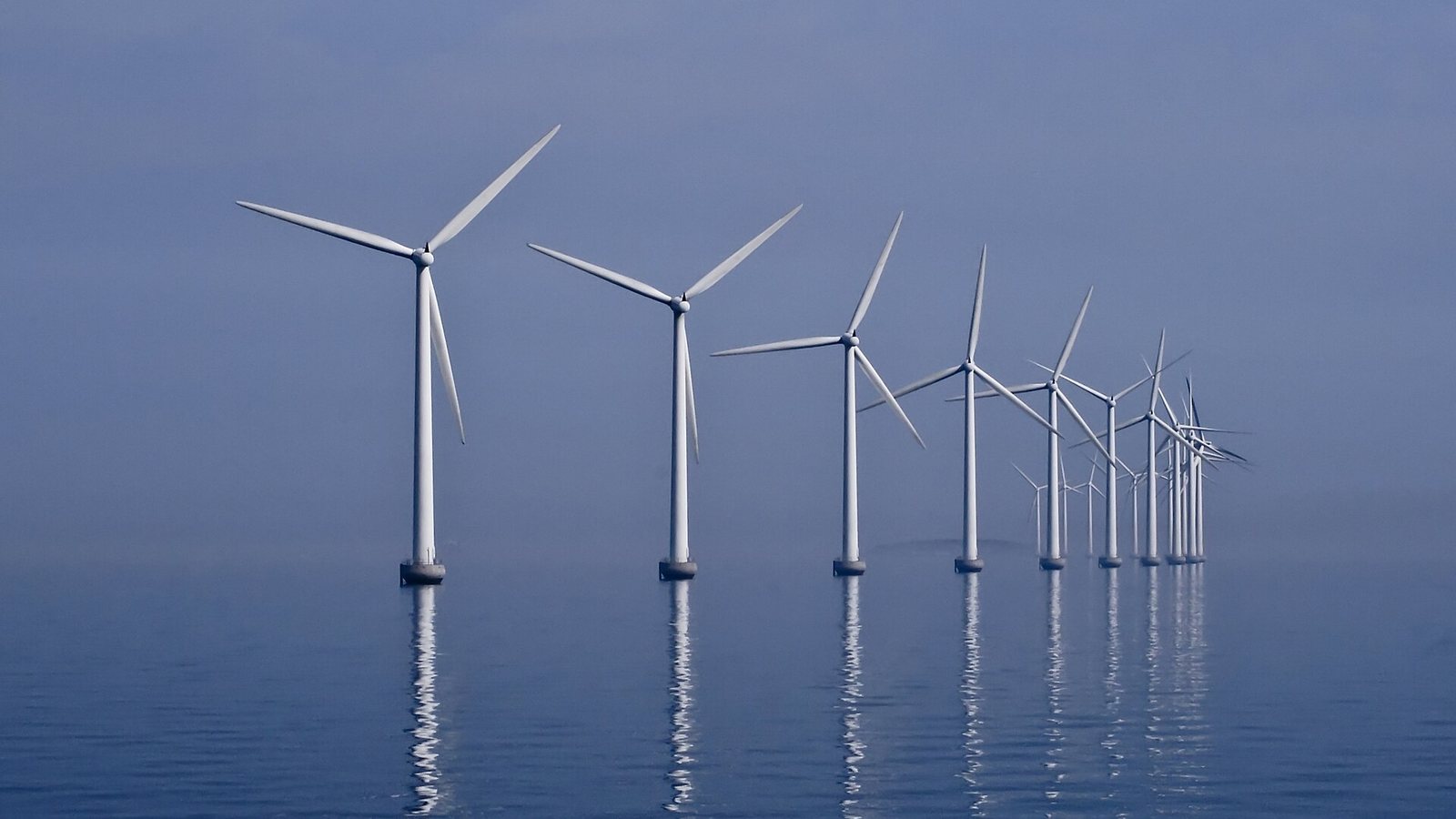
Illustrative image. Photo: Photo by Kim Hansen. Postprocessing (crop, rotation, color adjustment, dust spot, CC BY-SA 3.0, via Wikimedia Commons — source