


KHNP Ends Daewoo-Doosan Talks on $18.6B Czech Nuclear Project
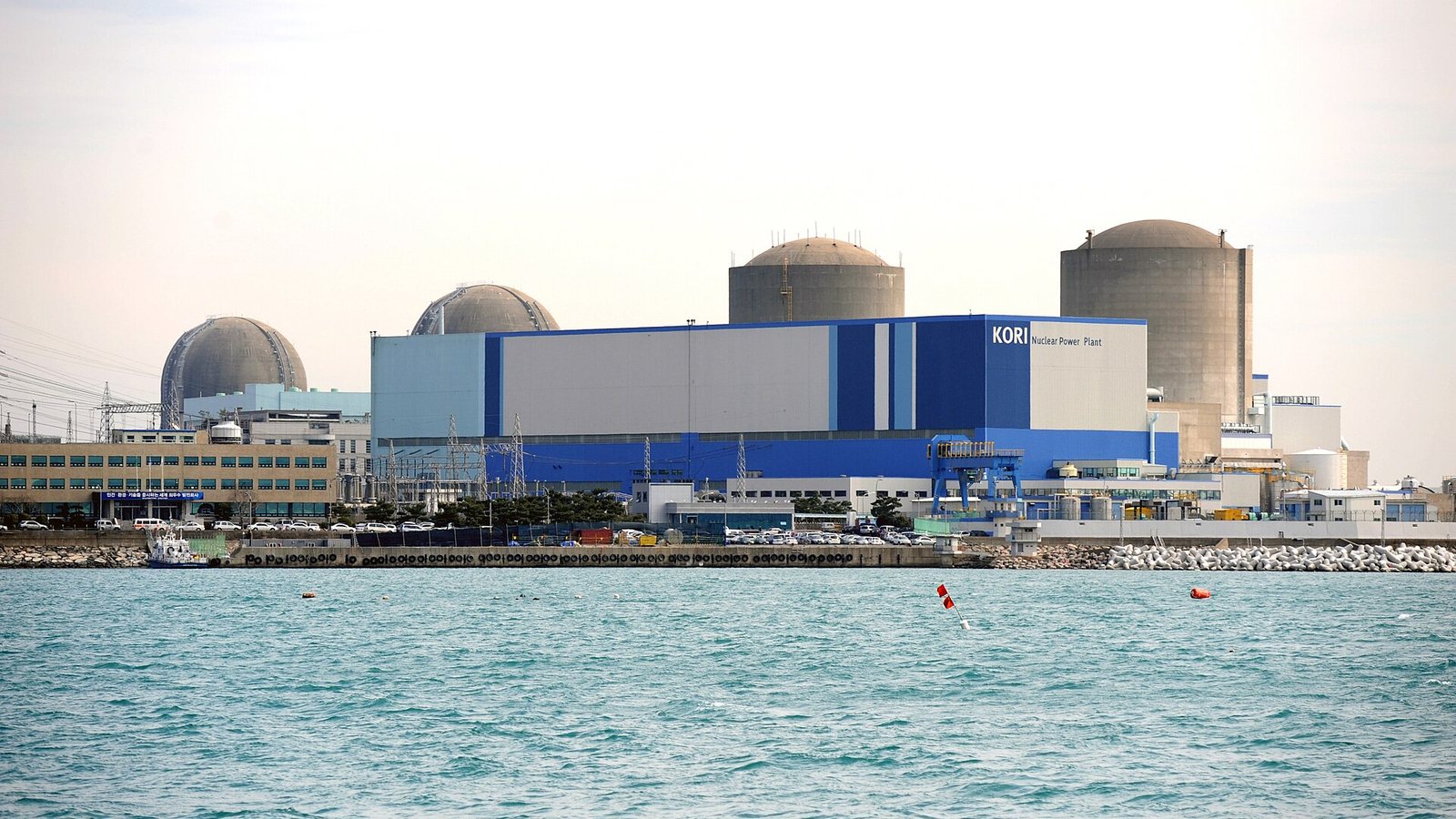

Korea Hydro & Nuclear Power (KHNP) said on October 29 that it is ending contract negotiations with the Daewoo Engineering & Construction–Doosan Enerbility consortium over construction work on two new APR1000 reactors at the Dukovany nuclear plant in the Czech Republic, and that it will launch a new tender to find a replacement contractor. The announcement unwinds, for now, the construction side of a deal that was worth roughly $18.6 billion when it was finally signed in June 2025 after a year of legal challenges from rival bidders EDF and Westinghouse.
KHNP said the parties had failed to reach a final agreement despite working-level talks, a dispute mediation committee and management-level discussions, and that it has “begun the process of terminating the joint cooperation agreement” with Daewoo and Doosan. Choi Il-kyung, executive vice president of KHNP’s overseas business division, said the company now aims “to sign a contract with a new consortium for the Czech project during July of 2027,” according to Korean media reports.
A Second Setback for a Deal Courts Had Already Delayed Once
The Dukovany 5 and 6 project has a troubled contracting history. The Czech government picked the KHNP-led Team Korea as preferred bidder in July 2024, beating rival offers built around EDF’s EPR and Westinghouse’s AP1000. Losing bidders contested the result, and in May 2025 a Brno court issued an injunction that briefly blocked the signing. Czech competition authorities and, ultimately, the courts dismissed the challenges, clearing the way for state utility ČEZ’s subsidiary Elektrárna Dukovany II (EDU II) to sign the roughly CZK 407 billion engineering, procurement and construction contract with KHNP that June.
What has now collapsed is not that main EPC contract between KHNP and EDU II, but the subcontract between KHNP and the Daewoo–Doosan consortium that was due to carry out the construction work. According to the consortium’s own account, the dispute escalated after KHNP introduced revised contract terms on October 7, giving the companies roughly three weeks to respond; Daewoo and Doosan asked for an extension to December 31, and KHNP rejected it.
A Dispute Over Who Absorbs Rising Construction Costs
At the center of the disagreement is how to price work that was only loosely defined when the companies signed their cooperation agreement. KHNP wanted a lump-sum contract based on construction quantities estimated at the basic-design stage, before detailed engineering was complete. The consortium wanted payment tied to quantities set at the detailed-design stage, which came in higher, plus compensation for the extra volumes.
Daewoo A&E, in its own statement, said KHNP had shifted the cost of design changes onto the contractor without adequately accounting for the increase in construction quantities, and said it intends to keep talking with KHNP. Doosan Enerbility struck a more conciliatory tone, saying it “deeply shares” the view that the project matters and noting that EDU II has allowed the outgoing consortium members to bid again in the new tender; the company said it will prepare a new bid and aims to complete the project.
What Stays in Place
The breakdown is narrower than it might first appear. Doosan Enerbility’s separate contracts with KHNP for the reactor equipment and the turbine generator — signed on December 16, 2025 and worth roughly 5.6 trillion won — remain unchanged and unaffected by the dispute, according to the company. KHNP has also said that ending the construction talks does not automatically terminate the broader cooperation agreement, which requires its own separate process.
The project’s headline schedule has not moved either, at least on paper: site preparation is still due to start in January 2028, full construction in November 2029, with Unit 5 targeted for completion in 2039 and Unit 6 in 2040. KHNP intends to hold a bidder briefing in January 2027 and open bidding in April, with a new construction contract targeted for July 2027 — leaving the project roughly 15 months to find, and sign, a replacement builder before site work is due to begin.
Why Dukovany Matters Beyond the Czech Republic
Dukovany already supplies a large share of Czech electricity from four older VVER-440 reactors, alongside two more recent units at Temelín, and the government has made new nuclear capacity central to its post-2022 push for energy security and lower dependence on imported gas and coal power. The KHNP contract, signed in 2025, was Korea’s first nuclear construction win in the European Union and one of its largest nuclear export deals since the Barakah project in the United Arab Emirates — a flagship of Seoul’s effort to build a nuclear-export industry to rival France’s and the United States’. That push has continued elsewhere this autumn: KHNP-linked Korean firms also agreed earlier this month to commit up to $120 billion toward eight new reactors in the United States, underscoring how much is riding on Korea’s reputation as a reliable, on-schedule nuclear contractor.
A breakdown specifically in the construction subcontract, rather than in the state-to-state EPC agreement, suggests the core government relationship between Prague and Seoul remains intact. But it adds a fresh commercial complication to a reactor program that has already survived one round of litigation, in a region — alongside Slovakia’s push to restart Bohunice and Poland’s delayed first nuclear plant — where Central Europe is racing to add nuclear capacity on tighter timelines than its supply chains have so far managed to match.
Sources
- World Nuclear News, “KHNP ends negotiations with construction consortium for Czech units,” October 29, 2026 — KHNP’s statement, project timeline, and quoted statements from Daewoo A&E and Doosan Enerbility.
- The Korea Times, “KHNP, consortium fail to agree on Czech nuclear plant contract,” October 29, 2026 — dispute details and consortium account of the October 7 deadline.
- Korea JoongAng Daily, “KHNP ends Daewoo-Doosan talks on $18.7 billion Czech nuclear plant,” October 29, 2026 — contract value and quote from KHNP executive Choi Il-kyung on the 2027 retendering target.
- Seoul Economic Daily (en.sedaily.com), “Korea’s KHNP Fails to Reach Construction Deal on $18 Billion Czech Nuclear Project,” October 29, 2026 — additional confirmation of the contract breakdown.
Illustrative image. Photo: IAEA Imagebank, Public domain, via Wikimedia Commons — source


