


Ørsted: Ownership, Leadership and Major Projects

Last updated: November 6, 2026
Ørsted A/S is a Danish energy company and the world’s largest developer of offshore wind farms, with wind projects across the North Sea, the Baltic Sea, the United Kingdom, the United States and Taiwan. Headquartered in Fredericia, Denmark, and listed on Nasdaq Copenhagen, the company is majority-owned by the Danish state and led by Chief Executive Officer Rasmus Errboe. Ørsted was known as DONG Energy until 2017, when it sold its oil and gas production business and rebranded around offshore wind, naming itself after the 19th-century Danish physicist Hans Christian Ørsted.
Overview
| Full name | Ørsted A/S |
| Founded | Traces to 1972 incorporation of predecessor Dansk Olie og Naturgas (DONG); formed as an integrated group in 2006 through a merger of DONG, Elsam, Energi E2, NESA, Copenhagen Energy and Frederiksberg Forsyning; renamed from DONG Energy to Ørsted on November 6, 2017 |
| Headquarters | Kraftværksvej 53, Fredericia, Denmark |
| Stock listing | Nasdaq Copenhagen (ticker: ORSTED) |
| CEO | Rasmus Errboe (since February 1, 2025) |
| Core business | Offshore wind development, construction and operation, with smaller onshore wind, solar and bioenergy/thermal power businesses |
| Majority owner | Kingdom of Denmark, 50.1% (as of 2026, subject to an unresolved political debate over divestment) |
Who Owns Ørsted?
Ørsted is unusual among large energy companies in being a stock-exchange-listed firm that is also majority state-owned. The Kingdom of Denmark, acting through the Danish state, holds 50.1% of Ørsted’s shares, a stake the government has defended as necessary to retain control over a strategically important company and to backstop its balance sheet through periodic capital raises. In July 2025, Norwegian state-controlled energy company Equinor acquired roughly a 10% stake in Ørsted, becoming its second-largest shareholder; the rest of the stock is held by institutional investors and free float on Nasdaq Copenhagen. Ownership has become politically contested in Denmark: ahead of and after the country’s March 2026 parliamentary election, several right-leaning parties called for a plan to divest the state’s stake, while the government warned that signaling an exit could damage the company’s share price and financing costs. The election produced no clear parliamentary majority, leaving the question of the state’s long-term ownership unresolved as of this writing. Estimates of exactly when or whether a sale could proceed vary widely across Danish press coverage, and there is no confirmed timeline from the government.
Leadership
Rasmus Errboe has been Group President and CEO since February 1, 2025. He joined Ørsted in 2012 and served as deputy CEO and chief commercial officer before his promotion. He succeeded Mads Nipper, who led the company for roughly four years but stepped down after Ørsted took a series of large impairments and cost overruns on offshore wind projects, including a significant US exit and write-down in 2023, that weighed on the company’s share price and credit rating. Errboe’s mandate has centered on cutting costs, narrowing the company’s geographic focus to its strongest markets, and defending existing US projects against federal permitting challenges (see Recent Developments below).
History
Ørsted’s roots go back to Dansk Olie og Naturgas (DONG), incorporated in 1972 as Denmark’s state oil and gas company. In 2006, DONG merged with several Danish power and district-heating utilities, including Elsam, Energi E2, NESA, Copenhagen Energy and Frederiksberg Forsyning, to form DONG Energy, an integrated oil, gas and electricity group. Over the following decade DONG Energy built up one of the world’s largest offshore wind portfolios while continuing to produce oil and gas in the Danish North Sea. In 2017 the company sold its oil and gas exploration and production business to UK-based Ineos and, on November 6, 2017, renamed itself Ørsted, in honor of the Danish physicist Hans Christian Ørsted, completing its transition into a company focused on renewable power. The following years brought rapid international expansion into UK, German, Dutch, US and Taiwanese offshore wind, followed by a period of financial strain from 2022 to 2024 as supply-chain costs, interest rates and project delays squeezed margins, triggering leadership changes, portfolio cuts and a renewed focus on fewer, larger home markets.
Main Business
- Offshore wind — Ørsted’s core business and the activity it is best known for worldwide; the company both develops and, typically together with institutional co-investors, owns and operates offshore wind farms, principally in Northern Europe, the United States and East Asia.
- Onshore wind and solar — a smaller portfolio of onshore wind and solar farms, mainly in the United States and Europe.
- Bioenergy and thermal power — combined heat-and-power plants in Denmark that have been progressively converted from coal to sustainable biomass, supplying district heating and backup electricity.
- Power sales and trading — corporate power purchase agreements and electricity trading and route-to-market services tied to Ørsted’s own generation and third-party renewable assets.
Scale and Financial Results
| Metric | Value | Period | Source |
|---|---|---|---|
| Total installed renewable capacity | 18.37 GW (10.16 GW offshore wind, 6.16 GW onshore wind, 2.06 GW bioenergy) | As of June 30, 2026 | Ørsted H1 2026 interim report |
| Revenue | DKK 48.3 billion (+28% year on year) | Full year 2025 | Ørsted FY2025 results, reported February 2026 |
| EBITDA (adjusted, ex. partnerships) | DKK 25.1 billion, within company guidance | Full year 2025 | Ørsted FY2025 results |
| EBITDA guidance (not actual) | More than DKK 28 billion | Full year 2026, company guidance | Ørsted company guidance, as reported February 2026 |
| Offshore wind capacity target (not actual) | More than 18 GW installed | Target for end of 2027 | Ørsted 2025 annual report |
| Danish state ownership | 50.1% | 2026 (politically contested) | Danish government and financial press reporting, 2026 |
| Equinor shareholding | ~10% (second-largest shareholder) | Acquired July 2025 | Company disclosure and financial press, 2025 |
Major Assets and Projects
- Hornsea 1 and Hornsea 2, United Kingdom — a cluster of operating offshore wind farms off the Yorkshire coast in the North Sea; Hornsea 2 was the world’s largest offshore wind farm by capacity when it entered full operation in 2022.
- Hornsea 3, United Kingdom — a further offshore wind farm under construction in the same North Sea cluster; UK regulator Ofgem opened a record £3.5 billion tender for the project’s transmission assets, as covered by The Daily Energy.
- Revolution Wind, United States — a nearly complete offshore wind project serving Rhode Island and Connecticut that became the center of a legal fight after the US government ordered construction halted in August 2025; a federal court granted Ørsted a preliminary injunction the following month, and the project became part of a wider December 2025 stop-work dispute, detailed in The Daily Energy’s coverage of the US permitting fight.
- Sunrise Wind, United States — an offshore wind project serving New York that was also covered by the federal government’s 2025 stop-work and lease-suspension orders; a federal judge granted Ørsted a temporary injunction on February 2, 2026, allowing construction to resume.
- Borssele 1 & 2, Netherlands and Horns Rev, Denmark — operating offshore wind farms that anchor Ørsted’s positions in the Dutch and Danish home markets.
Countries of Operation
Ørsted’s offshore wind portfolio is concentrated in Denmark, the United Kingdom, Germany and the Netherlands in Europe, with a significant US position built around Revolution Wind, Sunrise Wind and the operating South Fork Wind project, and development activity in Taiwan and other parts of the Asia-Pacific region. Following its 2022–2024 cost pressures, the company narrowed its geographic ambitions to concentrate capital in these core markets rather than pursuing new entries.
Recent Developments
- February 1, 2025 — Rasmus Errboe became CEO, succeeding Mads Nipper after a period of large project write-downs and cost overruns.
- July 2025 — Equinor acquired approximately a 10% stake in Ørsted, becoming its second-largest shareholder after the Danish state.
- August–September 2025 — The US government issued a stop-work order on the nearly complete Revolution Wind project; a federal court granted Ørsted a preliminary injunction weeks later, allowing work to continue.
- December 2025 — A broader US Interior Department order affected five offshore wind projects with a combined 5.8 GW of capacity, including Revolution Wind, Sunrise Wind, Empire Wind 1, Coastal Virginia Offshore Wind and Vineyard Wind 1; Ørsted again challenged the order in court, as reported by The Daily Energy.
- February 2, 2026 — A federal judge granted a temporary injunction against the stop-work order affecting Sunrise Wind, allowing construction to resume.
- February 2026 — Ørsted reported full-year 2025 revenue of DKK 48.3 billion (+28%) and adjusted EBITDA of DKK 25.1 billion, within its own guidance, and issued 2026 EBITDA guidance of more than DKK 28 billion.
- March 2026 — Denmark’s parliamentary election produced no clear majority; several right-leaning parties had campaigned for a plan to divest the state’s majority stake in Ørsted, leaving the company’s long-term ownership structure an open political question.
Related Entities
- Equinor — Norwegian state-controlled energy major that became Ørsted’s second-largest shareholder in 2025 and is itself a major offshore wind developer.
- Dogger Bank Wind Farm — the other giant North Sea offshore wind project off the UK coast, developed by Equinor, SSE Renewables and Vårgrønn rather than Ørsted, useful for comparing scale and ownership models.
- United States Energy Profile — context for the federal permitting disputes over Revolution Wind and Sunrise Wind.
- LCOE (Levelized Cost of Electricity) — the cost metric at the center of the cost overruns and impairments that reshaped Ørsted’s strategy from 2022 onward.
- Power Purchase Agreement (PPA) — the long-term contract structure that underpins revenue for most Ørsted offshore wind projects.
- Ofgem to Open Record £3.5 Billion Tender for Hornsea 3 Transmission Assets — TDE’s reporting on the transmission infrastructure tied to Ørsted’s Hornsea 3 project.
Sources
- Ørsted A/S, full-year 2025 results and 2026 guidance, reported February 2026
- Ørsted A/S, interim report for the first half of 2026
- Reuters, Bloomberg and energywatch.com — reporting on Danish state ownership, the March 2026 election and divestment debate (2026)
- Offshore Engineer (oedigital.com), Maritime Executive and ESG Today — reporting on the Revolution Wind and Sunrise Wind stop-work orders and litigation (2025–2026)
- Offshore Wind Biz and S&P Global Commodity Insights — reporting on the Sunrise Wind injunction (February 2026)
- Wikipedia and company disclosures — corporate history and 2017 renaming from DONG Energy (cross-checked against company filings)
- The Daily Energy reporting on Ofgem’s Hornsea 3 transmission tender and the US Justice Department’s offshore wind permit dispute
Frequently Asked Questions
Who owns Ørsted?
The Kingdom of Denmark holds 50.1% of Ørsted, making it a majority state-owned but publicly listed company. Equinor holds roughly 10%, acquired in July 2025, with the remainder held by institutional and free-float investors on Nasdaq Copenhagen.
Who is the CEO of Ørsted?
Rasmus Errboe has been CEO since February 1, 2025, succeeding Mads Nipper.
Is Ørsted the same company as DONG Energy?
Yes. Ørsted was called DONG Energy until it sold its oil and gas production business and renamed itself Ørsted on November 6, 2017, after selling its upstream oil and gas assets to Ineos.
Why did the US government try to stop Ørsted’s offshore wind projects?
In 2025 and 2026, the US Interior Department issued stop-work and lease-suspension orders affecting Revolution Wind, Sunrise Wind and several other offshore wind projects. Ørsted challenged the orders in federal court and won injunctions allowing construction on both projects to continue, though the underlying disputes reflect a broader shift in US federal policy toward offshore wind.
Is Ørsted’s Danish state ownership at risk of being sold?
It is politically contested. Several right-leaning Danish parties have called for a plan to divest the state’s stake, and Denmark’s March 2026 election left no clear parliamentary majority, so the question remains unresolved.
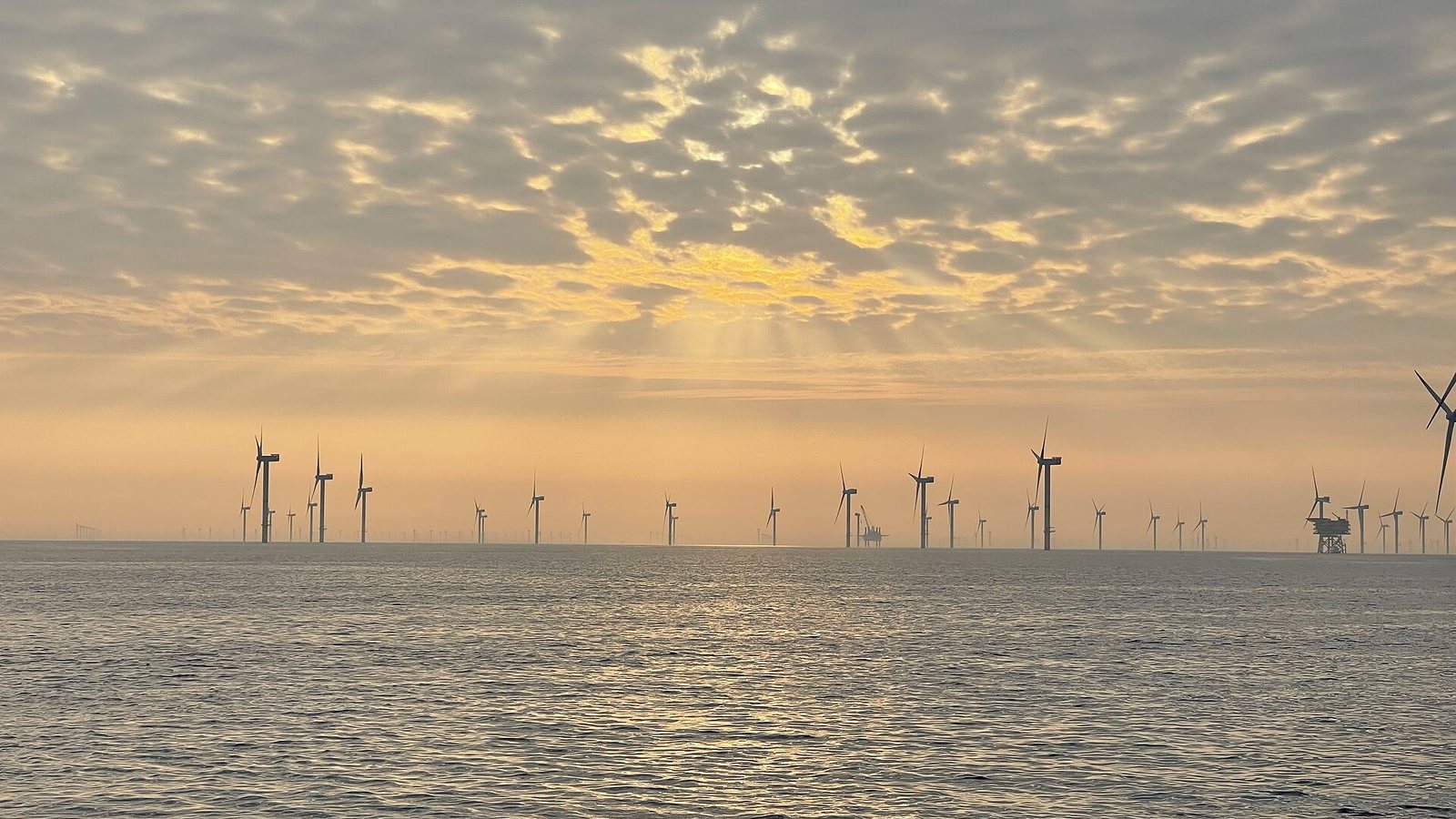
Illustrative image. Photo: Capmat007, CC BY-SA 4.0, via Wikimedia Commons — source

[…] to open its largest-ever competition to find a private owner for the transmission assets linking Ørsted’s 2.9 gigawatt (GW) Hornsea 3 offshore wind farm to the national grid, in a tender round […]
[…] capacity. Revolution Wind is a 704 MW farm off Rhode Island developed by a 50/50 venture between Ørsted and Skyborn Renewables; it finished offshore construction and has been feeding power into New […]