


Inside Ghawar, the World’s Largest Oil Field
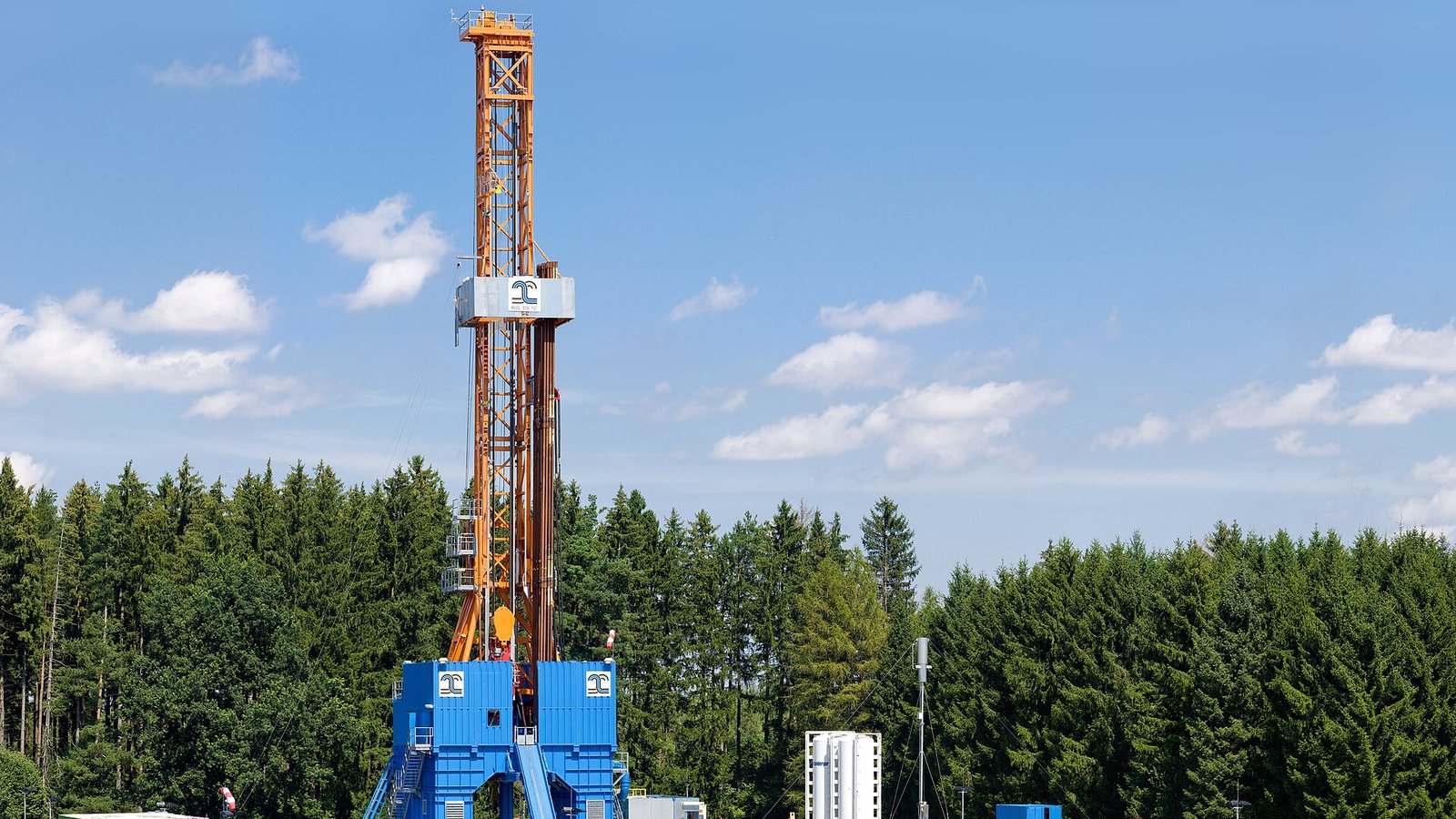

Ghawar is a roughly 230-kilometer-long oil field in eastern Saudi Arabia that has produced more crude oil than any other field in history — over 80 billion barrels since it entered production in 1951. Operated by state-owned Saudi Aramco, it remains the largest conventional oil field ever discovered, though its own disclosures show capacity has declined well below the levels long assumed by outside analysts.
Where Is Ghawar?
Ghawar sits in Saudi Arabia’s Eastern Province, running roughly north to south through the Al-Ahsa region between the cities of Hofuf and the Gulf coast near Abqaiq and Udhailiyah. Estimates of its size vary by what exactly is being measured: a widely cited geological study (Saner et al., 2005) puts the productive subsurface area at about 225 km by 25 km, while Saudi Aramco’s own technical reporting (via GeoExpro, 2007) gives the full structure as roughly 280 km by 30 km, covering about 5,300 km². Wood Mackenzie’s asset database cites an even larger producing area of about 7,200 km². The field is divided into several producing areas, including ‘Uthmaniyah, Shedgum, Haradh, Hawiyah, Ain Dar and Fazran, each operated as a distinct block within the same geological structure.
Discovery and the Start of Production
Ghawar was discovered in 1948, when the Arabian American Oil Company (Aramco’s predecessor) drilled the Ain Dar-1 well into what turned out to be the northern end of the structure. Commercial production began in 1951. By the late 1950s and 1960s, successive discoveries along the anticline’s length showed that Ain Dar, Shedgum, ‘Uthmaniyah, Hawiyah and Haradh were all part of one continuous field rather than separate deposits, which is why Ghawar is often described as a “super-giant” — a field holding more than 5 billion barrels of ultimately recoverable oil, a threshold Ghawar exceeds many times over.
Who Owns and Operates Ghawar
Ghawar is wholly owned and operated by Saudi Aramco, the Saudi state oil company that was fully nationalized by 1980 (completing a process that began in the 1970s) after decades of operation as the US-founded Arabian American Oil Company. Aramco itself is majority-owned by the Saudi government even after its partial 2019 IPO, which listed under 2% of shares on the Saudi Tadawul exchange. Day-to-day operations are run through Aramco’s Southern Area and Northern Area oil operations divisions, which between them manage Ghawar’s constituent producing blocks.
Geology: Why Ghawar Holds So Much Oil
Ghawar is a north-trending anticline — a long, arched fold in the rock layers — sitting above a basement horst block that first formed during the Carboniferous-age Hercynian deformation and was reactivated episodically, notably in the Late Cretaceous. According to GeoExpro’s geological summary, the fold is a relatively simple, gently dipping (3-8°) structure in its southern areas, becoming structurally more complex toward the north.
The main reservoir is the Upper Jurassic Arab-D carbonate, a limestone unit that sits within the broader Arab Formation and the uppermost Jubaila Formation. It is sealed above by anhydrite (evaporite) layers of the Arab-D and Arab-C members, which trap the oil beneath an impermeable cap, and charged by oil generated in the underlying Jurassic Hanifa source rock. Porosity in the best grainstone intervals of the Arab-D reportedly exceeds 30%, among the highest of any major oil reservoir in the world, which is a major reason the field can sustain such large flow rates per well.
Since the 1960s, Aramco has maintained reservoir pressure through peripheral waterflooding: seawater, drawn from the Gulf and treated at facilities such as the Qurayyah seawater plant, is injected around the edges of the field to push oil toward producing wells in the interior. This technique, rather than natural pressure alone, is what has allowed Ghawar to sustain high output for more than seven decades.
Reserves: How Much Oil Is Left
Public estimates of Ghawar’s reserves vary significantly by date, measurement basis (original recoverable vs. remaining proved reserves) and source, and Aramco does not publish a current, field-by-field reserves breakdown. The figures below should be read as a timeline of disclosed or reported estimates rather than a single definitive number.
| Estimate | Figure | Basis / context | Source |
|---|---|---|---|
| 2010 | ~88 billion barrels | Proven reserves, as assessed by then-oil minister Ali Naimi | Reported by the Financial Times / Dawn, citing Naimi’s 2010 remarks |
| 2019 | ~48.2 billion barrels | Remaining oil, implying roughly 30 billion barrels less than the 2010 figure; Aramco said this was enough for about 34 more years at its then-maximum sustainable rate | Aramco bond prospectus (April 2019), as reported by the Financial Times |
| Cumulative (various) | 80+ billion barrels produced since 1951 | Total historical production — the most oil produced by any field on record | Saudi Vision 2030 official encyclopedia entry on Ghawar; corroborated by multiple industry histories |
| Depletion | ~48% of proved reserves produced | Aramco-disclosed depletion for Ghawar specifically, versus a 29% average across all Saudi fields | US EIA Saudi Arabia Country Analysis Brief, citing Aramco data |
Estimates vary this widely partly because Saudi Arabia has historically treated detailed field-level reserve data as a closely held strategic figure, and partly because “reserves” can mean original discovered oil, oil remaining to be produced, or oil that is technically versus economically recoverable — categories that are easy to conflate across different reports.
Production and Capacity
Ghawar’s output has also been reported very differently depending on the year and the source. US EIA data from around 2012 cited an onshore capacity of roughly 5.8 million barrels a day (b/d) of Arab Light crude, a figure widely repeated in industry commentary through the 2010s. Aramco’s 2019 bond and IPO prospectuses disclosed a materially lower maximum sustainable capacity of about 3.8 million b/d — the first time the company had confirmed, in an official filing, that Ghawar’s capacity had fallen well short of the 5 million b/d figure many analysts had assumed. Historical output peaked higher still: NS Energy and other industry trackers put Ghawar’s all-time production peak at 5.7 million b/d in 1981. Some secondary sources estimate Ghawar still supplied roughly 40-45% of Saudi Arabia’s crude output as of the early 2020s, though Aramco has not confirmed a current percentage and this figure should be treated as an approximation.
The gap between the 2012-era 5.8 million b/d figure and the 2019-disclosed 3.8 million b/d is one of the most consequential reserve-and-capacity disclosures in modern oil-market history, feeding into long-running debates about how close the world might be to a plateau in conventional oil supply.
Infrastructure and How the Oil Moves
Oil produced across Ghawar’s producing areas is gathered and processed at Gas-Oil Separation Plants (GOSPs) scattered across the field, then piped to Aramco’s stabilization and export infrastructure. A significant share moves to the Abqaiq processing facility — one of the world’s largest crude oil stabilization plants, located just west of the field — before onward shipment via pipeline to the Ras Tanura export terminal on the Gulf coast, or across the Kingdom via the East-West Crude Oil Pipeline to Yanbu on the Red Sea, which lets Saudi exports partly bypass the Strait of Hormuz chokepoint.
Development History
Ghawar’s development proceeded in stages as each producing area was brought online: Ain Dar and Shedgum in the north were developed first through the 1950s, followed by ‘Uthmaniyah and Hawiyah in the central section, and finally Haradh in the south, whose later phases (Haradh-III) were among the first fields where Aramco deployed what it called “MRC” (maximum reservoir contact) horizontal wells in the 2000s to sustain output as the shallower, easier-to-produce oil was depleted. Throughout, Aramco expanded peripheral waterflood capacity and, in later decades, added advanced well-completion and reservoir-monitoring technology (including so-called “smart fields” instrumentation) to manage a reservoir whose pressure support depends entirely on continuous seawater injection.
Current Status
Ghawar remains in active production and continues to anchor Saudi Arabia’s crude output and, by extension, OPEC’s global spare-capacity cushion, even as its best-known public disclosures confirm a long-term decline in maximum sustainable capacity from the levels assumed a decade ago. Aramco has not announced a retirement date; the field’s own economics depend on continued waterflood investment, infill drilling and enhanced-oil-recovery techniques to offset natural decline in the most mature producing areas.
Why Ghawar Matters
Ghawar’s scale is one of the foundations of Saudi Arabia’s position as the world’s largest oil exporter and as OPEC’s de facto leader: a single field supplying a large share of a country that alone holds the second-largest proved oil reserves in the world (after Venezuela) gives Riyadh outsized influence over global spare capacity and, through OPEC+ decisions, over prices. Ghawar is also a reference case in the broader “peak oil” debate: because it is both the world’s most productive field ever and one of the best-documented examples of a legacy super-giant in decline, its disclosed capacity figures are closely watched as a signal for how quickly the world’s largest conventional fields are aging.
Frequently Asked Questions
How big is the Ghawar oil field?
Estimates vary by what is measured: a 2005 geological study puts the productive subsurface area at about 225 km by 25 km, while other industry sources describe the full structure as up to 280 km long and around 5,300-7,200 km² in area. By any measure, it is the largest conventional oil field ever discovered.
Who owns the Ghawar oil field?
Saudi Aramco, the majority state-owned Saudi national oil company, wholly owns and operates Ghawar. Aramco sold a small minority stake (under 2%) to public investors in its 2019 IPO, but the Saudi government retains overwhelming ownership.
Is Ghawar running out of oil?
Ghawar is not close to running out, but its disclosed maximum sustainable capacity has fallen well below levels long assumed by outside analysts — from roughly 5.8 million b/d cited in older EIA data to about 3.8 million b/d disclosed in Aramco’s 2019 bond prospectus. Aramco says the field still held roughly 48.2 billion barrels of remaining oil as of that 2019 disclosure.
How does Saudi Aramco keep Ghawar producing at such high rates?
Primarily through peripheral waterflooding: seawater is injected around the edges of the field to maintain reservoir pressure and push oil toward producing wells, supplemented more recently by horizontal “maximum reservoir contact” wells and other enhanced-recovery techniques in the more mature producing areas.
What is the main oil-bearing rock at Ghawar?
The Upper Jurassic Arab-D carbonate, a high-porosity limestone reservoir sealed by anhydrite layers above it and charged by oil from the underlying Jurassic Hanifa source rock.
Related The Daily Energy Pages
- What Is Saudi Aramco? Ownership, Leadership and Production
- Saudi Arabia Energy Profile
- Amin H. Nasser
- What Is OPEC?
- What Are Upstream, Midstream and Downstream in Oil and Gas?
- What Is Brent Crude?
- What Is the Strait of Hormuz and Why Does It Matter?
- Largest Oil Fields in the World
Sources
- Saner, S. et al., “Sequence stratigraphic and lithofacies analysis… Ghawar,” geological literature cited via academic indexes (2005 dimensions estimate)
- GeoExpro, “The King of Giant Fields” and related Ghawar geology summaries (Saudi Aramco Review reporting)
- Wood Mackenzie, Ghawar asset report (producing-area figures)
- Saudi Vision 2030 official encyclopedia, Ghawar Field entry (cumulative production figure)
- Financial Times / Dawn, reporting on Saudi Aramco’s 2019 bond prospectus disclosures on Ghawar reserves and capacity
- US Energy Information Administration (EIA), Saudi Arabia Country Analysis Brief (historical capacity and depletion figures)
- NS Energy Business, Ghawar field profile (historical peak production)
Illustrative image. Photo: Richard Bartz, CC BY-SA 2.5, via Wikimedia Commons — source




[…] Inside Ghawar, the World’s Largest Oil Field […]