


Who Buys Russia’s LNG?

Last updated: 10 November 2026 · Last verified: 10 November 2026
Russia is the world’s fourth-largest LNG exporter, behind the United States, Australia and Qatar, and its cargoes split across two very different markets. Yamal LNG, in the Russian Arctic, still sends most of its output to Europe despite an EU plan to end Russian LNG purchases entirely by 2027. Sakhalin-2, on Russia’s Pacific coast, has supplied Japan, South Korea and China for years without being targeted by sanctions. The newest project, the US-sanctioned Arctic LNG 2, has found buyers almost exclusively in China as Japanese and European buyers steer clear of its cargoes.
Russia’s LNG Exports by Project and Destination
No single public release breaks down all of Russia’s LNG exports by both project and destination for a consistent recent period. The table below combines a single-month snapshot (March 2026, the most recent full breakdown available) with separate cumulative totals for context — readers should treat the shares as directional rather than as one unified dataset.
| Period | Flow | Volume / share | Top destinations | Source |
|---|---|---|---|---|
| March 2026 (single month) | All Russian LNG | 2,799 kt; ~8% of global seaborne LNG exports (world’s 4th-largest exporter that month, behind the US at 33%) | France 35% and China 24% of non-EU/G7-tanker cargoes; combined 42% of total volume | Kyiv School of Economics (KSE) Russian LNG Tracker, April 2026 edition (published 6 May 2026) |
| March 2026 (single month) | Yamal LNG only | 1,764 kt; 63% of total Russian LNG exports that month | Zeebrugge (Belgium) and Montoir (France) terminals, 46% combined | KSE Russian LNG Tracker |
| March 2026 (single month) | Sakhalin-2 only | Not separately stated as a total volume in this release | Tongyeong (South Korea) and Rudong, China (PetroChina), 34% combined | KSE Russian LNG Tracker |
| January–July 2026 (cumulative) | All Russian LNG | 19.0 million tonnes (+11% y/y), driven in part by Arctic LNG 2 supply | Not broken out by destination in this release | Gas Processing & LNG, citing preliminary LSEG ship-tracking data (August 2026) |
| January–June 2026 (cumulative) | Sakhalin-2 only | 5.1 million tonnes (up slightly from 5.0 Mt in H1 2025) | Primarily Northeast Asia (Japan, South Korea, China) | Baird Maritime roundup of Russian LNG export data (2026) |
Full-year 2025 data from the environmental NGO Urgewald put France’s share of Yamal LNG imports at nearly 42% (about 6.3 million tonnes) — broadly consistent with the 35–46% France/Zeebrugge-Montoir figures seen across 2026 snapshots above, despite the EU’s stated goal of ending Russian LNG purchases.
Yamal LNG → Europe: A Shrinking Window
Yamal LNG, operated by Novatek, remains the largest single source of Russian LNG and is overwhelmingly Europe-facing: its March 2026 cargoes split mainly between Zeebrugge in Belgium and Montoir in France, which together took 46% of Yamal’s shipments that month. That flow continues despite the European Union’s stated plan to end Russian LNG imports entirely by 2027 — France, in particular, has drawn criticism from EU member states and campaign groups for continuing to import Russian LNG even as it supports sanctions on Russia elsewhere. Until the EU’s import ban takes effect, Yamal cargoes to France and Belgium remain Russia’s single largest LNG revenue stream.
Sakhalin-2 → Asia: The Unsanctioned Route
Sakhalin-2, on Russia’s Pacific coast, has avoided the sanctions applied to Arctic LNG 2 and continues supplying Japan, South Korea and China. Japanese trading houses and utilities retain equity stakes and offtake rights in the project dating to before the war in Ukraine, giving Japan a continued, if diplomatically sensitive, role as a buyer. South Korea’s Tongyeong terminal and China’s Rudong terminal (operated by PetroChina) together accounted for 34% of Sakhalin-2’s March 2026 cargoes. Shipment volumes have stayed broadly stable — 5.1 million tonnes in the first half of 2026, close to the 5.0 million tonnes shipped in the same period of 2025.
Arctic LNG 2 → Almost Entirely China
Arctic LNG 2, Novatek’s newest project, has faced sanctions since before its first cargoes and has struggled to find ice-class carriers free of exposure to those sanctions, limiting its ramp-up. Ship-tracking reports cited in trade press through mid-2026 describe its export destinations as almost exclusively Chinese, a pattern discussed in more detail on this site’s China LNG importer page. The project has delivered roughly 1.6 million tonnes in the first half of 2026 and about 2 million tonnes through July, modest next to Yamal or Sakhalin-2, but the direction is clear: China has been the one major LNG buyer willing to take sanctioned Arctic LNG 2 volumes that Japanese, South Korean and European buyers have avoided.
What to Watch Next
The EU’s stated goal of ending Russian LNG purchases by 2027 is the key date to watch for Yamal’s European flows — if enforced as planned, France and Belgium’s current share of Yamal cargoes would need to be replaced, most likely by US or Qatari LNG, mirroring the shift already seen in Spain’s supplier mix. Arctic LNG 2’s growth depends mainly on Novatek securing more sanctions-compliant ice-class tankers rather than on production capacity, which has outpaced shipping availability so far. Sakhalin-2’s Asian flows look the most stable of the three routes, since neither Japan’s continued offtake nor China’s and South Korea’s purchases face the same sanctions pressure as Yamal or Arctic LNG 2.
Frequently Asked Questions
Who buys most of Russia’s LNG?
France and China together accounted for 42% of Russia’s total LNG exports in March 2026, according to the Kyiv School of Economics Russian LNG Tracker — France mainly through Yamal LNG cargoes, China through both Sakhalin-2 and the newer Arctic LNG 2 project.
Does Europe still buy Russian LNG?
Yes. France remains the largest single buyer of Russian LNG, taking 35% of non-EU/G7-tanker cargoes in March 2026, mostly from Yamal LNG via the Zeebrugge and Montoir terminals, despite the EU’s stated plan to phase out Russian LNG imports by 2027.
Is China buying more Russian LNG?
Yes — Russian LNG shipments to China rose 31–44% year-on-year in 2026 depending on the dataset, driven by continued Sakhalin-2 deliveries to the Rudong terminal and the ramp-up of the sanctioned Arctic LNG 2 project, whose cargoes have gone almost exclusively to Chinese buyers.
What is Arctic LNG 2 and who buys its output?
Arctic LNG 2 is Novatek’s newest Russian LNG project, sanctioned by the United States before it shipped its first cargo. Ship-tracking reports through mid-2026 show its exports going almost entirely to China, the only major LNG-importing country willing to take sanctioned volumes at scale.
When will the EU stop buying Russian LNG?
The European Union has set a goal of ending Russian LNG imports by 2027, though as of November 2026 France and other buyers continued taking Yamal LNG cargoes, and the exact enforcement timeline for LNG (as opposed to pipeline gas, which has its own separate phase-out schedule) was still being finalized.
Related The Daily Energy Pages
- Where Does China Get Its LNG? (Who Powers Who? series)
- Who Buys Russia’s Oil? (Who Powers Who? series)
- Who Buys Qatar’s LNG? (Who Powers Who? series)
- Where Does Spain Get Its LNG? (Who Powers Who? series)
- Russia Energy Profile: Oil, Gas, Power and Sanctions (2026)
- Gazprom
- What Is LNG and How Does It Work?
Sources
- Kyiv School of Economics, Russian LNG Tracker, April 2026 edition (published 6 May 2026)
- Urgewald, analysis of 2025 Yamal LNG import data by destination country
- Gas Processing & LNG, “Russia’s LNG Exports in January-July up 11% Year-on-Year” (August 2026)
- Baird Maritime, factbox roundups on Russian LNG export volumes and destinations (2026)
- Reuters and trade-press ship-tracking reports on Arctic LNG 2 cargo destinations (cited via Baird Maritime, 2026)
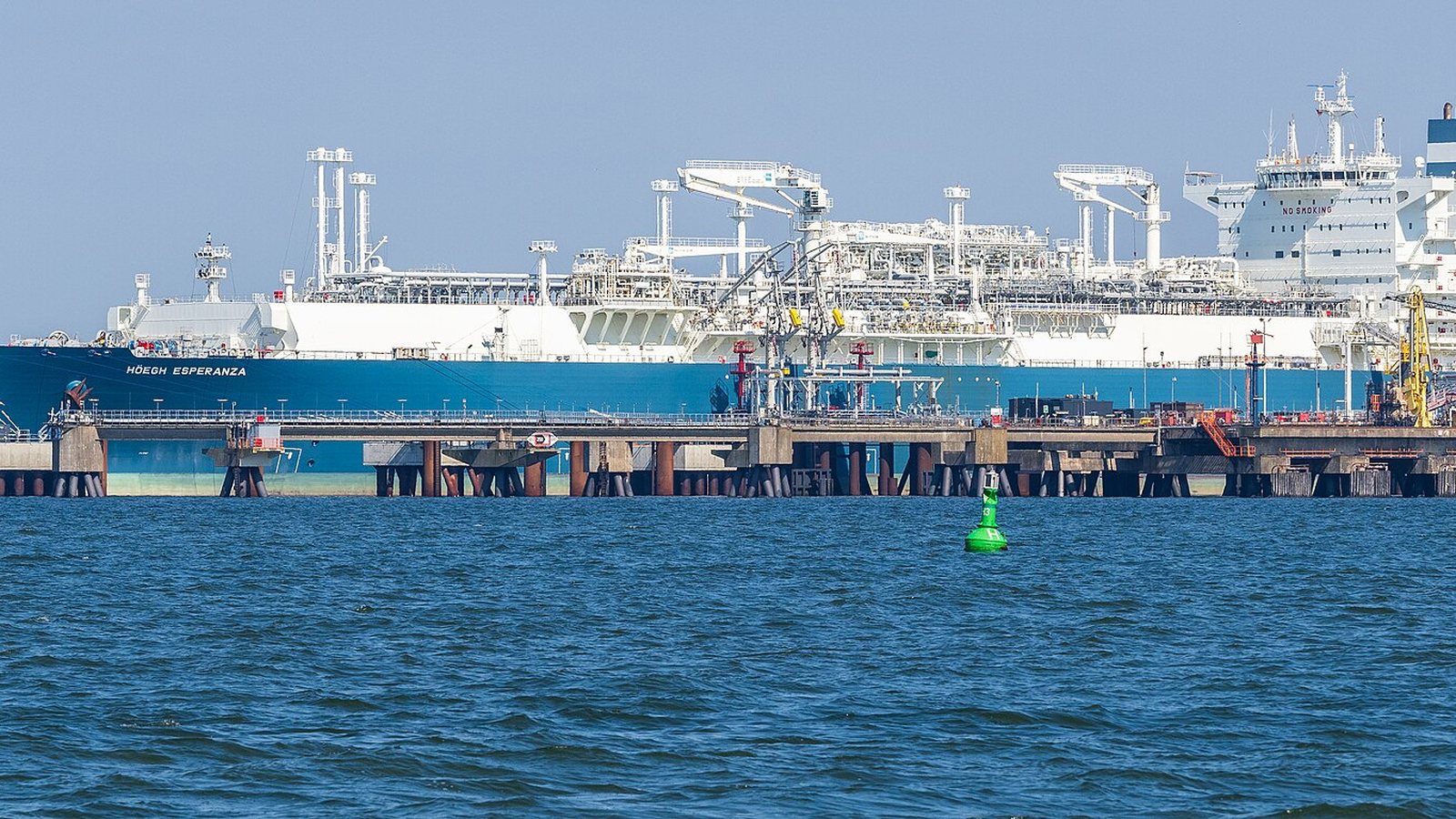
Illustrative image. Photo: JoachimKohler-HB, CC BY-SA 4.0, via Wikimedia Commons — source

[…] Who Buys Russia’s LNG? (Who Powers Who? series) […]