


What Is Fracking (Hydraulic Fracturing) and How Does It Work?
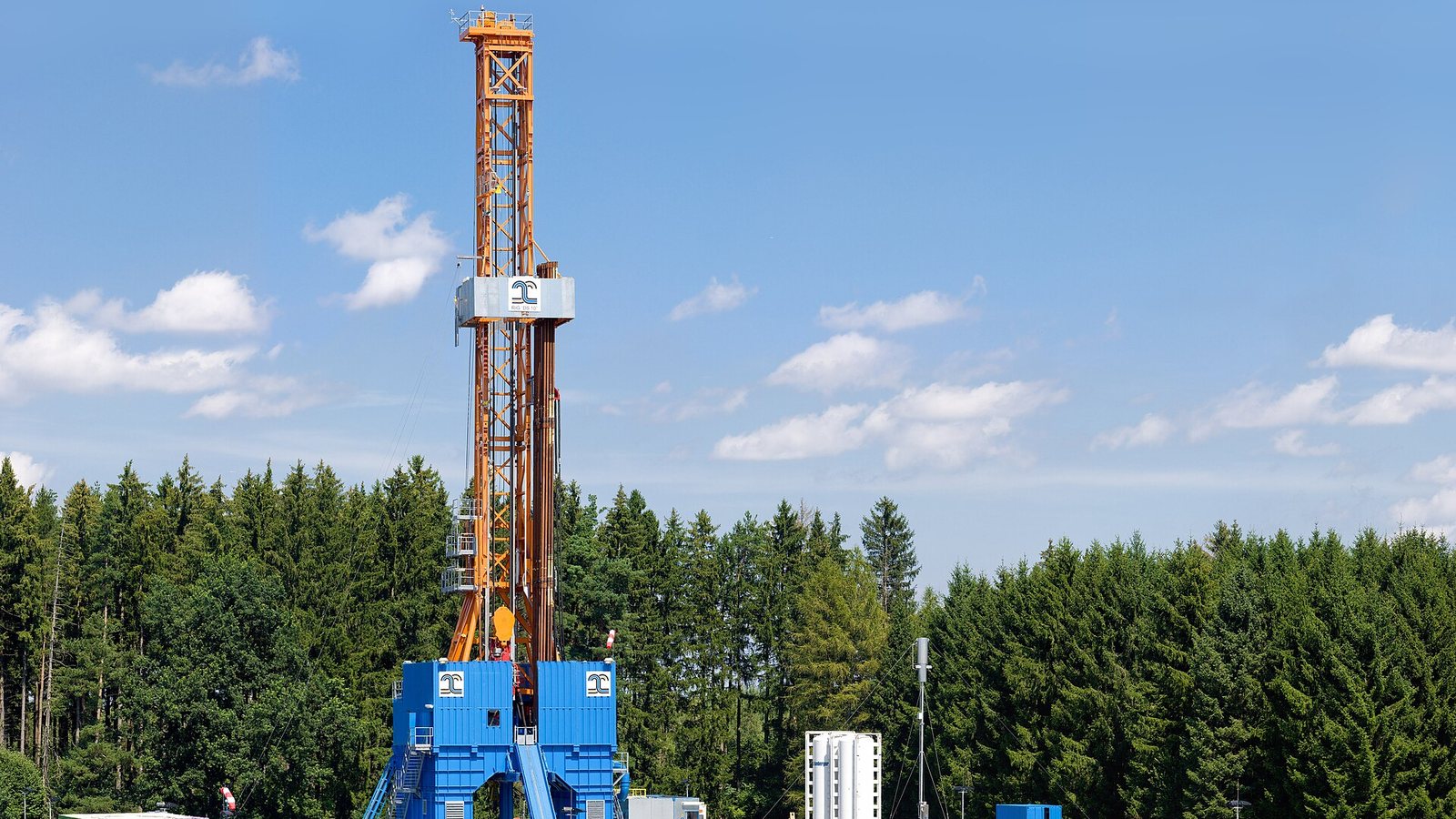

Hydraulic fracturing — usually shortened to “fracking” — is a well-stimulation technique in which a high-pressure mixture of water, sand and chemical additives is pumped underground to crack open tight rock layers, letting trapped oil or natural gas flow to the surface. Combined with horizontal drilling, it is the technology that unlocked US shale basins and reshaped global energy markets from the 2000s onward.
Definition
Fracking is a well-completion method, not a type of drilling on its own. After a well has been drilled — today almost always drilled horizontally through a shale or other “tight” rock layer — it is cased with steel pipe and cemented in place. Sections of that pipe are then perforated, and a fracturing fluid is pumped in at high pressure to crack the surrounding rock. Sand or ceramic beads mixed into the fluid (“proppant”) lodge in the new cracks and hold them open after the pressure is released, so oil or gas can keep flowing into the well once the operation ends.
The technique is applied mainly to “tight” formations — shale, and some tight sandstone and carbonate layers — where oil and gas are present but too poorly connected within the rock to flow at commercial rates through a conventional vertical well.
How It Works
- Drilling — a well is drilled vertically, then turned to run horizontally for roughly 1–3 miles through the target shale layer.
- Casing and perforating — steel pipe is cemented in place, then small explosive charges punch holes through the casing at intervals along the horizontal section.
- Fracturing — fluid (typically more than 90% water, with sand and under 1% chemical additives such as friction reducers and biocides) is pumped in at high pressure in stages along the lateral, cracking the rock around each perforated interval.
- Flowback and production — pressure is released, some fluid returns to the surface as “flowback,” and oil or gas begins flowing through the propped-open fractures into the well.
Modern “slickwater” fracturing — using large volumes of low-viscosity, chemically slicked water to carry proppant deep into long fractures — was proven commercially in the late 1990s in Texas’s Barnett Shale and is now the standard approach across US shale plays.
Why It Matters
Hydraulic fracturing, paired with horizontal drilling, turned previously uneconomic shale rock into some of the world’s largest sources of oil and natural gas. The US Energy Information Administration credits the resulting “shale revolution” with taking the United States from a natural gas importer in the mid-2000s to the world’s largest natural gas producer by 2011, and from a major oil importer to the world’s largest crude oil producer, overtaking Saudi Arabia and Russia around 2018. That shift reset global LNG and oil trade flows, reduced US reliance on imported energy, and gave the US new leverage as an exporter.
Where It Is Used
Fracking is used across major US shale basins — the Permian Basin in Texas and New Mexico, the Bakken in North Dakota, the Eagle Ford and Haynesville in Texas and Louisiana, and the Appalachian Marcellus and Utica — and in Canada’s Montney and Duvernay plays. Outside North America, Argentina’s Vaca Muerta formation has become the leading growth story, with national production setting repeated records through 2025. China holds large shale-gas resources but development has been slower due to more difficult geology. Several European countries, including France and Germany, and Scotland, have banned or indefinitely suspended fracking on environmental grounds, while the UK lifted and then reimposed restrictions on shale gas depending on the government in office.
Key Characteristics
| Element | Typical detail |
|---|---|
| Fluid composition | >90% water, ~8–9% proppant (sand/ceramic), <1–2% chemical additives (estimates vary by well and operator) |
| Water use per well | Roughly 2–5 million gallons for a modern horizontal shale well; estimates vary by basin and lateral length |
| Horizontal lateral length | Commonly 1–3 miles in current US shale development |
| Key US plays | Permian, Bakken, Eagle Ford, Haynesville, Marcellus, Utica |
| Main induced-seismicity cause | Disposal of produced/flowback wastewater in deep injection wells, not the fracturing process itself, per USGS research |
Related Technologies and Concepts
- Horizontal drilling — steering a well to run sideways through a target rock layer, multiplying the rock contacted per well.
- Proppant — sand or manufactured beads that hold fractures open after pumping stops.
- Tight oil / shale oil and shale gas — the hydrocarbons produced from low-permeability rock using this technique.
- WTI crude oil — the US benchmark price most directly affected by shale supply growth from fracking.
- Flaring — the burning off of natural gas that outpaces pipeline capacity, a frequent side-effect of fast-growing shale oil production.
- Induced seismicity — seismic activity linked mainly to wastewater disposal wells associated with oil and gas production, distinct from the fracturing process itself.
Real-World Examples
The technology’s breakthrough came in the Barnett Shale near Fort Worth, Texas, where Mitchell Energy’s successful slickwater fracturing experiments in the late 1990s made shale gas commercially viable; the approach was then combined with horizontal drilling and spread to the Bakken, Eagle Ford and, above all, the Permian Basin, which the EIA and industry data put among the most productive oil and gas basins in the world. In Oklahoma, a state with some of the most closely studied induced seismicity in the US, the US Geological Survey has found that only a small share of earthquakes — on the order of 1–2% in the state’s own research record — are linked to hydraulic fracturing itself, with the large majority tied instead to wastewater disposal wells; regulatory limits on disposal-well injection introduced from 2015 onward were followed by a sharp decline in the state’s earthquake rate. Internationally, Argentina’s Vaca Muerta shale play has become the main growth story outside North America, with the country posting record national oil output in late 2025 on the back of rising Vaca Muerta volumes.
FAQ
What is fracking in simple terms?
It is a technique for cracking open tight underground rock with high-pressure fluid so that oil or natural gas trapped inside can flow out into a well.
Does fracking cause earthquakes?
Hydraulic fracturing itself is linked to only a small share of induced earthquakes. Most induced seismicity near oil and gas operations comes from disposing of wastewater in deep injection wells, a separate step from the fracturing process, according to US Geological Survey research.
How much water does fracking use?
Typically on the order of 2 to 5 million gallons per well for a modern horizontal shale well, though the exact figure varies by basin, well length and operator; estimates in public studies differ accordingly.
Is fracking banned anywhere?
Yes. France, Germany and Scotland are among the jurisdictions that have banned or indefinitely suspended hydraulic fracturing, largely over environmental and water-contamination concerns, while other regions, led by the United States and increasingly Argentina, have built major industries around it.
What is the difference between fracking and drilling?
Drilling creates the wellbore itself; fracking is a separate completion step performed afterward to stimulate rock around that wellbore so oil or gas can flow at commercial rates.
Related The Daily Energy Pages
- US Energy Profile: Oil, Gas, Power and Policy (2026)
- What Is WTI Crude Oil and Why Does It Matter?
- What Is Natural Gas and How Is It Used?
- What Is OPEC? Members, History and How It Sets Oil Policy
- ExxonMobil: Ownership, Leadership and Projects
- Shell: Ownership, Leadership and Projects
- Why Are Oil Prices Rising?
Sources
- U.S. Energy Information Administration, analyses of US shale gas and tight oil development
- U.S. Geological Survey, research and FAQs on hydraulic fracturing and induced earthquakes
- U.S. Environmental Protection Agency, 2015 study on hydraulic fracturing and drinking water resources
Illustrative image. Photo: Richard Bartz, CC BY-SA 2.5, via Wikimedia Commons — source




[…] in the Permian Basin of West Texas and southeastern New Mexico, using horizontal drilling and hydraulic fracturing (fracking). The US domestic crude benchmark is WTI (West Texas Intermediate), priced at Cushing, Oklahoma, […]