Largest Nuclear Power Plants in the World

The largest nuclear power plants in the world are measured by net electrical capacity, and the list is led by Japan’s Kashiwazaki-Kariwa, followed by Bruce in Canada and a group of Korean, Chinese, Ukrainian and French stations in the five-to-six gigawatt range. Ranking them is less simple than it looks, because a plant’s size depends on whether you count net or gross output, operating or shut-down units, and sites or projects. This guide explains the method and gives an approximate ranking with context.
Largest Nuclear Power Plants: The Ranking at a Glance
The table below gives rounded, approximate net capacities based on figures published by the International Atomic Energy Agency (IAEA) Power Reactor Information System and by plant operators. Treat the numbers as indicative, because capacity changes with uprates, retirements and new units, and different sources round differently.
| Plant | Country | Reactors (approx.) | Net capacity (approx.) |
|---|---|---|---|
| Kashiwazaki-Kariwa | Japan | 7 | about 8.0 GW |
| Bruce | Canada | 8 | about 6.3 to 6.5 GW |
| Yangjiang | China | 6 | about 6.0 GW |
| Hanul | South Korea | 6 | about 5.9 GW |
| Hanbit | South Korea | 6 | about 5.9 GW |
| Zaporizhzhia | Ukraine | 6 | about 5.7 GW |
| Gravelines | France | 6 | about 5.5 GW |
| Paluel | France | 4 | about 5.2 GW |
| Cattenom | France | 4 | about 5.2 GW |
South Korea’s Kori and Saeul complex is also in this size class, and counts differently depending on whether older and newer units are grouped as one site. Several more Chinese stations are growing towards the same range as units are added. Check the IAEA PRIS database for the current status of each reactor.
Methodology and Data Sources for Ranking Nuclear Plants
Any list of the largest nuclear power plants depends on choices made by the compiler. The most important are:
- Net or gross capacity: net capacity is what the plant can send to the grid after its own use; gross is what the generators produce. Net is the standard for comparisons.
- Operating or installed: some lists include reactors that are shut down, under long-term outage or still being built. A plant with units offline can top a list of installed capacity but produce nothing.
- Site boundary: two neighbouring stations with separate names may or may not be counted as one site.
- Capacity or output: a plant’s nameplate size is not the same as how much electricity it generates in a year. Output depends on the capacity factor, outages and grid demand.
The main public sources are the IAEA PRIS database, the World Nuclear Association’s reactor tables and operator disclosures such as those from TEPCO, Bruce Power and EDF.
Top Nuclear Power Plants Breakdown
Kashiwazaki-Kariwa (Japan)
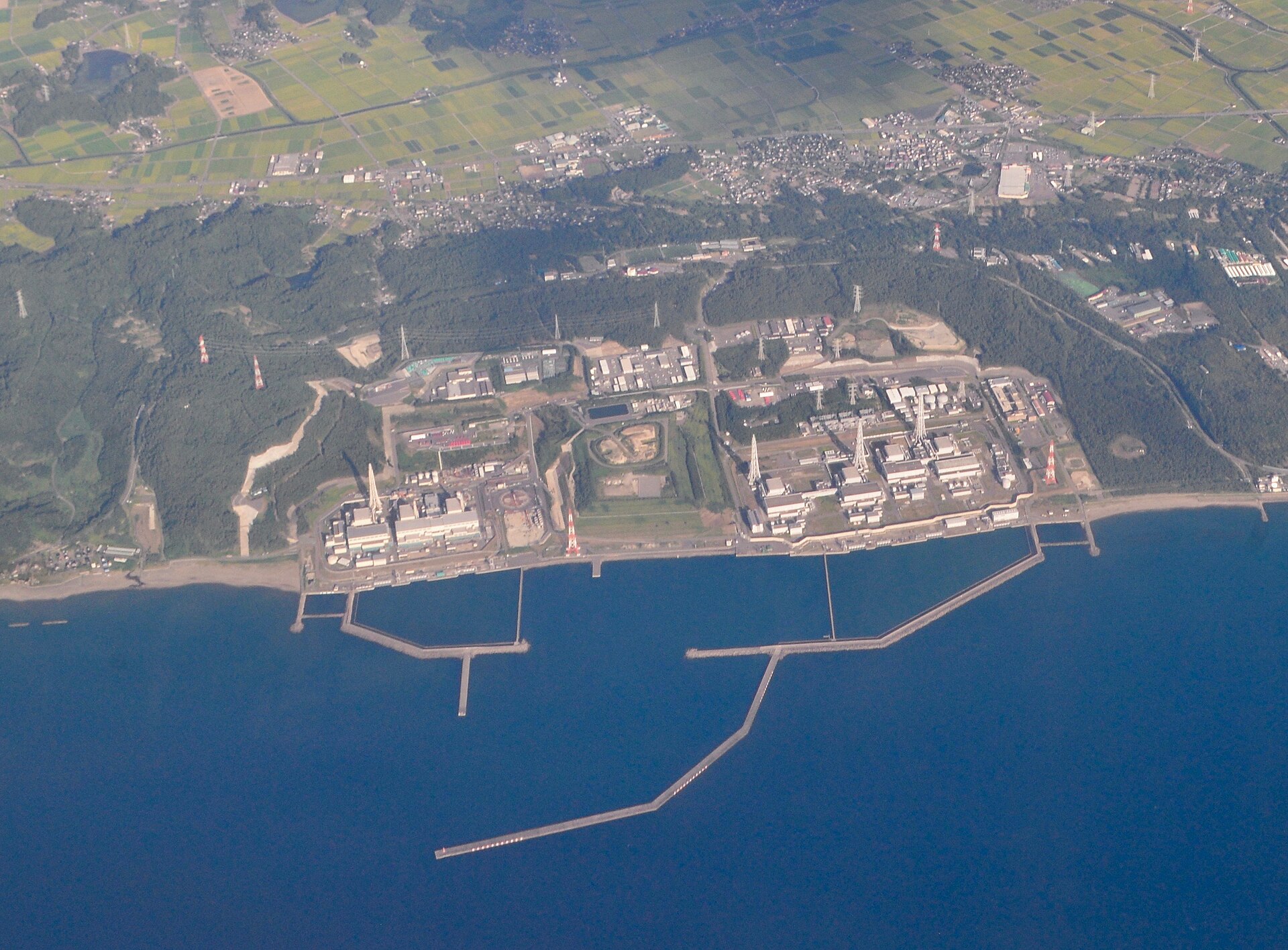
Operated by TEPCO on the coast of Niigata Prefecture, it has seven reactors, a mix of boiling-water and advanced boiling-water designs. It has been the world’s largest nuclear station by installed capacity for many years. Its units were taken offline after the Fukushima accident of 2011, and returning them to service has depended on regulatory review and local consent. Always check TEPCO and the Japanese regulator for the present state of each unit.
Bruce (Canada)
Bruce Nuclear Generating Station in Ontario, run by Bruce Power, has eight CANDU heavy-water reactors. It is generally described as the largest operating nuclear plant in the world by net capacity. Life-extension work and uprates have increased its output over time.
Yangjiang (China)
Yangjiang in Guangdong Province was built in phases by CGN with six pressurised-water units. It shows the speed of China’s nuclear build-out, with units entering service in quick succession.
Hanul and Hanbit (South Korea)
Both are operated by Korea Hydro and Nuclear Power and each hosts six reactors. They are part of a fleet that supplies a large share of South Korea’s electricity.
Zaporizhzhia (Ukraine)
The six VVER-1000 reactors make it Europe’s largest nuclear plant. The site has been under Russian military control since early 2022, and its reactors have been in a shut-down state, with safety concerns monitored by the IAEA. Its capacity exists on paper, but its reactors have not been supplying power to the grid since the occupation began.
Gravelines, Paluel and Cattenom (France)
These EDF stations each have between four and six reactors of the 900 and 1,300 megawatt classes. They show how France built a standardised fleet in the 1970s and 1980s.
Why These Plants Lead
Several factors explain why a handful of sites reach such size:
- Multi-unit design: building several reactors on one site shares land, cooling water, grid connections, security and staff, and lowers cost per megawatt.
- Coastal or lakeside cooling: large volumes of water are needed, which favours sea and lake shores.
- Strong grid access: large lines connect output to demand centres.
- State-backed programmes: France, Korea, Japan and China built their fleets through coordinated national plans.
- Local acceptance: communities near existing nuclear sites are often more willing to accept expansion.
Regional Trends and Surprises
Asia dominates the new-build picture. China has the biggest pipeline of reactors under construction, and South Korea and Japan host some of the biggest sites. Europe’s giants are mostly older French and Ukrainian stations. North America has only one entry in the top group, Bruce, because the United States built many single-site plants with two or three units rather than very large multi-unit sites. The largest U.S. station, Palo Verde in Arizona, has three reactors and sits below the global top group.
There are some surprises. The biggest plant on paper is not the biggest producer, because shut-down units add capacity but not output. And plants that look small on the list can have very high capacity factors, delivering more electricity than larger sites with long outages.
What the Numbers Mean for Energy Markets
Large nuclear plants supply steady, low-carbon baseload power. A single multi-gigawatt site can power millions of homes, so its outages affect regional prices, and its restart or closure moves market expectations. Japan’s experience shows that capacity on paper does not guarantee supply. Canada’s shows that refurbishment can extend the life of a large fleet at lower cost than building new.
The list also indicates where new projects may be heading. Developers and governments now discuss new large reactors, small modular reactors and life extensions, and the largest nuclear power plants are a reminder of how long and capital-intensive such projects are.
Frequently Asked Questions About the Largest Nuclear Power Plants
Which is the largest nuclear power plant in the world?
By installed net capacity, Kashiwazaki-Kariwa in Japan. By operating capacity, Bruce in Canada is usually cited as the largest.
Which is the largest nuclear plant in Europe?
Zaporizhzhia in Ukraine, although its reactors have been shut down since the occupation began. Among operating European plants, French stations such as Gravelines are the largest.
Which country has the most nuclear capacity?
The United States has the most installed reactor capacity, followed by France and China, according to IAEA data. China has the largest number of reactors under construction.
What is the largest nuclear plant in the United States?
Palo Verde Generating Station in Arizona, with three reactors.
Why are net and gross capacity different?
Plants use some of the electricity they generate to run pumps, cooling systems and other equipment. Net capacity excludes that self-use.
Conclusion
The largest nuclear power plants are multi-reactor coastal sites in Japan, Canada, China, South Korea, Ukraine and France, with capacities of roughly five to eight gigawatts each. Rankings change with the definition used, so check whether a list counts net or gross capacity and operating or idle units. For the latest status, rely on the IAEA PRIS database and operator announcements.
Sources and further reading
- International Atomic Energy Agency, Power Reactor Information System (iaea.org)
- World Nuclear Association, reactor and country data (world-nuclear.org)
- Tokyo Electric Power Company Holdings, Kashiwazaki-Kariwa information (tepco.co.jp)
- Bruce Power, station information (brucepower.com)
- EDF, French nuclear fleet information (edf.fr)
- U.S. Energy Information Administration, nuclear data (eia.gov)