Why Westinghouse and BWXT Matter to Nuclear Supply Chains


Last updated: November 22, 2026
Two American companies sit at the center of almost every Western effort to rebuild nuclear capacity: Westinghouse Electric and BWX Technologies (BWXT). Neither is a traditional arms maker, but both grew out of — and still partly depend on — US and allied defence programmes, and both are now central suppliers to the civilian nuclear buildout that governments are counting on for grid decarbonisation and AI-driven power demand. Their story is a clear example of how defence-rooted nuclear engineering feeds directly into civilian energy capacity.
BWXT: the US Navy’s sole nuclear fuel supplier, and a growing civilian manufacturer
BWXT, spun off from Babcock & Wilcox’s nuclear division in 2015, describes itself as the sole manufacturer of naval nuclear reactors and reactor fuel for the US Navy’s submarines and aircraft carriers, built mainly at its Lynchburg, Virginia site. That defence role — part of the Navy’s decades-long reactor and fuel-security chain — is BWXT’s most sensitive and most consistent revenue line, but the company has used the same manufacturing base to expand well beyond it:
- It fabricates TRISO advanced fuel for Antares Nuclear, the microreactor developer selected under the US Air Force’s ANPI programme to supply military bases (see our piece on whether microreactors can power military bases) — fuel fabrication for that programme began in late 2025.
- In Canada, BWXT supplies components for CANDU reactor refurbishments and for Ontario Power Generation’s BWRX-300, the small modular reactor project under construction at Darlington — the first grid-connected SMR build in North America.
- It processes government-owned enriched-uranium scrap under contract to the US Department of Energy’s National Nuclear Security Administration, and its executives have publicly discussed a larger domestic uranium-enrichment build-out tied to replenishing the US stockpile.
- It runs a long-standing medical-isotopes business, unrelated to propulsion but built on the same nuclear-materials handling expertise.
Westinghouse: naval-reactor lineage, now anchoring the civilian AP1000 fleet
Westinghouse’s link to defence is historical rather than ongoing: the company built the first pressurised-water reactor (PWR) for USS Nautilus in the 1950s under the US Navy’s Rickover-led reactor programme, then commercialised that same reactor concept for civilian power. Almost every large PWR built since — including Westinghouse’s own AP1000, the reactor design behind Georgia’s Vogtle 3 and 4 and planned or under-construction plants in Poland, Bulgaria and elsewhere — descends from that naval engineering. See our explainer on how a nuclear-powered submarine works and the broader piece on what is nuclear propulsion for more on that lineage. In 2026, Westinghouse has pushed to industrialise that legacy at fleet scale:
- In March 2026 it announced a “Standard AP1000 Plant” specification intended to let utilities order a largely pre-engineered design rather than a bespoke one, aimed at cutting the cost and schedule overruns that hit Vogtle.
- In June 2026 Westinghouse said it intends to partner with the US Department of Energy’s Office of Energy Dominance Financing on American Nuclear Supply Chain Loans, intended to let utilities and suppliers buy long-lead-time reactor components (such as reactor pressure vessels and steam generators) ahead of a confirmed order — a financing tool meant to shorten delivery timelines by as much as three years.
- It has agreed with Nuclear Transport Solutions to co-develop “Pegasus,” a transport package for high-assay, low-enriched uranium (HALEU) fuel — the advanced fuel type most next-generation SMRs and microreactors, including several with defence-programme customers, will need.
Why both companies matter to the same supply chain
| BWXT | Westinghouse | |
|---|---|---|
| Core defence business | Sole supplier of naval reactors and reactor fuel to the US Navy | Historical: designed the first naval PWR (Nautilus, 1950s); no major current defence contract |
| Core civilian business | Nuclear components, medical isotopes, advanced-fuel (TRISO) manufacturing | Large-scale reactor design and construction (AP1000), nuclear fuel and services |
| Flagship civilian project | BWRX-300 components, Darlington, Ontario (Canada) | AP1000 fleet: Vogtle 3&4 (US, operating); Poland, Bulgaria (planned/under contract) |
| 2026 dual-use link | TRISO fuel for Antares Nuclear’s military-base microreactors | HALEU transport package (Pegasus) usable by both civil SMRs and defence-adjacent microreactor programmes |
| Status | Operating / expanding | Operating / expanding |
Both companies also sit inside the wider group this site has tracked under which defence companies are investing in energy technologies, alongside Rolls-Royce SMR, GE Vernova, Honeywell, General Atomics and Fincantieri. What sets BWXT and Westinghouse apart is that nuclear fuel and components — not batteries, microgrids or SAF — is their core product, which makes them a bottleneck (and therefore a point of leverage) for almost every Western SMR and large-reactor programme now being planned.
Where the overlap shows up in policy
US and allied governments have increasingly treated nuclear fuel capacity itself as a security issue, not just a commercial one: domestic uranium conversion and enrichment capacity, HALEU availability, and naval fuel fabrication have all been folded into the same “nuclear fuel security” policy conversations that also cover grid decarbonisation and AI-driven electricity demand. BWXT’s naval fuel role and its civilian TRISO and SMR-component work draw on the literal same production lines and the same specialised workforce, which is why officials increasingly discuss defence and civilian nuclear fuel capacity together rather than separately.
FAQ
Are Westinghouse and BWXT defence companies?
BWXT has an active, ongoing defence role as the US Navy’s sole supplier of naval reactors and reactor fuel. Westinghouse’s defence link is mostly historical — it designed the first naval reactor in the 1950s — though it still supplies fuel-cycle technology, such as HALEU transport, that both civilian and defence-adjacent reactor programmes will need.
What’s the difference between naval and civilian nuclear fuel?
Naval reactors generally use more highly enriched fuel than most civilian power reactors, which is one reason naval fuel fabrication is handled by a single, closely controlled supplier (BWXT) rather than the broader commercial fuel market that supplies civilian plants.
Why does the US rely on BWXT alone for naval nuclear fuel?
Naval fuel fabrication requires facilities, security clearances and non-proliferation controls that only one US company has maintained continuously since the Cold War; building a second qualified supplier would take years and significant investment.
What is the AP1000 and how is it connected to the Navy?
The AP1000 is Westinghouse’s large civilian pressurised-water reactor design. It descends from the pressurised-water reactor concept Westinghouse first built for a US Navy submarine in the 1950s, though the AP1000 itself is a civilian design with no naval application.
Does BWXT’s SMR and microreactor work overlap with its naval work?
The customers and products are different (civilian SMR components and defence-programme microreactor fuel, versus Navy fuel and reactors), but they are made using the same advanced-manufacturing and nuclear-materials expertise at BWXT’s facilities.
Sources
- BWXT investor and overview materials, 2026 (bwxt.com)
- BWXT Q2 2026 earnings call remarks, CEO Rex Geveden, on uranium enrichment capacity
- Westinghouse Nuclear newsroom: Standard AP1000 Plant announcement (March 2026); DOE Office of Energy Dominance Financing partnership (June 2026); Nuclear Transport Solutions HALEU transport agreement
- E&E News, “The race to develop American-made nuclear fuel”
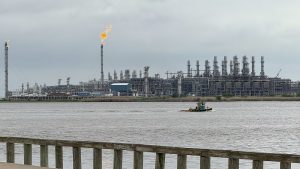
Illustrative image. Photo: Nuclear Regulatory Commission from US, Public domain, via Wikimedia Commons — source