What Is Henry Hub and Why Does It Set U.S. Gas Prices?

Last updated: November 9, 2026
Henry Hub is a natural gas pipeline interconnection point in Erath, Louisiana, that serves as the official delivery point for the NYMEX natural gas futures contract and, as a result, the benchmark price for natural gas across the United States. Prices are quoted in US dollars per million British thermal units ($/MMBtu), and most of the roughly 200 regional pricing hubs in North America are valued relative to Henry Hub rather than independently.
What Henry Hub is and where it sits
Henry Hub is not a company or an exchange — it is a physical point where multiple natural gas pipelines meet, located near Erath in Vermilion Parish, Louisiana. According to CME Group, the hub interconnects with eight interstate and three intrastate pipelines, giving shippers access to markets across the Midwest, Northeast, Southeast and Gulf Coast regions of the US. The hub itself is owned and operated by Sabine Pipe Line LLC, a subsidiary of EnLink Midstream, which acquired the asset from Chevron in 2014; older reference material that names Chevron as owner reflects the pre-2014 ownership structure.
How Henry Hub became the US gas benchmark
The New York Mercantile Exchange (NYMEX, part of CME Group) chose Henry Hub as the delivery point for its natural gas futures contract because of its dense pipeline connectivity, which made it a natural aggregation point for supply and demand. Each standard NYMEX Henry Hub futures contract covers 10,000 MMBtu; CME also lists a Micro Henry Hub contract sized at 1,000 MMBtu for smaller positions. Because so many pipelines can deliver gas into or out of the hub, its price reflects nationwide supply and demand conditions rather than one region’s local bottlenecks, which is why traders, utilities and analysts use it as the reference price for the entire US market.
Why Henry Hub matters
Most other US natural gas pricing points are quoted as a “basis” — a differential above or below Henry Hub — rather than as a standalone price. When a region needs more gas than its pipelines can bring in, its local hub price rises above Henry Hub; when a producing region has more gas than its pipelines can move out, its local price falls below Henry Hub. This makes Henry Hub the anchor for:
- Domestic pricing — wellhead contracts, utility fuel costs and, indirectly, retail heating and electricity bills across much of the US
- US LNG export contracts — many long-term US LNG supply agreements are priced as a fixed fee plus a Henry Hub-linked variable cost, in contrast to oil-indexed or Asian spot-indexed (JKM) contracts common elsewhere
- Financial and hedging markets — the NYMEX Henry Hub futures strip is one of the most actively traded commodity contracts globally and is used by producers, utilities and traders to hedge gas-price risk
Henry Hub vs. other energy benchmarks
Henry Hub plays the same structural role for US natural gas that Brent crude plays for international oil pricing: both are reference prices that other contracts are quoted against rather than commodities traded in isolation. It is a distinct concept from LCOE, which models the lifetime cost of building and running a power plant rather than the market price of a fuel. Outside the US, natural gas markets use their own regional benchmarks — the Dutch TTF hub for Europe and the JKM spot price for LNG delivered into Northeast Asia — and these can diverge sharply from Henry Hub when US LNG export capacity, weather or pipeline constraints change the balance between domestic and international supply.
| Benchmark | Commodity | Region | Unit |
|---|---|---|---|
| Henry Hub | Natural gas | United States | $/MMBtu |
| TTF (Title Transfer Facility) | Natural gas | Europe | €/MWh |
| JKM (Japan Korea Marker) | LNG spot | Northeast Asia | $/MMBtu |
| Brent crude | Crude oil | Global/Atlantic basin | $/barrel |
What moves the Henry Hub price
Henry Hub prices respond to the same supply-and-demand drivers as any commodity market: US gas production levels (especially from the Permian, Appalachian and Haynesville shale plays), storage inventory levels tracked weekly by the US Energy Information Administration (EIA), weather-driven heating and cooling demand, and the volume of gas being diverted to LNG export terminals along the Gulf Coast. As US LNG export capacity has expanded, Henry Hub has become increasingly linked to international gas markets: strong overseas demand for US LNG can pull more gas toward export terminals and put upward pressure on the domestic benchmark. The EIA and CME Group both publish Henry Hub futures and spot price data on a daily basis; the official NYMEX settlement is the figure most commonly cited as “the Henry Hub price.”
Related entities
Henry Hub prices are watched closely across the US energy sector, including by gas producers and utilities active in the United States energy profile, by LNG exporters whose contracts reference it, and by power generators whose fuel costs move with it.
FAQ
Where is Henry Hub located?
Near Erath, in Vermilion Parish, Louisiana, at a point where multiple interstate and intrastate natural gas pipelines interconnect.
Who owns Henry Hub?
Sabine Pipe Line LLC, a subsidiary of EnLink Midstream, has owned and operated Henry Hub since acquiring the asset from Chevron in 2014.
Why is Henry Hub the US natural gas benchmark?
It is the delivery point for the NYMEX natural gas futures contract, and its dense pipeline connectivity makes its price a reliable proxy for nationwide, rather than purely local, gas market conditions.
What is the Henry Hub price quoted in?
US dollars per million British thermal units ($/MMBtu). The standard NYMEX futures contract covers 10,000 MMBtu.
Is Henry Hub the same as TTF or JKM?
No. Henry Hub is the US benchmark; TTF is Europe’s natural gas benchmark and JKM is the spot price marker for LNG delivered into Northeast Asia. The three can move independently depending on regional supply, weather and LNG trade flows.
Related The Daily Energy pages
Sources
- CME Group — Understanding Henry Hub
- EnLink Midstream — About Sabine Pipe Line LLC
- US Energy Information Administration — Natural Gas data and analysis
- CME Group — Henry Hub Natural Gas Futures contract specifications
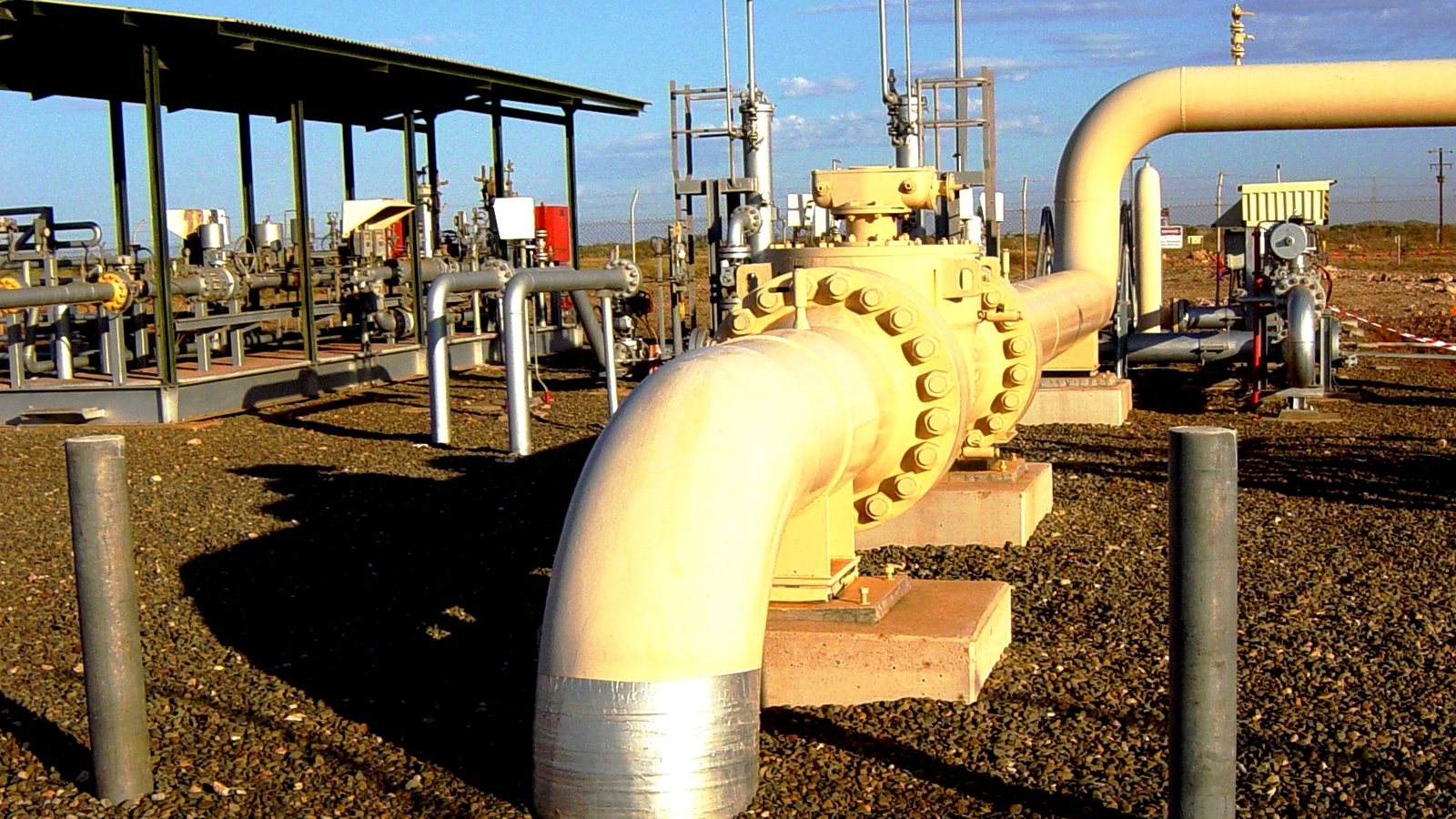
Illustrative image. Photo: Glen Dillon, CC BY 3.0, via Wikimedia Commons — source