Iran War Adds at Least $39 Billion to World’s LNG Bill, Rystad Says

The war disrupting Iran’s neighborhood has added at least $39 billion to what the world’s LNG buyers will pay in 2026, according to new modeling from Rystad Energy, even though those buyers end up importing 60.7 million fewer tonnes of LNG than they would have without the conflict. The analysis, released October 26, estimates that global LNG portfolio costs will climb to at least $256.3 billion this year from a pre-war estimate of $217.8 billion — an 18% increase — as the loss of Qatari and Emirati cargoes through the Strait of Hormuz pushes buyers toward a thinner, pricier spot market.
Why the bill is rising even as volumes fall
Rystad’s modeling assumes Qatari and UAE LNG deliveries are effectively unavailable from March through the end of 2026, a disruption tied to the conflict’s effect on shipping through Hormuz, the chokepoint through which Qatar — the world’s largest LNG exporter alongside the United States — moves nearly all of its cargoes. Tanker attacks in and around the strait hit a monthly record this month, and the resulting squeeze means buyers are not simply paying more for the same gas; they are paying more for less of it, because the volumes that would have moved through Hormuz at contracted prices are gone and have to be replaced, if at all, on the open market.
Europe absorbs the sharpest hit
Of the roughly $39 billion in added global costs, Europe accounts for at least $12 billion — an 18% rise in its own LNG bill — even as its import volumes fall by 24 million tonnes. The region is exposed because it normally buys around 65% of its LNG on the spot market and ties roughly a quarter of its long-term contracts to gas-hub price indexes rather than oil, leaving it with comparatively little insulation when spot prices spike. Europe was due to receive 24.7 million tonnes of Qatari LNG in 2026 and, under Rystad’s modeling, stands to lose 20.6 million tonnes of that volume. According to the analysis, the region’s spot-import share rises by only 5.5 percentage points once demand destruction — industrial users and utilities simply burning less gas at these prices — is factored in, which Rystad’s Christoph Halser, a senior analyst on its gas and LNG research team, points to as evidence that Europe has little remaining room to out-bid other buyers for scarce cargoes.
East Asia’s older contracts turn into an advantage
East Asian buyers are faring better in relative terms, according to Rystad, despite having the largest nominal exposure to Qatari and Emirati supply of any region. Roughly 82% of East Asia’s long-term LNG contracts are indexed to oil prices rather than to gas hubs, and only about 14.5% of its imports are bought on the spot market — a legacy of the long-term, oil-linked contracting structure that Japanese and South Korean buyers in particular have relied on for decades. That structure is translating into an estimated 9.7% rise in East Asia’s LNG costs, the smallest increase of any importing region outside the Middle East itself, even as the region works to replace some of the same lost Gulf volumes.
Smaller markets are cutting demand instead of paying up
Elsewhere, the adjustment is showing up more in volumes than in prices. Rystad says South Asian buyers are adjusting mainly by importing less, with Pakistan cutting purchases more sharply than India. In Africa, Egypt is driving the increase in both prices and import volumes as it leans more heavily on LNG to cover gas shortfalls, while Brazil is doing the same in South America. In the Middle East itself, the adjustment is also happening through demand destruction rather than substitution, reflecting how little alternative supply is available to a region whose own export infrastructure is part of what the conflict has disrupted.
What Rystad says importers should do next
Halser’s central argument is that the episode exposes a gap between price risk and supply risk: buyers who diversified which price benchmark their contracts were linked to still ended up unable to guarantee they would receive physical cargoes when a chokepoint closed. Rystad’s recommendation is for buyers to match contract length and volume flexibility to their residual, uncontracted demand, and to diversify the geographic origin and shipping route of that supply — pointing to US Gulf Coast cargoes, which reach Europe without transiting Hormuz, and Australian and Canadian Pacific supply as lower-chokepoint-risk alternatives, while noting that Asia-bound US cargoes can still run into separate capacity constraints at the Panama Canal. Rystad also flags that expanding US liquefaction capacity gives importers access to Henry Hub-indexed supply, but cautions that rising feedgas demand from new liquefaction trains could itself support higher Henry Hub prices over the life of a long-term contract — meaning today’s price advantage for US-linked cargoes is not guaranteed to hold for the duration of the deals being signed now.
Sources
- OilPrice.com, “The Iran War Just Added $39 Billion to the World’s LNG Bill,” contributed by Rystad Energy, October 26, 2026 — primary source for all cost, volume and regional figures, and for analyst commentary from Christoph Halser.
- The Daily Energy, “Japan’s Trade Deficit Nearly Doubles as Hormuz Crisis Inflates Energy Bill” — cited for independent context on how the same Hormuz disruption has already raised one major LNG importer’s energy costs.
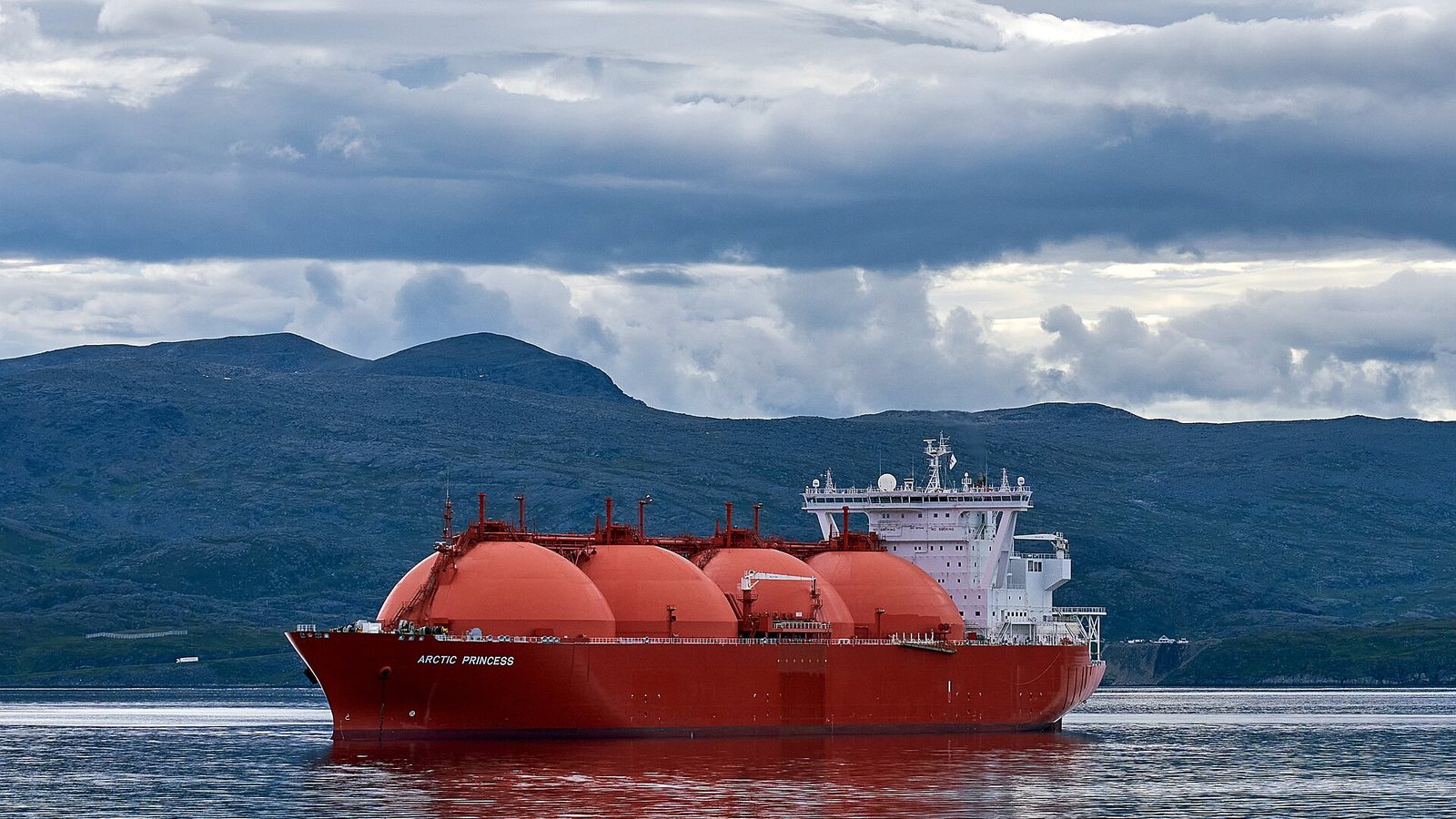
Illustrative image. Photo: Virtual-Pano, CC BY-SA 4.0, via Wikimedia Commons — source