DOE Designates Helium a Critical Material, Citing Semiconductor Supply Risk


The US Department of Energy designated helium a critical material on October 23, invoking authority under the Energy Act of 2020 to flag the gas as facing “growing supply chain risks” even though the country remains a major helium producer. Energy Secretary Chris Wright signed the determination, which DOE frames around helium’s role in semiconductor manufacturing — an application the agency says has “no viable substitutes” for many of its specific uses, from creating inert atmospheres on chip production lines to leak detection and cooling.
What the designation actually does
DOE’s notice, published alongside a Federal Register filing, says helium meets the statutory definition of a critical material because global demand is growing faster than production while limited refining capacity and lengthy permitting timelines constrain how quickly the US can expand its own output. The agency points to “significant domestic deposits of helium-rich natural gas” as a potential buffer, but the announcement itself does not set out new tariffs, a stockpiling program or direct incentives — it formally labels the gas as critical, a step that typically precedes, rather than replaces, policy tools such as loan support or streamlined permitting for processing plants. Assistant Secretary of Energy Audrey Robertson said the department is “taking decisive action to ensure American manufacturers have reliable access to helium.”
A long-running fight over helium’s status
Helium’s position on US critical-material and critical-mineral lists has shifted before. The gas appeared on Interior’s 2018 critical minerals list but was dropped from a 2021 draft, a decision helium producers and some lawmakers criticized at the time. The European Union, Canada and the UK have all already classified helium as a critical raw material, leaving the US as something of an outlier among major industrial economies. This month’s move brings Washington’s framework closer to its allies’, though it runs through DOE’s own statutory mechanism under the Energy Act of 2020 rather than the Interior Department’s separate critical-minerals process. DOE used that same mechanism last year to designate metallurgical coal as a critical material, a decision Secretary Wright framed in similar national-manufacturing terms.
Why now: a Qatar outage exposed the gap
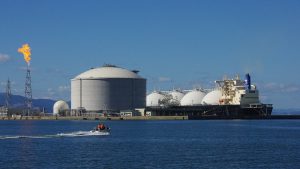
The timing follows a real-world demonstration of how exposed global helium supply can be. Qatar’s Ras Laffan complex, which QatarEnergy operates and which the US Geological Survey credits with roughly 30% of global helium output, went offline after drone strikes in early March tied to the wider Iran conflict, prompting QatarEnergy to declare force majeure on deliveries days later. South Korea, which sourced nearly 65% of its helium from Qatar, and chipmakers elsewhere that depend on uninterrupted inert-gas supply, felt the squeeze almost immediately, and spot helium prices reportedly doubled in the weeks that followed even though spot trading is a small share of total volumes. That episode is the clearest illustration of why DOE now describes helium supply as concentrated and vulnerable, even though the disruption originated overseas rather than in domestic supply.
Part of a wider critical-materials push
The helium designation adds to a growing list of inputs Washington has moved to secure this year as it tries to reduce reliance on concentrated foreign supply chains for materials that underpin both energy infrastructure and advanced manufacturing — a push that has also touched rare earth elements and other minerals tied to defense and energy technology. Unlike rare earths or lithium, where China’s processing dominance is the central concern, helium’s vulnerability runs through a handful of gas fields and liquefaction plants concentrated in the US, Qatar and Russia — meaning the policy tools that work for mineral supply chains may not translate directly to a molecule that is produced, not mined, and cannot be stockpiled as cheaply as a solid.
Sources
- US Department of Energy, “Energy Department Designates Helium as Critical Material to Strengthen American Manufacturing and Supply Chain Security,” October 23, 2026 — primary source for the designation, its legal basis and official quotes.
- The New Arab, “Iran war halts Qatar helium output, threatening global tech supply chains,” March 2026 — independent reporting on the Ras Laffan outage and its effect on global helium supply cited for background context.
Illustrative image. Photo: Tmy350, CC BY-SA 4.0, via Wikimedia Commons — source