Indiana Weighs Up to 6 GW of Canadian Candu Reactors Under New AtkinsRéalis MoU


AtkinsRéalis, Hoosier Energy Rural Electric Cooperative and the State of Indiana signed a memorandum of understanding to study deploying up to eight Enhanced Candu 6 reactors — as much as 6 gigawatts of capacity — at retired or retiring power plant sites across Indiana, World Nuclear News reported Tuesday. The agreement sits alongside, but is separate from, a smaller 960 MW small modular reactor project that American Electric Power, X-energy and Amazon announced in the same state days earlier.
The MoU is an early-stage framework for discussion, not a construction commitment: no site has been chosen, no financing is in place and no final investment decision has been made. AtkinsRéalis, the Montreal-based engineering group that holds the exclusive licence to market the Candu reactor design, is positioned as the original equipment manufacturer; the underlying intellectual property belongs to the Canadian government and is held by Atomic Energy of Canada Ltd. Hoosier Energy, a not-for-profit transmission cooperative that serves rural electric members across central and southern Indiana, will contribute its grid and siting expertise to early discussions, while the state government is a signatory to the agreement. Indiana Governor Mike Braun framed the deal around jobs and affordability, saying the state wants to ensure “affordable electricity and high-wage opportunities” for its workforce.
Why Candu, and why now
The Enhanced Candu 6 is a Canadian pressurised heavy-water reactor design in the 700-plus megawatt class that uses natural, unenriched uranium fuel and can be refuelled while operating, rather than requiring extended outages. AtkinsRéalis has been working to bring the technology into the U.S. market for the first time: the company filed a notice of intent with the U.S. Nuclear Regulatory Commission in June to begin the licensing process, held its first public NRC meeting on the design in August, and has since submitted the first of seven planned topical reports covering its quality-assurance programme. That licensing push is unfolding against a broader surge in U.S. utility interest in nuclear power, driven largely by data-center and AI-related electricity demand, and has been helped along by a Trump administration order directing regulators to speed up commercial reactor licensing.
A state with no nuclear plants, suddenly in demand
Indiana currently has no operating commercial nuclear power plant; its generation mix has historically leaned on coal and natural gas. The MoU explicitly points to a “gas-to-nuclear” or coal-to-nuclear construction model, evaluating retired or retiring power sites rather than greenfield locations — the same brownfield logic AEP and X-energy used days earlier when they picked the site of AEP’s retired Breed coal plant in Sullivan County for their own 960 MW small modular reactor feasibility study. Reusing an existing power-plant site can shorten timelines by preserving land rights, transmission connections and local workforce experience, which is one reason Indiana is now fielding two separate nuclear proposals — one for small modular reactors, one for a much larger fleet of heavy-water units — within the same week.
What has to happen before anything gets built
AtkinsRéalis Nuclear President Joe St Julian said the goal is to “strengthen energy security, support skilled jobs and deliver lasting benefits to communities,” while Hoosier Energy President and CEO Donna Walker said her cooperative was “pleased to offer our expertise as part of early discussions.” Both framings are consistent with a project still years from any construction decision: the MoU itself states that any deployment timeline depends on site selection, financing, offtake arrangements, regulatory and licensing approval, environmental review, transmission planning and further stakeholder engagement — all still to be worked out. For comparison, the Enhanced Candu 6’s closest service record is in Ontario, Canada, where Candu units at stations such as Bruce Power and Pickering have operated for decades and are currently undergoing multibillion-dollar refurbishments rather than new construction.
Sources
- World Nuclear News, “Indiana considering 6 GW Candu nuclear project”, Oct. 20, 2026 (MoU terms, partner quotes, NRC licensing timeline, related Sullivan County project)
- TheDailyEnergy.com, “X-energy, AEP and Amazon to Study 960 MW SMR Plant at Retired Indiana Coal Site”, Oct. 19, 2026 (background on the parallel Breed coal-site SMR project)
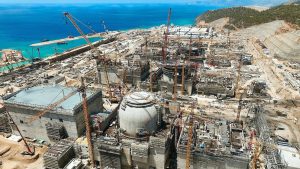
Illustrative image. Photo: Nuclear Regulatory Commission, Public domain, via Wikimedia Commons — source