


Finland Grants World’s First Operating Licence for a Permanent Nuclear Waste Repository
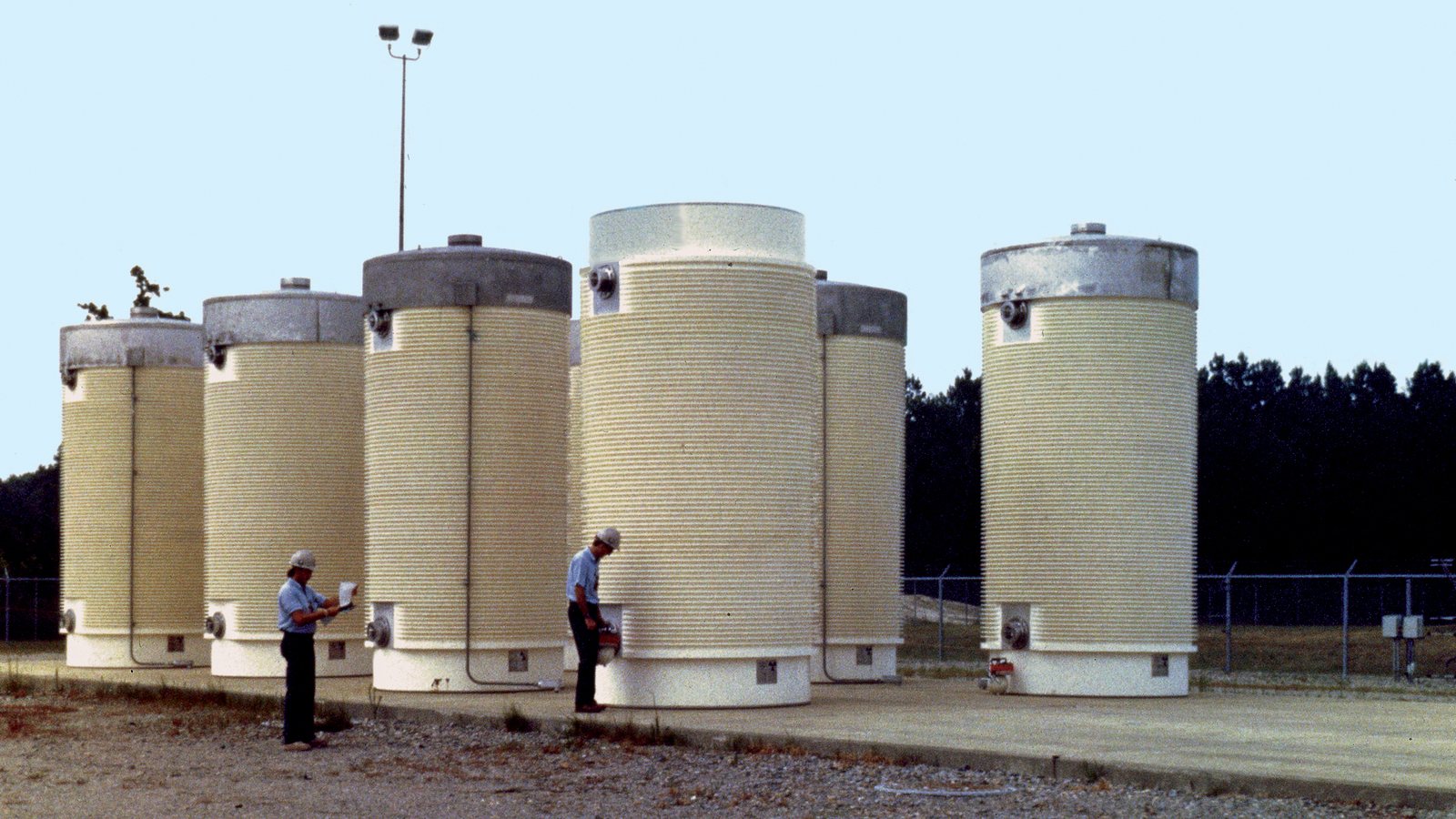

Finland’s government has granted Posiva Oy an operating licence for the world’s first permanent disposal facility for spent nuclear fuel, clearing the last major regulatory hurdle for a repository carved roughly 450 metres into bedrock at Olkiluoto, on Finland’s west coast. The licence, confirmed on October 23, covers both the encapsulation plant where used fuel will be sealed into copper canisters and the Onkalo final disposal facility itself, and runs from March 2024 through the end of 2070.
A decision years in the making
Posiva filed its operating licence application with Finland’s Ministry of Economic Affairs and Employment back in December 2021. The dossier then went to the Radiation and Nuclear Safety Authority, STUK, which spent years working through the safety case before concluding in August that “there is no obstacle to granting the facility an operating licence” on radiation and nuclear safety grounds. The Finnish Government’s decision follows that favourable opinion. Minister of Climate and the Environment Sari Multala tied the approval to the country’s broader energy strategy, saying Finland’s “strong safety culture underpins the production of clean energy,” while Posiva President and CEO Ilkka Poikolainen framed the milestone in narrower terms, noting that for spent fuel, “only safe final disposal is possible.”
What the licence actually covers
The scale of the permitted operation is laid out in detail. Posiva is authorised to possess, process, store and ultimately dispose of up to 6,500 tonnes of uranium in used fuel, loaded into roughly 3,300 copper-and-cast-iron disposal canisters. Once the facility is running at full tilt, Posiva can place a maximum of 60 canisters a year into the repository, each lowered into one of around 100 deposition tunnels that will eventually total about 35 kilometres when excavated across the facility’s planned 100-year operating life. Disposal itself happens at about 450 metres depth; the first tunnel built is roughly 330 metres long and holds about 30 deposition holes. The licence also sets limits for lower-activity waste — up to 3,000 cubic metres of low- and intermediate-level material, of which as much as 1,500 cubic metres may be permanently disposed of at the site. Posiva expects disposal operations to run into the 2120s, after which the repository would be backfilled and sealed.
One more inspection before the first canister goes in
An operating licence is not the same as a green light to start burying fuel. STUK must still carry out its own inspection of the completed encapsulation and disposal facility and confirm separately that it meets every safety requirement set for the start of operations; disposal cannot begin until that review is finished. Posiva has not published a start-up date. The licence does, however, come with its own long-term accountability built in: the company must submit a periodic safety assessment and an updated long-term safety case to regulators within ten years of the licence taking effect, the kind of standing obligation deep geological disposal projects are designed around precisely because their timeframes run in centuries, not years.
Why the rest of the nuclear world is watching Finland
No other country has yet reached this point. Sweden, France, the United Kingdom and the United States are all pursuing their own deep geological repositories, but each remains earlier in the regulatory process than Posiva’s project, which traces back to Finland’s 1983 national decision to pursue final disposal and more than four decades of site investigation, underground research and canister testing since. The absence of a proven, licensed solution for high-level nuclear waste has long been cited by critics as the industry’s unresolved problem; Finland’s approval gives both the nuclear sector and policymakers elsewhere a working regulatory and engineering template to point to, at a moment when several European countries are separately moving to expand nuclear generation. Poland has pushed back the start-up date for its first plant, Slovakia just connected a fourth reactor at Mochovce to the grid, and Italy’s senate has voted to reopen the door to nuclear power after a 39-year gap — all signs of a continent rethinking its nuclear posture even as the back end of the fuel cycle, waste disposal, has lagged behind construction ambitions.
The fuel it’s built to hold
The repository is designed to take spent fuel from two Finnish utilities: Teollisuuden Voima’s Olkiluoto plant, where the Onkalo site itself sits, and Fortum’s Loviisa plant on the country’s south coast. Both are established, operating reactor fleets rather than new builds, meaning Onkalo’s near-term task is working through a known, already-generated inventory of used fuel rather than planning around reactors yet to be built — a materially different problem from the one facing countries like the UK or US, which are still selecting repository sites for waste from larger and more geographically dispersed nuclear programmes.
Sources
- World Nuclear News, “Posiva given go-ahead to operate Finnish used fuel repository,” October 23, 2026 — licence scope, capacity figures, ministerial and CEO quotes, international context.
- Finnish Government (Valtioneuvosto) / Ministry of Economic Affairs and Employment — official confirmation that STUK’s safety opinion was incorporated into the government’s licence preparation, and the licence application timeline.
Illustrative image. Photo: Nuclear Regulatory Commission, Public domain, via Wikimedia Commons — source


