Belgium Pushes Nuclear Takeover Deadline to December 12 Amid Valuation Dispute


The Belgian government, French utility Engie and its Belgian subsidiary Electrabel have pushed back the deadline for agreeing the terms of a potential state takeover of Belgium’s nuclear fleet to December 12, the three parties said in a joint statement reported by World Nuclear News on November 5. The talks, which cover all seven of Belgium’s nuclear reactors along with their staff, subsidiaries, assets and decommissioning liabilities, have now missed two deadlines in a row, with the parties pointing to ‘significant differences’ over how to value the business.
A second missed deadline
Belgium and Engie signed a Letter of Intent on April 30, 2026, opening exclusive negotiations for the state to acquire Engie’s and Electrabel’s nuclear activities in the country. The two sides originally aimed to settle the main commercial terms — known as heads of terms — by October 1, 2026. That date slipped once already, to November 4, and has now slipped again. In their joint statement, the parties said they had made progress but that ‘significant differences remain, particularly regarding the valuation of the transaction,’ adding that they have given themselves ‘a maximum period of one additional month’ to close the gap.
What the Belgian state would be buying
The scope of the deal is broad: it covers the full fleet of seven reactors at the Doel and Tihange sites, along with Electrabel’s nuclear personnel, subsidiaries and the associated assets and liabilities, including the obligation to decommission and dismantle retired units. Of the seven, only two are currently generating power. Doel 4 came back online on October 8 after a long-term-operation overhaul, and Tihange 3 restarted on July 10, both under a separate 10-year licence extension that Belgium and Engie agreed to keep the units running to 2035. The other five are shut: Doel 1 (retired February 2025), Doel 2 (taken off the grid in December after 50 years of service), Doel 3 (closed September 2022), Tihange 1 (disconnected September 30, 2025) and Tihange 2 (closed January 2023). Decommissioning and dismantling work on those closed units is reported to be on hold while the ownership talks continue.
Licence extension and ownership are two separate questions
It is worth separating two distinct processes that are easy to conflate. The 10-year licence extension for Doel 4 and Tihange 3 is already agreed and is why those two reactors are running again. The current negotiation is a bigger and separate matter: whether the Belgian state buys Engie’s and Electrabel’s entire nuclear business outright, rather than simply keeping reactors licensed to operate. A deal on heads of terms would not itself restart any of the five closed reactors; it would determine who owns and controls the fleet, and on what financial terms, going forward.
Part of a wider reversal of Belgium’s phase-out policy
The talks follow a sharp policy turn in Belgium. A 2003 law had mandated a complete phase-out of nuclear power, but in May 2025 the Belgian parliament voted by a large majority to repeal it, opening the door to both licence extensions and, now, a possible state buy-in. Belgium is not alone in revisiting the ownership and operating life of its nuclear fleet: Czech utility KHNP recently ended talks with a Daewoo-Doosan consortium over construction work for new reactors at Dukovany, and French utility EDF has kept its existing fleet running through supply-chain moves such as Mitsubishi Heavy Industries’ delivery of replacement steam generators to the Cruas plant. Across the region, governments and utilities are negotiating who holds and finances nuclear assets as reliance on them grows again.
What happens if the gap isn’t closed
The joint statement frames December 12 as a hard cap — ‘a maximum period of one additional month’ — rather than an open-ended extension, suggesting the parties see this round of talks as close to its limit. Neither side has said what happens if no agreement on heads of terms is reached by then: whether talks would simply lapse, be extended again, or shift to a different structure altogether. The core sticking point, valuation, is also the hardest to bridge in a negotiation involving a mixed fleet of two operating and five retired reactors, each carrying different decommissioning liabilities and residual value.
Sources
- World Nuclear News, ‘Belgian nuclear power plant negotiations extended,’ November 5, 2026 — for the new December 12 deadline, the valuation dispute, the April 30 Letter of Intent, and the status of all seven reactors.
- Prior World Nuclear News and Brussels Times reporting on Belgium’s 2003 nuclear phase-out law, its 2025 repeal, and the Doel 4/Tihange 3 licence extension.
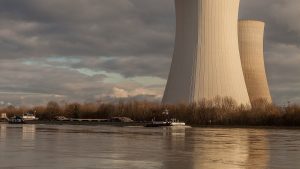
Illustrative image. Photo: Christian David, CC BY-SA 4.0, via Wikimedia Commons — source