Australia Passes Law Forcing LNG Exporters to Reserve Up to 20% of Gas for Home Market

Australia’s parliament has passed legislation forcing liquefied natural gas exporters on the east coast to set aside part of their output for the domestic market, ending nearly a year of debate over how far Canberra should go to shield local households and manufacturers from a tightening gas supply. The Senate cleared the package in a late sitting on Thursday, November 26, and the House of Representatives followed the next morning, sending the bills to law on Friday, November 27.
The centerpiece, the Domestic Gas Reservation Bill 2026, requires LNG exporters supplying the east coast market to reserve up to 20% of their annual export volumes for Australian buyers, a mechanism that takes effect in 2028. It is paired with the Domestic Gas Reservation Levy Bill 2026 and a related bill of consequential amendments. Prime Minister Anthony Albanese announced the result on social media: “PASSED: We’re keeping more gas here for Australians with a domestic gas reservation.”
From a flat mandate to a ceiling
The scheme has been under discussion since Labor first flagged it in December 2025 and released a detailed design in May 2026, before introducing the legislation in October. The Daily Energy reported at the time that the original proposal set a flat 20% reservation requirement. The version that passed softens that to an “up to 20%” ceiling, giving regulators flexibility on the exact share, and it exempts gas already locked into existing long-term export contracts. The opposition Liberal-National coalition said it would not block the bill, letting it pass with broad support despite months of industry pushback.
Why Western Australia got a pass
Western Australia, home to roughly two-thirds of the country’s LNG exports from projects including Chevron’s Gorgon and Wheatstone plants and the North West Shelf venture, secured a full exemption in the week before the final vote. The state already runs its own 15% domestic reservation policy and has no pipeline link to the east coast gas network that the new law targets, making a second, overlapping obligation largely redundant. Western Australian Premier Roger Cook said the carve-out would “give us certainty so we can continue to attract investment, bring on new gas supply, and create jobs.”
What it means for Shell, Santos and Origin Energy
The law’s practical weight falls on the east coast exporters that have opposed it for more than a year. Santos chief executive Kevin Gallagher had warned during the bill’s passage that forcing sales at uneconomic prices could undermine company business models, and urged Canberra to adopt commercial terms closer to the Western Australian model rather than a blanket mandate. Shell Australia chair Cecile Wake called the proposal “an extraordinarily heavy-handed intervention into a market that is actually working well,” while Shell has separately been reshaping its Australian LNG portfolio, selling down its North West Shelf stake to XRG earlier this month. Woodside, which is not named among the three east coast projects directly covered by the obligation, had warned it could shelve a planned Bass Strait drilling campaign if the policy pushed domestic prices too low. The Australian Chamber of Commerce and Industry struck a more measured tone, saying the scheme would have “significant and varied implications,” offering some near-term price relief for industrial gas users but carrying risks for investment further out.
The supply math behind the law
Canberra’s case for intervention rests on warnings from the Australian Competition and Consumer Commission that the east coast market, which spans the gas-dependent manufacturing and power sectors of New South Wales, Victoria and Queensland, risked slipping into a supply deficit as soon as December 2026. That particular shortfall was ultimately averted through existing voluntary agreements between exporters and the government and by drawing on commercial gas reserves rather than mandatory diversions, but officials have continued to argue that the underlying risk of future shortfalls justifies a permanent legal backstop. The reservation mechanism now written into law is designed to apply well before the next tight winter, giving the market more than a year to adjust supply contracts ahead of the 2028 start date.
The outcome leaves Australia with a two-track gas policy: a long-standing, state-run 15% reservation in the west that keeps flowing largely untouched, and a new, nationally legislated ceiling of up to 20% on the east coast that reshapes how Shell, Santos, Origin Energy and other exporters there plan supply contracts for the rest of the decade. Other Australian energy policy moves this year have focused on renewables buildout, but the gas reservation fight has been the most contested domestic energy story of 2026, and its final form — a ceiling rather than a mandate, with Western Australia carved out — reflects the compromises both sides accepted to get it through parliament.
Sources
- Khanlist, “Australian Parliament passes government plan to reserve 20%,” November 27, 2026 — bill passage timeline, Senate and House votes, PM Albanese and WA Premier Cook quotes.
- Yahoo News, “Australia Passes Landmark Law to Reserve Gas for Domestic Consumers,” November 26-27, 2026 — reservation mechanism, 2028 start date, ACCC deficit warning, Western Australia exemption rationale.
- The Daily Energy, “Australia to Introduce Bill Forcing LNG Exporters to Reserve Up to 20% of Gas,” October 9, 2026 — original flat 20% proposal for comparison.
- Reporting on industry reaction during the bill’s passage, including statements attributed to Santos CEO Kevin Gallagher, Shell Australia chair Cecile Wake, Woodside and the Australian Chamber of Commerce and Industry.
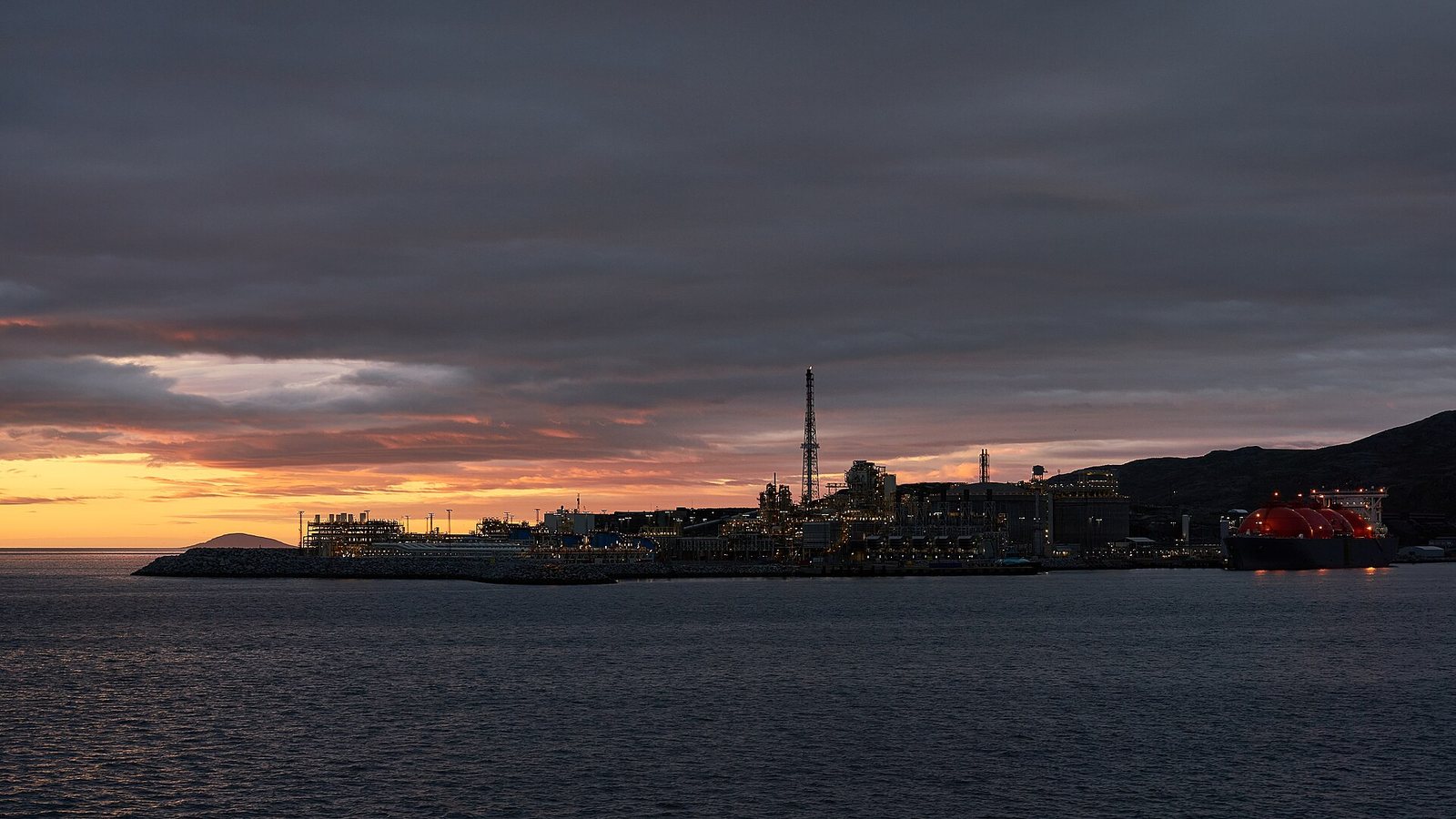
Illustrative image. Photo: Virtual-Pano, CC BY-SA 4.0, via Wikimedia Commons — source