South Australia Selects Four Developers to Advance Almost 13 GW of Wind and Solar at Whyalla

South Australia has granted four renewable energy developers the exclusive right to apply for feasibility licences in the Whyalla West release area, advancing proposals for almost 13 gigawatts (GW) of combined wind and solar capacity in the state’s Upper Spencer Gulf region. The state’s Department for Energy and Mining announced the selection on 19 October 2026, covering more than 3,300 square kilometres of pastoral land and marking the first outcome from a land-release tender opened under South Australia’s Hydrogen and Renewable Energy Act 2023.
Four developers, four different bets
Windlab was awarded the largest slot, with a proposed 6 GW wind-and-solar hybrid project — the single biggest proposal among the four. Altra Energy follows with a 4.7 GW wind-and-solar scheme, while Heron Energy is pursuing a 1.6 GW wind project. Neoen, which already operates large-scale solar and battery storage assets elsewhere in South Australia, was selected for a considerably smaller 350 MW solar project. Added together, the four proposals come to roughly 12.65 GW of proposed capacity, the figure South Australian officials are citing as “almost 13 GW.”
South Australia’s Minister for Energy and Mining, Tom Koutsantonis, framed the selection around the region’s industrial legacy. “For generations, Whyalla has been one of South Australia’s great industrial centres,” he said, adding that the government wants to “build on that strength, attracting new investment and creating opportunities for the next generation of industry.”
A feasibility licence is not a green light
None of the four proposals has reached a final investment decision, planning consent or grid-connection agreement. What the companies have won is an exclusive right — within the Whyalla West release area — to apply for a Renewable Feasibility Licence, which allows them to carry out technical, environmental and commercial studies before lodging a formal development application. South Australia’s government has been explicit that project scope, siting and final capacity will depend on those studies, along with native title processes, environmental assessment and transmission studies with the state’s network operator. Combined proposed capacity at this early stage routinely runs well ahead of what ultimately gets built once engineering, land-use and connection constraints are worked through.
A second release area under the same tender process, Gawler Ranges East, covering roughly 5,200 square kilometres on the Upper Eyre Peninsula, has not yet had its outcome announced.
Why Whyalla, why now
The push to anchor new wind and solar capacity around Whyalla lands alongside an unresolved, multi-billion-dollar effort to rescue the city’s steelworks. The plant was placed into state administration in 2024, and the federal and South Australian governments have since committed a rescue package worth more than A$2 billion, including up to A$500 million from a new sovereign Green Iron Fund. In February 2026, Santos agreed to supply 20 petajoules of gas a year for a decade, starting in 2030, to support a direct-reduced-iron process using local magnetite — a gas-based interim step that critics, including the think tank Climate Energy Finance, argue risks locking Whyalla into fossil-fuel infrastructure instead of the green hydrogen route the state had earlier earmarked roughly A$600 million to pursue through a planned 250 MW electrolyser and 200 MW hydrogen power plant.
That debate over gas versus hydrogen for the steelworks remains unresolved, but it underscores why the state is simultaneously racing to lock in new, low-cost generation in the same corridor: whichever path Whyalla’s industrial future takes, it will need large volumes of firmed renewable power, transmission capacity and port access that are already anchored at Whyalla. The Upper Spencer Gulf’s existing grid infrastructure and heavy-industry footprint make it one of the more straightforward places in the state to add utility-scale wind and solar at this scale, even before the steelworks’ energy strategy is settled.
South Australia already draws the large majority of its electricity from wind and solar in a typical year, and the state has positioned fresh renewable capacity as a way to support both export-oriented green manufacturing ambitions and the reliability of its own grid as coal and gas generation continue to retire.
For more on South Australia’s renewables build-out, see our coverage of Australia’s large-scale solar investment breaking its annual record and the A$790 million battery EPC deal at the Mortlake Energy Hub.
Sources:
- Energy Source & Distribution (esdnews.com.au), “Renewables projects tapped to power Whyalla industry,” 19 October 2026 — developer names, proposed capacities and minister’s quote.
- Whyalla News Online (whyallanewsonline.com.au), “Renewable pipeline grows,” 19 October 2026 — independent local confirmation of the selection.
- PV Magazine Australia (pv-magazine-australia.com), “South Australia opens up new areas for renewable energy opportunities,” 7 April 2026 — background on the release-area tender and land area.
- Engineering News (engineeringnews.co.za), “Santos signs gas supply agreement for Whyalla steelworks,” 20 February 2026 — background on the steelworks rescue and gas-versus-hydrogen debate.
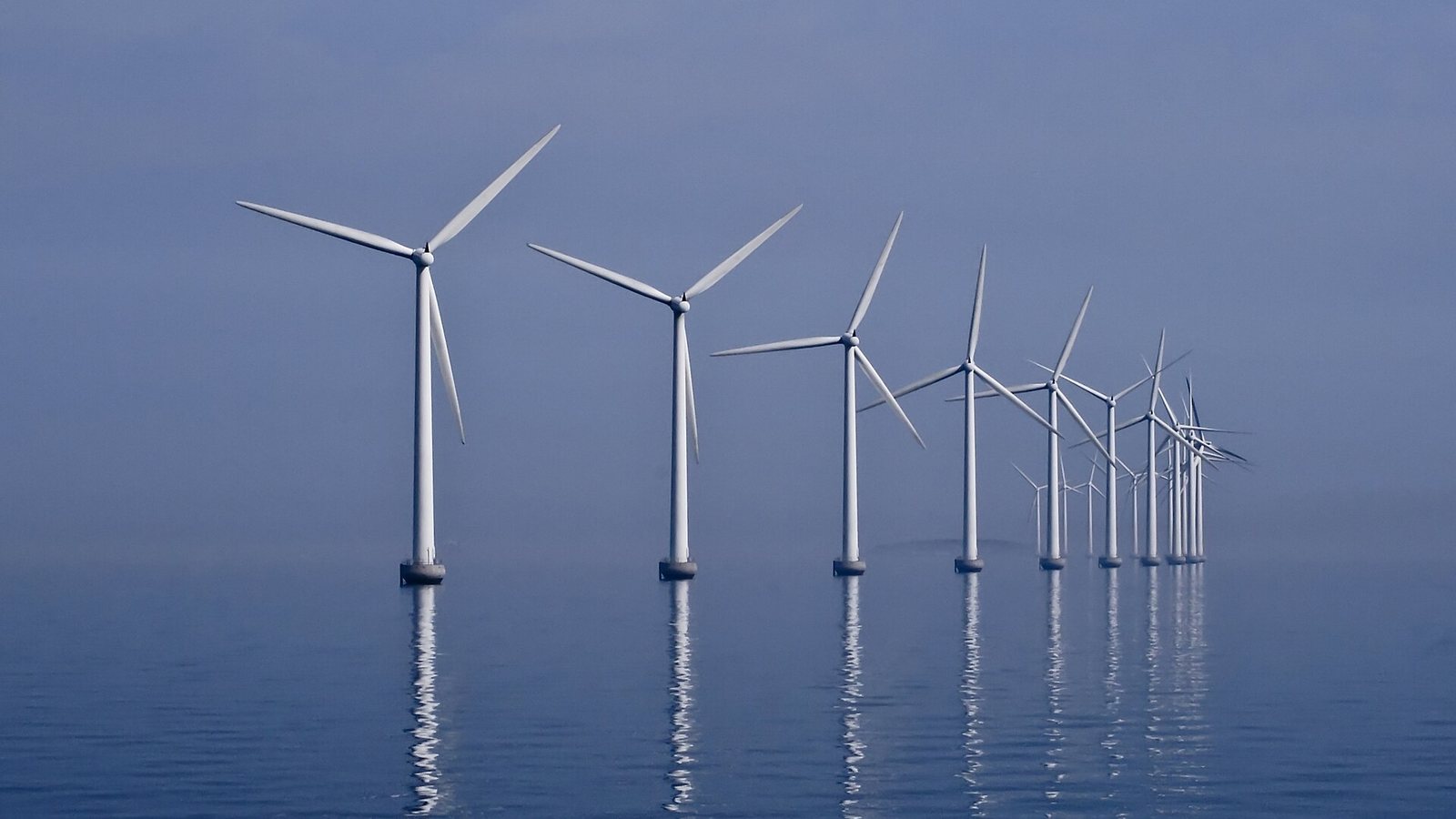
Illustrative image. Photo: Photo by Kim Hansen. Postprocessing (crop, rotation, color adjustment, dust spot, CC BY-SA 3.0, via Wikimedia Commons — source