What Is Capacity Factor in Power Generation?

Last updated: November 23, 2026
Capacity factor is the ratio of the electricity a power plant actually generates over a period of time to the amount it could have generated if it had run at full rated output for that entire period. A plant with a 50% capacity factor produced only half of its theoretical maximum output. The measure is used across every generation technology — nuclear, coal, gas, wind, solar, and hydro — to compare how intensively different plants actually run.
Definition
The U.S. Energy Information Administration (EIA) defines capacity factor as the ratio of a generating unit’s actual electrical output over a given period to the output it could have produced running continuously at full (nameplate) capacity over that same period.
The formula is:
| Capacity factor | = Actual energy output (MWh) ÷ (Rated capacity (MW) × Hours in period) |
For example, a 1 MW generator that runs at full output for one hour produces 1 MWh. If the same unit instead runs at only half its rated capacity for that hour, it produces 0.5 MWh — a capacity factor of 50% for that hour. Over a full year (8,760 hours), a 100 MW plant with a theoretical maximum of 876,000 MWh that actually generates 700,000 MWh has an annual capacity factor of about 80%.
How It Works
Capacity factor is almost always calculated on an annual basis, since output for most plants varies with the season, time of day, maintenance schedules, and (for wind and solar) weather. A plant is never at its theoretical maximum for an entire year: even the most reliable baseload plants need scheduled maintenance outages, and intermittent sources depend on resource availability (sunlight, wind speed, river flow).
Capacity factor should not be confused with efficiency, which measures how much of a fuel’s energy content is converted into electricity. A plant can be highly efficient but run with a low capacity factor if it is only dispatched during peak demand, and vice versa.
Why It Matters
Capacity factor is one of the key inputs into the levelized cost of electricity (LCOE): a lower capacity factor spreads a plant’s fixed construction costs over fewer actual megawatt-hours, raising the cost per unit of electricity generated. It is also used by grid planners and utilities to judge how much a given plant can be relied on to meet demand, and by investors and analysts to assess whether a power project is performing as expected against its design assumptions.
Where It Is Used
Capacity factor figures are published by national statistical agencies (the EIA in the United States, Eurostat in the EU) and by grid operators, and are widely cited in power-plant performance reports, renewable-energy siting studies, and utility regulatory filings. According to EIA data, average U.S. capacity factors in 2024 were approximately:
| Generation type | Average capacity factor (2024, U.S.) |
|---|---|
| Nuclear | ~92% |
| Natural gas (combined-cycle) | ~60% |
| Coal | ~43% |
| Wind | ~34% |
| Solar PV | ~23% |
Figures are rounded U.S. fleet averages for 2024 as reported by EIA data; individual plants vary based on location, technology vintage, and dispatch patterns. Estimates vary slightly between EIA’s own published tables and secondary compilations depending on exact reporting-period cutoffs.
Key Characteristics
- Baseload plants run highest. Nuclear plants post the highest capacity factors of any generation type because they are designed to run continuously and are only taken offline for scheduled refueling and maintenance — see small modular reactors (SMRs), which are also designed around high, steady capacity factors.
- Weather-dependent sources run lowest. Wind and solar capacity factors depend on local wind speed and sunlight hours, and vary significantly by site and season.
- Combined-cycle gas plants (CCGT) sit in between, often used for both baseload and mid-merit dispatch depending on grid needs.
- Capacity factor is not capacity credit. A plant’s capacity factor describes how intensively it runs on average; it does not by itself measure how much that plant can be counted on during a grid stress event, which is a separate planning metric (effective load-carrying capability).
- It cannot exceed 100% under normal accounting, since a plant cannot produce more than its rated maximum output over a period, though brief above-nameplate output is possible for short intervals before averaging.
Related Technologies
Capacity factor interacts closely with LCOE, baseload generation, and grid dispatch concepts. Technologies built specifically to raise the capacity factor of variable renewables include battery storage and pumped hydro, which store excess generation for use when wind or solar output drops.
Real-World Examples
- The UK’s Hornsea offshore wind farm and Dogger Bank wind farm are both offshore projects; offshore wind sites typically post higher capacity factors than onshore wind because wind speeds over open water are stronger and steadier.
- Nuclear plants in the United States have consistently posted capacity factors above 90% for over a decade, reflecting high reliability and long refueling intervals — among the highest of any generation technology worldwide.
- A natural gas CCGT plant used mainly to balance renewables on the grid may run at a 40-50% capacity factor even though it is mechanically capable of running near 90% if dispatched continuously.
FAQ
What is a good capacity factor?
It depends on the technology. For nuclear, above 90% is typical and expected. For onshore wind, 30-45% is considered strong; for solar PV, 20-30% is typical depending on location. There is no single universal benchmark across technologies.
Is capacity factor the same as efficiency?
No. Efficiency measures how much of a fuel’s energy content converts into electricity. Capacity factor measures how much of a plant’s maximum possible output it actually generates over time, regardless of fuel efficiency.
Can capacity factor exceed 100%?
Not under standard reporting conventions, since output is measured against the plant’s own rated maximum. A capacity factor below 100% is the norm because of maintenance, weather, and dispatch decisions.
Why do nuclear plants have a higher capacity factor than solar or wind?
Nuclear plants are designed to run continuously as baseload generation and are only taken offline for planned refueling and maintenance, whereas wind and solar output depends on weather and daylight availability, which varies hour to hour and season to season.
Related The Daily Energy Pages
- What Is LCOE (Levelized Cost of Electricity)?
- What Is a CCGT (Combined Cycle Gas Turbine) Power Plant?
- What Is a Small Modular Reactor (SMR)?
- Hornsea Offshore Wind Farm: Capacity, Ownership and Status
- Dogger Bank Wind Farm: Owners, Capacity and Timeline
- How Do Solar Panels Work?
Sources
- U.S. Energy Information Administration, “Capacity factor” glossary definition and “Today in Energy,” eia.gov
- U.S. Energy Information Administration, Electric Power Annual, Table 4.08.B (capacity factors by fuel type)
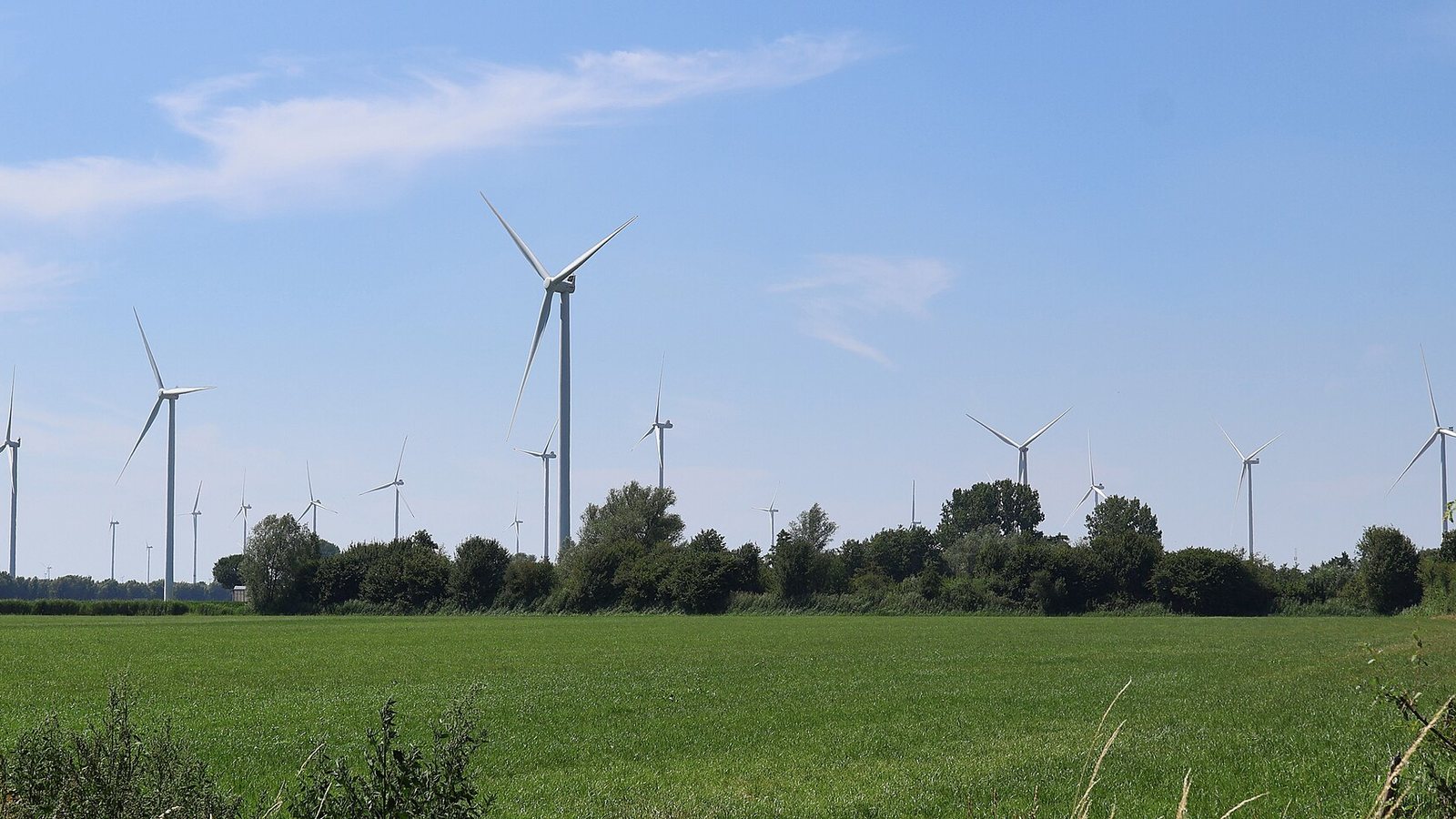
Illustrative image. Photo: Renée Kools, CC BY 4.0, via Wikimedia Commons — source