ENGIE-Led Consortium Reaches Financial Close on 900 MW Shokeir Wind Farm in Egypt

A consortium made up of France’s ENGIE, Aeolus and Egypt’s Orascom Construction has reached financial close on the 900 megawatt (MW) Shokeir wind farm in Egypt’s Gulf of Suez, the companies said in statements published in mid-November. Lenders provided approximately $588 million in non-recourse debt financing for the build-own-operate project, known in some filings as Gulf of Suez 3.
The project company, Shokeir Wind Energy, is owned 35% by ENGIE, 40% by Aeolus and 25% by Orascom Construction, according to a statement from Orascom Construction. Separate equity bridge loans back each shareholder’s stake: Germany’s KfW for ENGIE, Japan’s Mizuho for Aeolus, and the Netherlands’ FMO together with British International Investment for Orascom Construction.
86 Turbines, a 25-Year Government-Backed PPA
The wind farm, near Ras Shokeir on the Gulf of Suez, will use 86 turbines of 10.5 MW each. Its output is covered by a 25-year power purchase agreement with the state-owned Egyptian Electricity Transmission Company, with payment obligations guaranteed by Egypt’s Ministry of Finance, a structure commonly used to make Egyptian renewable projects bankable for international lenders.
Construction on the site began in June 2026, ahead of this month’s financial close. The companies expect the first 300 MW phase to enter commissioning in January 2028, with the full 900 MW in operation by summer 2028.
ENGIE’s Largest Onshore Wind Farm Globally
ENGIE describes Shokeir as set to become its largest onshore wind farm anywhere in the world once complete. The deal also lifts the ENGIE-Aeolus-Orascom Construction consortium’s combined wind capacity in Egypt from about 912.5 MW currently operating to roughly 1.81 gigawatts (GW) once Shokeir is finished, according to the companies’ figures.
The project adds to a wider pipeline of large wind developments on Egypt’s Gulf of Suez coast, a corridor with some of the strongest and most consistent wind resource in the country. Other announced projects in the area include additional phases referred to by developers as Gulf of Suez wind parks, alongside separate contracted capacity from other sponsors; Egypt’s cabinet has said national wind capacity rose to roughly 2.2 GW in 2024 from 1.9 GW the year before, while industry reporting has since put total installed wind capacity above 3 GW. Figures from different sources do not always agree, and the numbers above describe contracted or announced capacity rather than a single verified installed total.
Shokeir is one of several large wind projects moving through Egypt’s pipeline at once. Separately, developers have signed a power purchase agreement for a 1 GW wind project led by Infinity Power and Hau Energy, while NIAT and Rasgha, two 250 MW onshore wind farms, add a further 500 MW between them. A memorandum of understanding with China’s Sany envisions a 2 GW wind-turbine factory alongside a 2 GW wind farm, which Sany has said it expects to connect to Egypt’s national grid within 23 months of signing. Egypt’s electricity minister has separately cited 10.5 GW of renewable generation capacity connected to the national grid across all technologies, a figure that should not be confused with wind-only capacity.
Part of Egypt’s Push to Raise Renewables’ Share of Generation
Egyptian officials have set a series of targets for lifting renewables’ share of the national electricity mix, with government statements citing goals of more than 42% by 2030 and above 60% by 2040; a separate, more recent target cited by state media points to 45% by 2028. Egypt’s government has also issued “golden licences” intended to fast-track large onshore wind projects and has signed memoranda with turbine manufacturers, including a 2 GW manufacturing and wind-farm agreement with China’s Sany, as it tries to attract both capital and industrial capacity for the sector.
The Shokeir financing shows how Egypt has structured its renewable pipeline to rely on sovereign guarantees and a mix of European and Gulf-linked development finance institutions, a model it has used on earlier Gulf of Suez wind projects to bring down the cost of capital for lenders wary of currency and offtake risk.
Sources
- Orascom Construction, “ENGIE-Aeolus-Orascom Construction Consortium Achieves Financial Close on the New 900 MW Build-Own-Operate Shokeir Wind Farm in Egypt,” November 2026, for ownership structure and financing detail.
- Energy Global, “ENGIE-Aeolus-Orascom Construction consortium achieves financial close,” November 16, 2026, for project timeline and turbine count.
- The Middle East Observer, “ENGIE Consortium Secures $588mn Financing for Egypt’s 900MW Wind Farm,” November 16, 2026, for financing figures and lender detail.
- Daily News Egypt, “Gulf of Suez wind farm: 900MW deal reaches financial close,” for consortium capacity context.
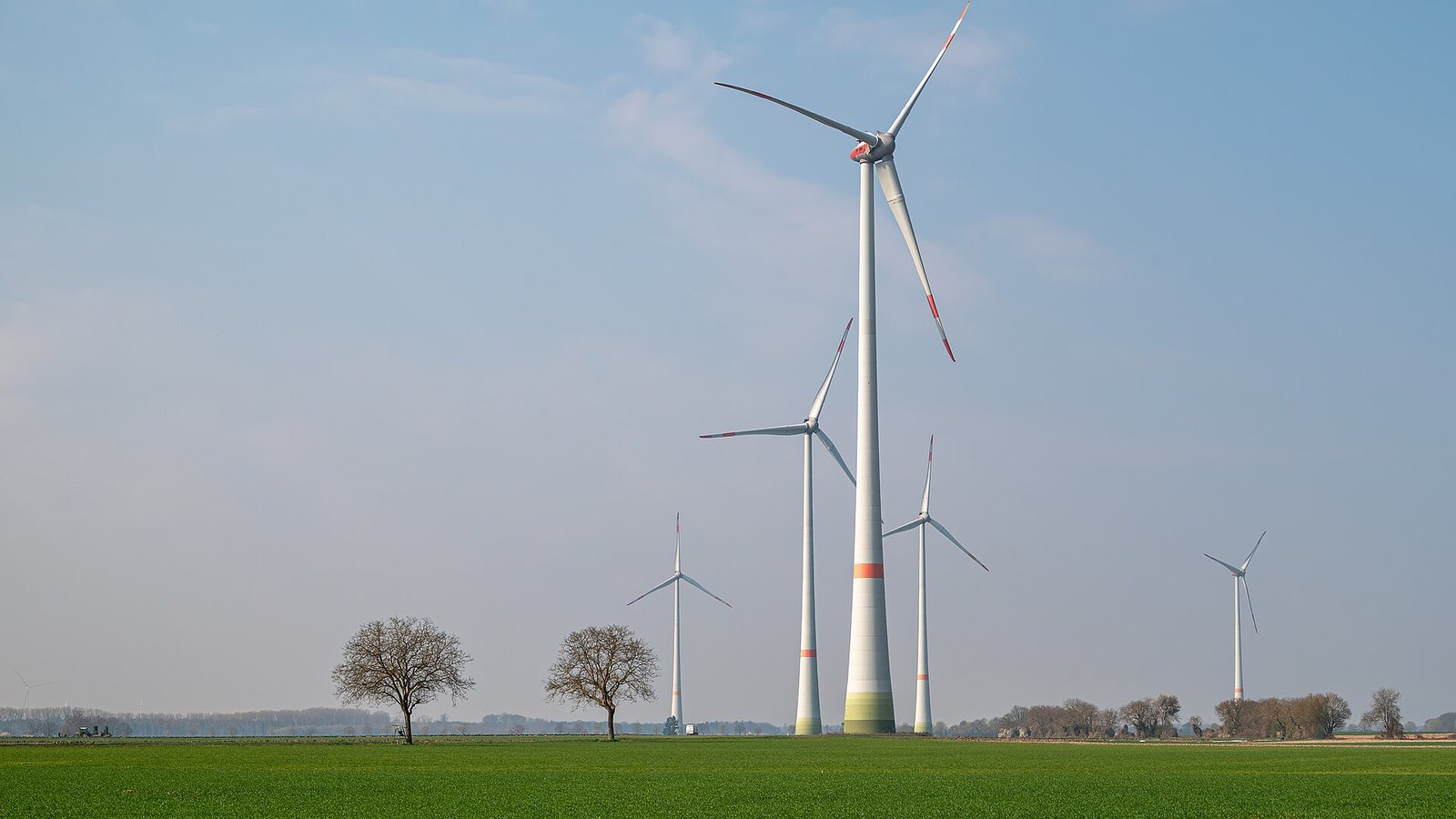
Illustrative image. Photo: Achim Lammerts (Syntaxys), CC BY-SA 4.0, via Wikimedia Commons — source