Romania’s Cernavodă Nuclear Plant Restarts Both Reactors After Drought Shutdown


Romania’s only nuclear power station is back at full strength after its longest outage in two decades. Operator Nuclearelectrica reconnected Cernavodă Unit 1 to the national grid on November 6 and brought it to full power the next day, and Unit 2 began start-up procedures on November 9 with synchronization expected around November 10, according to World Nuclear News. Both 650 MWe CANDU units had been offline since late summer after the Danube River fell to levels too low to guarantee safe cooling-water intake.
A drought that outran the plant’s design assumptions
Unit 1 was taken offline on July 28 and Unit 2 followed on August 13 as a precaution, after water levels near the plant dropped below the roughly 185-centimeter threshold Nuclearelectrica treats as the floor for normal cooling operations. According to World Nuclear News, the drop was more severe than the 100-year low-water event the plant’s designers had planned around. Cernavodă was not alone: persistently low Danube flows this summer also forced Hungary’s Paks nuclear plant to scale back output and affected facilities in Bulgaria, underscoring how a single river’s hydrology now touches the generation plans of several national grids at once.
Putting a price on three months without nuclear power
Romanian Prime Minister Ilie Bolojan’s government has estimated the cost of the two-unit shutdown at around €200 million (about $223 million), a figure cited by acting premier Ilie Bolojan’s office and reported by World Nuclear News. Cernavodă normally supplies roughly a fifth of Romania’s electricity, so taking both units offline simultaneously left the country leaning more heavily on gas, coal and imports through a period that included a summer demand peak.
Nuclearelectrica looks at ways to reduce the risk
Nuclearelectrica chief executive Mihai Gioară said the shutdown gave the company “an opportunity to review and assess the experience gained,” and that it is working with Romanian authorities on short-, medium- and long-term fixes to improve the plant’s availability during low-water periods. One project under discussion, known as Bala 2, would route additional water toward the plant; continued dredging of the river channel is also being treated as a priority. Before Unit 1 could resume supplying the grid, Romania’s nuclear regulator had to sign off on the restart following the extended outage.
A wider test for Danube-dependent nuclear fleets
Cernavodă’s two operating reactors, commissioned in 1996 and 2007, are not the only story at the site: Nuclearelectrica is also continuing construction of Units 3 and 4, both CANDU-6 designs that were roughly half-built in the early 2020s and are now targeting commercial operation in 2030 and 2031. Those units are central to Bucharest’s plan to grow nuclear generation rather than simply restore what already exists. For now, though, the summer’s drought has become a live case study in a problem utilities across Europe are increasingly planning around: rivers that cool reactors and thermal plants are themselves vulnerable to the same climate extremes the grid is trying to manage. How quickly Unit 2 reconnects, and whether this summer proves to be an outlier or a preview, will shape how much Romania — and its neighbors along the Danube — invest in backup cooling capacity over the next few years.
This article draws on reporting from World Nuclear News and Euronews Romania; some details, including the exact timing of Unit 2’s reconnection, had not been independently confirmed by additional sources at the time of writing.
Related: Russian Strikes Cut Power to 600,000 in Ukraine Days Before Abu Dhabi Talks and NRC Completes Final Safety Review of Dow’s Texas SMR Project look at other pressure points in today’s nuclear and grid-security landscape.
Sources
- World Nuclear News, “Cernavodă units returning to operation after three months,” November 9, 2026 — restart timeline, cost estimate, operator quotes. world-nuclear-news.org
- World Nuclear News, “Romanian plant taken offline as Hungary moves to keep Paks operating,” August 2026 — regional drought impact on Paks. world-nuclear-news.org
- Euronews Romania, on Unit 1’s reconnection after 101 days offline, November 2026 — independent confirmation of Unit 1 restart timing. euronews.ro
- Al Jazeera, “Falling Danube flow forces shutdown of Romania’s sole nuclear plant,” August 13, 2026 — original shutdown and water-level details. aljazeera.com
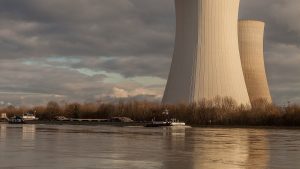
Illustrative image. Photo: Christian David, CC BY-SA 4.0, via Wikimedia Commons — source