Egypt Deepens Gas Cuts to Fertilizer Plants to 33% as LNG Costs Bite

Egypt has widened curbs on natural gas supplies to its fertilizer industry, with state-run producer Misr Fertilizers Production Company (MOPCO) notified on November 8 that its allocation would be cut by 33%, up from an initial 20% reduction imposed on November 1 across the sector, as Cairo tries to rein in a natural-gas import bill swollen by falling domestic output and higher global prices.
A 20% cut becomes a third of supply within a week
Egyptian Chemical Industries (KIMA) disclosed to the Egyptian Stock Exchange that it had reduced its gas intake by 20% starting November 1 following a directive from its supplier. The company, which operates a urea, ammonia and ammonium nitrate complex in Aswan dating to 1956, said its main urea plant “continues to operate normally” and that it was “currently assessing the impact of the reduced gas supplies.” KIMA’s newer unit, KIMA 2, is designed to produce 1,220 tonnes of ammonia a day, with 900 tonnes a day feeding a 570,000-tonne-a-year urea plant and the remaining 300 tonnes supplying an older line that makes 120,000 tonnes a year of ammonium nitrate and 100,000 tonnes a year of nitrogen fertilizers. By November 8, MOPCO was told the cut to its own supply had deepened to 33%, according to company disclosures, while a separate state-run producer has seen one of its three production lines operate below 40% of capacity because of the reduced gas volumes, according to Egyptian outlet Al Manassa.
Falling domestic gas output meets a costlier LNG market
Egypt’s own gas production has slid from a peak of roughly 7 billion cubic feet a day in 2019 to about 3.7 billion cubic feet a day now, forcing the country to lean more heavily on imported liquefied natural gas to cover the gap. That LNG is far more expensive than it was before the Iran war pushed global prices higher this year — Rystad Energy has estimated the conflict has added at least $39 billion to the world’s LNG import bill since it began — and Egypt’s government has earmarked roughly $10.1 billion for LNG purchases in the 2026/27 fiscal year alone. Rationing gas to energy-intensive industries such as fertilizer production is one of the more direct levers Cairo has to limit how much of that costlier LNG it needs to buy, even though the policy risks squeezing an export sector that depends on cheap domestic feedstock gas to compete internationally.
Inflation and investment trade-offs
The government is also weighing broader gas-price increases for industrial consumers alongside the supply cuts, and at least one analyst cited in Egyptian media has estimated the fertilizer curbs alone could add roughly 0.25 percentage points to November inflation, compounding pressure on a currency and import bill already strained by the region’s wider energy shock. The squeeze is unfolding even as Egypt keeps pursuing new power-sector investment elsewhere in its energy mix: Norway’s Scatec secured $217 million in financing on November 1 to build the Dandara solar-storage plant, part of a push to add renewable capacity that does not carry the same import-cost exposure as gas-fired generation or gas-fed industry. Neither KIMA nor MOPCO has disclosed the gas supplier’s identity or given a timeline for when the cuts might ease; both companies say they are still assessing the financial impact.
Sources
- Egypt Oil & Gas, “KIMA Cuts Natural Gas Intake by 20% Following Supplier Directive,” Nov. 1–8, 2026 — KIMA stock exchange disclosure, plant details, MOPCO 33% cut.
- Devdiscourse / Reuters-sourced reporting, “Egypt deepens gas cuts to fertilizer makers as energy squeeze tightens,” Nov. 8, 2026 — production decline figures, LNG import budget.
- Al Manassa, “Surging energy costs push Egypt toward fresh austerity measures,” Nov. 2026 — capacity impact at a state-run producer, inflation estimate.
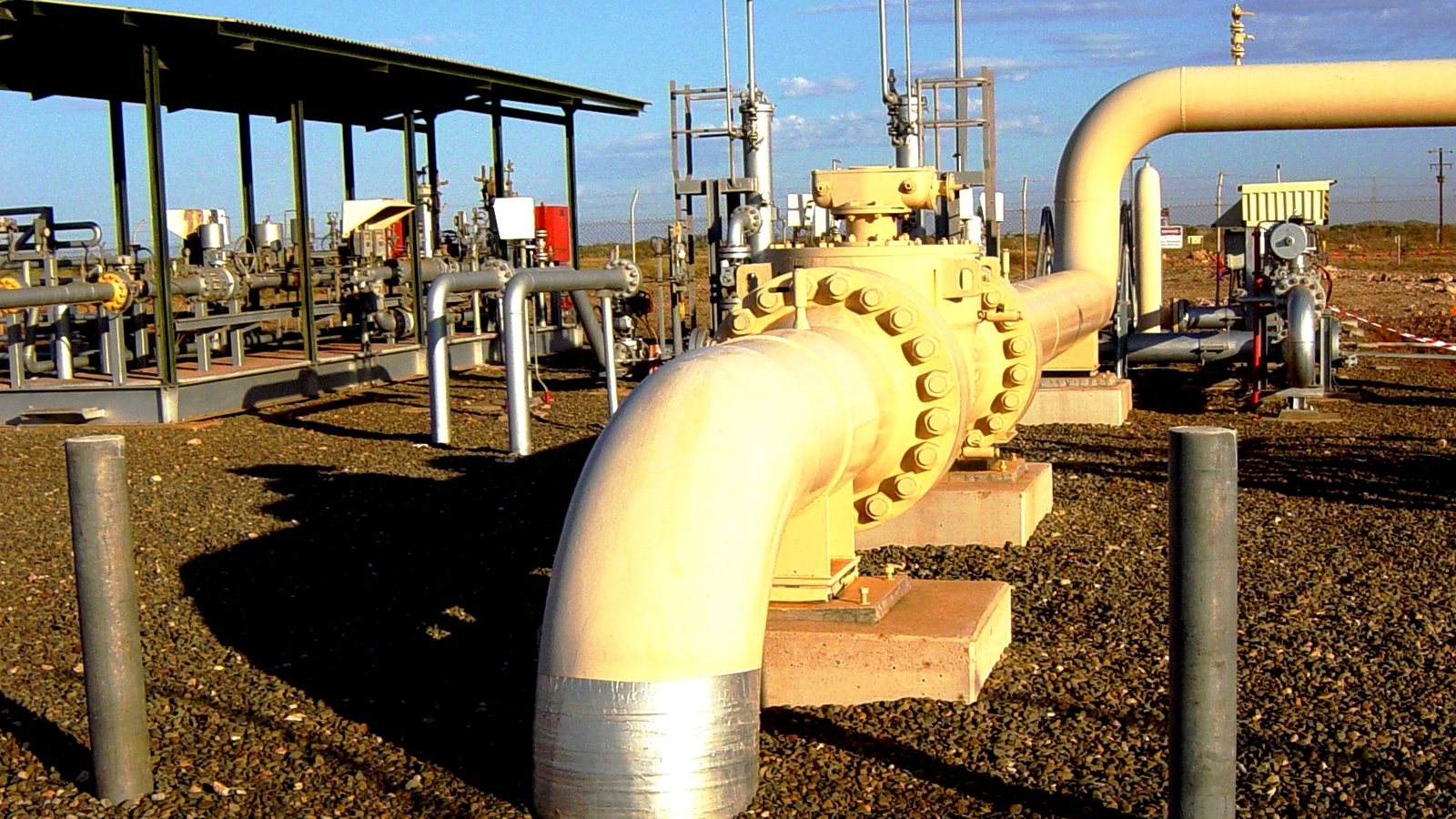
Illustrative image. Photo: Glen Dillon, CC BY 3.0, via Wikimedia Commons — source