Dangote Breaks Ground on $2.5B Namibia Fuel Hub

Nigerian industrialist Aliko Dangote broke ground on Wednesday on a $2.5 billion fuel storage and pipeline project near the port of Walvis Bay in Namibia, a venture he said will bring cheaper and more secure fuel supplies to landlocked economies across Southern Africa. The ceremony marks Dangote Group’s latest push into African fuel logistics, coming three weeks after the $1.6 billion initial public offering of its Lagos refinery closed.
A storage depot and a 1,700-kilometer pipeline
The project combines a fuel storage terminal outside Walvis Bay with a pipeline stretching roughly 1,700 kilometers (1,056 miles) into Botswana and South Africa, with Dangote saying the network is designed to eventually reach other landlocked markets in the region. The storage terminal is expected to hold around 600 million liters of fuel, split between 360 million liters of diesel and 240 million liters of petrol, according to the company. Dangote said construction of the storage facility alone would take no more than 18 months, though he did not give a separate completion date for the pipeline.
Raising the stakes on Africa investment
At the same ceremony, Dangote raised his target for industrial investment across Africa to $60 billion by 2030, up 20% from the $50 billion goal he had previously set, according to Bloomberg. Dangote Group has already announced more than $35 billion in infrastructure commitments this year alone. “We also put our money on the table — it’s not just about saying things,” Dangote told reporters in Walvis Bay. “From 2030 to 2035, we’re rolling out an even bigger one, and I’m sure others will join us,” he added, suggesting the Namibia project is a down payment on a larger continental buildout rather than a standalone venture.
The Walvis Bay project follows an October announcement in which Dangote outlined a wider petroleum distribution network across East, Central and Southern Africa, combining pipelines, storage terminals and supply corridors. It also builds on the group’s core refining business: Dangote has said he plans to raise the capacity of his Lagos refinery from 650,000 to 1.4 million barrels per day within three years, a project that helped drive the $1.6 billion share sale that closed in October.
Fuel security on a volatile global market
Namibia has a population of roughly 3 million, but its position at Walvis Bay gives it an outsized role in regional fuel logistics for neighbors such as Botswana, Zambia and Zimbabwe that have no direct sea access. Southern African governments have grown more focused on fuel-supply security this year as global oil markets have swung on the Iran-Israel-US conflict and repeated disruptions near the Strait of Hormuz, which have added volatility and shipping costs to crude and refined-product trade far beyond the Middle East.
The Namibia project also arrives as the country’s small energy sector draws wider international attention: Australia’s Bannerman Energy took a final investment decision in October on its Etango uranium mine in the Erongo region, part of a broader wave of resource investment into the country alongside Dangote’s fuel infrastructure plans.
Sources
- Nairametrics, “Dangote raises Africa investment target to $60 billion, begins $2.5 billion Namibia project,” November 4, 2026 — investment target, Dangote quotes, project cost and timeline.
- OilPrice.com, “Dangote Breaks Ground on $2.5 Billion Namibia Fuel Hub for Southern Africa,” November 4, 2026 — independent confirmation of project scope and location.
- The Daily Energy, “Dangote Refinery’s $1.6 Billion IPO Closes as Nigeria Eyes Africa’s Biggest Share Sale,” October 13, 2026 — background on Dangote Group’s refining and financing strategy.
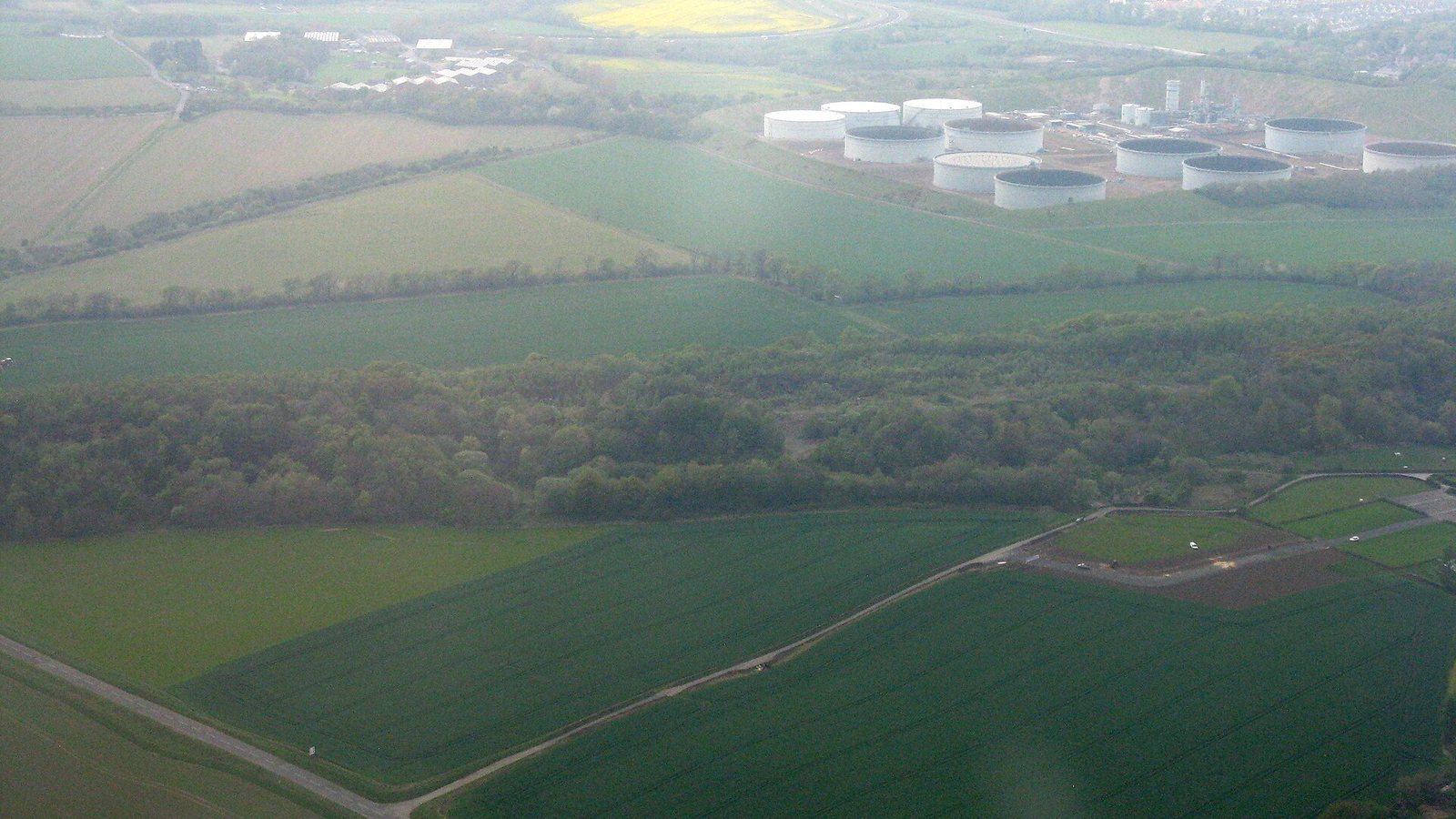
Illustrative image. Photo: M J Richardson, CC BY-SA 2.0, via Wikimedia Commons — source