BWXT’s BANR Microreactor Chosen for Indigenous-Led Transportable Nuclear Plant in Canada


Prodigy Clean Energy, the Pabineau First Nation and the Eel River Bar First Nation have selected BWX Technologies’ BANR microreactor as the reactor technology for a proposed Transportable Nuclear Power Plant (TNPP) at Belledune, New Brunswick, the companies said on October 6, 2026. The project, led by the two Indigenous communities on their traditional territory, would use two 22-megawatt-electric BANR units for a combined output of up to 50 MWe, with BWXT Canada and its subsidiary Kinectrics supporting licensing and supply-chain development.
What Has Actually Been Decided
The announcement is a technology selection, not a construction start or a final investment decision. According to BWXT’s own release, the partners still need to complete a Licence to Prepare Site application and reach a Final Investment Decision, both targeted within the next 18 months. Commercial operation is targeted for the early 2030s. The province of New Brunswick has issued a letter of intent to purchase the plant’s electricity output, an offtake signal rather than a signed power purchase agreement.
BANR is a high-temperature gas-cooled microreactor that runs on TRISO fuel, rated at 22 MWe and 75 MWt per unit. BWXT has pitched the design for off-grid and remote applications, including an earlier contract to supply the technology for the U.S. Army’s Janus Program.
An Indigenous-Led Project Tied to a Coal Phase-Out
Pabineau First Nation and Eel River Bar First Nation are leading the project on their own traditional territory, with Prodigy Clean Energy as the transportable-reactor developer and BWXT and Kinectrics as technology and engineering partners. The site sits near the Belledune Generating Station, a coal-fired plant that operator NB Power has already been ordered to stop burning coal at under federal policy, by 2030. Belledune would add a second Canadian nuclear data point alongside the refurbishment of existing reactors at Ontario’s Pickering nuclear plant, where OPG and Aecon are extending the life of large conventional units even as Prodigy and BWXT pursue a much smaller, factory-built design. The TNPP is being framed locally as part of what replaces that generating capacity and the jobs tied to it, rather than as an addition to New Brunswick’s grid alongside continued coal use.
The companies said the project is intended to create roughly 150 jobs during site preparation and about 40 permanent positions once operating, and that a completed plant could supply enough electricity for about 40,000 homes.
Why a “Transportable” Design, and Why Canada
Prodigy’s TNPP concept is built around factory-fabricated reactor modules that can be shipped largely complete to a site rather than built in place, a design intended to cut on-site construction time and make nuclear power viable for communities too small or remote to support a conventional reactor build. Prodigy chief executive Mathias Trojer said BANR gives the project “a credible pathway to delivering the G7’s first commercially operating TNPP,” a framing that positions Belledune as a demonstration project rather than the end goal.
The companies describe the pilot explicitly as a blueprint: validating the logistics, licensing path and operating model at Belledune before attempting to deploy a fleet of transportable reactors elsewhere in Canada, including remote northern communities currently reliant on diesel generation, and in export markets. BWXT’s John MacQuarrie said BANR is designed “to meet heat and electricity demands currently requiring carbon-emitting sources,” language that points as much at displacing diesel and coal generation in off-grid settings as at conventional grid supply.
What Still Has to Go Right
Two 22 MWe microreactors would make Belledune a small plant by nuclear standards, and the project’s economics depend on proving that a factory-built, transportable design can be licensed and operated more cheaply per megawatt than past small-reactor efforts have managed. Canada’s nuclear regulator has not yet received the Licence to Prepare Site application the partners say they still need to file, and no cost estimate for the Belledune plant has been disclosed. The early-2030s in-service target leaves roughly six to seven years for licensing, site preparation, factory fabrication of the reactor modules and commissioning, a timeline similar to those claimed by other first-of-a-kind microreactor projects in North America that have so far mostly slipped, including the Tennessee Valley Authority’s Clinch River SMR, which needed a multi-year NRC review before winning its construction permit.
Sources
- BWX Technologies, investor press release, “BWXT’s BANR Microreactor Chosen for Canadian Transportable Nuclear Power Plant Project,” October 6, 2026 — project selection, reactor specifications, timeline, New Brunswick letter of intent, executive quotes.
- World Nuclear News, coverage of the BANR selection for the Belledune TNPP, October 6, 2026 — independent confirmation of reactor output figures and project structure.
- Interesting Engineering, reporting on the proposed 50 MW transportable nuclear plant, October 2026 — homes-powered estimate and jobs figures.
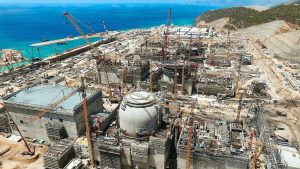
Illustrative image. Photo: Nuclear Regulatory Commission, Public domain, via Wikimedia Commons — source