


Brazil’s Grid Has Room for 56 GW of Battery Storage Ahead of December Auctions


Brazil’s national grid has roughly 56 gigawatts (GW) of remaining connection capacity available for battery energy storage system (BESS) projects, according to an analysis published by Absae, the Brazilian Association of Energy Storage Solutions. The figure, drawn from the grid operator ONS’s Technical Note 0095/2026, was reported by pv magazine on October 3, 2026, weeks before Brazil holds its first-ever auctions dedicated exclusively to battery storage.
The Capacity Reserve Auctions, known by the acronym LRCAP, are scheduled for December 2-4, 2026, under rules set out in Ministry of Mines and Energy (MME) Ordinance No. 136/2026. For developers deciding where to site projects and how aggressively to bid, the ONS data offers one of the clearest public pictures yet of where grid connections remain genuinely open.
Preferred Substations Hold Only Part of the Space
Of the 56 GW total, Absae’s analysis found that 13.7 GW sits at substations that receive preferential treatment under Ordinance 136/2026 — locations the government has specifically flagged as priorities for storage development. A larger share, roughly 36 GW, is spread across non-preferred substations, ordinary connection points that carry no special status under the ordinance.
ONS designated 129 substations nationwide for the auction program. Of those, 93 currently show available connection capacity, per the analysis. At some locations, individual available blocks run as large as 3.7 GW in a single spot, enough to accommodate several utility-scale projects at once.
Where the Open Capacity Is Concentrated
The states with the most concentrated headroom are Bahia, Piauí, Ceará and northern Minas Gerais, a stretch of Brazil’s Northeast and north-central region that is also home to much of the country’s installed wind and solar generation. That overlap is notable, since variable renewables are precisely where storage is most useful for smoothing output, though neither ONS nor Absae frames it as a stated design choice. Brazil’s storage build-out echoes a broader shift playing out elsewhere in the region, including Cuba’s push to expand solar capacity and stabilize its own grid.
A Crowded Field Chasing Limited Contracts
Demand for a place in the December auctions far outstrips both the available grid space and the underlying need it is meant to serve. A total of 6,091 projects have registered to compete, together proposing 296.8 GW of capacity — more than five times the 56 GW of connection headroom ONS has identified. That gap means the large majority of registered projects will not secure either a connection or a supply contract this round, regardless of technology, a dynamic familiar to developers of other grid-scale battery projects such as the Tesla Megapack deployed in markets worldwide.
Capacity Versus the Shortfall It Is Meant to Cover
ONS separately projects that Brazil faces a power shortfall of between 4.5 GW and 10 GW over 2028-2030, the gap this storage build-out is intended to help close. Absae executive director Fabio Lima argued that the 56 GW of available grid capacity is not the constraint on reaching that goal. “The network has about 56 GW of available capacity, well above the power requirement it estimates for coming years, with capacity distributed across several regions,” Lima said.
The three figures in play — 56 GW of grid headroom, 296.8 GW of registered project proposals, and a 4.5-10 GW forecast shortfall — measure different things: available connection space, developer ambition, and projected need, respectively. None of the 56 GW represents storage that has actually been built or contracted.
What Winners Will Be Required to Deliver
Under Ordinance 136/2026, winning projects receive 15-year supply contracts with delivery starting in August 2028. Two separate auctions will be held, one of them carrying minimum local-content requirements. To qualify, projects must offer at least 30 MW of power capacity, sustain discharge for a minimum of four hours, achieve round-trip efficiency of at least 85%, and declare zero variable operating cost. Once under contract, ONS can dispatch a system for up to two four-hour cycles per day, capped at 366 cycles annually.
Sources
- pv magazine, October 3, 2026 — reported Absae’s analysis and the 56 GW connection-capacity figure: pv-magazine.com
- ONS (Operador Nacional do Sistema Elétrico) — source of Technical Note 0095/2026, the underlying grid-connection-capacity and substation data, and the 4.5-10 GW shortfall projection.
- Absae (Brazilian Association of Energy Storage Solutions) — author of the analysis of ONS data and source of the Fabio Lima quote.
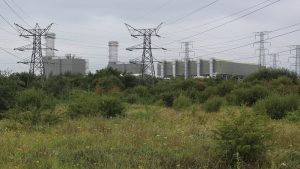
Illustrative image. Photo: Frans Berkelaar, CC BY 2.0, via Wikimedia Commons — source


.jpg)