Solar Installer Salary and Job Outlook
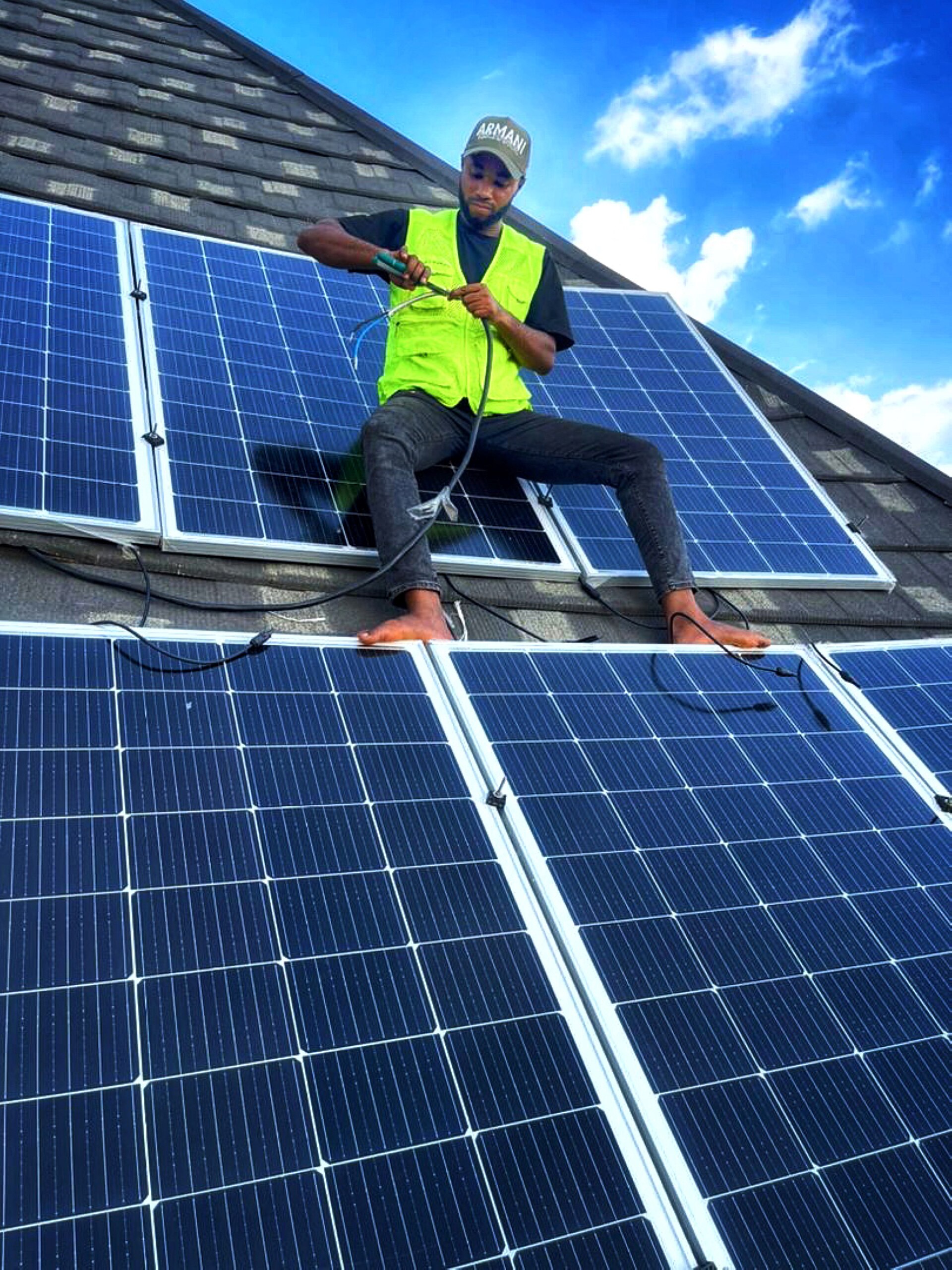

A solar installer salary depends mostly on where the work is, how much experience the installer has and whether the employer is a small residential contractor or a large utility-scale developer. In the United States, the Bureau of Labor Statistics (BLS) reports a median annual wage for solar photovoltaic installers of around $50,000 in its recent editions, with entry-level pay below that figure and experienced crew leads above it. This guide explains what shapes pay, how careers progress and what the job outlook looks like.
Solar Installer Salary: Quick Answer and Key Numbers
The most reliable public benchmark is the BLS Occupational Outlook Handbook, which publishes a median wage, a pay distribution and a ten-year employment projection for “solar photovoltaic installers”. Figures are updated every year, so check the live page on bls.gov before quoting a number. In recent editions the median has sat close to $50,000 a year, and the lowest-paid tenth of workers earns clearly less while the highest-paid tenth earns considerably more.
A few points are worth keeping in mind when you read any pay figure for this trade:
- The median is not an offer. It is the midpoint of all reported wages, across all states and employers.
- Hourly work is common. Many installers are paid by the hour, so overtime during busy summer months can raise annual earnings.
- Job titles differ. “Solar technician”, “PV installer” and “solar installation specialist” can describe slightly different bundles of tasks and pay.
Average Pay by Experience Level
Pay rises in steps as installers take on more responsibility. The table below describes the usual pattern without attaching figures that vary by market. For current numbers, compare the BLS data with job postings in your own area.
| Career stage | Typical duties | Pay position |
|---|---|---|
| Helper or trainee | Carrying materials, assembling racking, learning safety routines | Lowest band, often close to local entry-level wages |
| Installer | Mounting rails and modules, running conduit, basic wiring under supervision | Around the occupational median |
| Lead installer or crew chief | Running a crew, reading plans, quality checks, customer handover | Above the median, often with performance bonuses |
| Electrician or commissioning technician | Inverter and AC-side work, testing, grid connection | Higher band, tied to electrical licensing |
| Supervisor or project manager | Scheduling, permitting, budgets, safety compliance | Highest band, usually salaried |
What Drives Solar Installer Salary?
Several factors move a solar installer salary up or down, and they often stack on top of each other.
Licences and certifications
Installers who hold an electrician’s licence, or who work under one, tend to be paid more because they can perform the electrical connections that unlicensed crew members cannot. Voluntary credentials such as those offered by NABCEP (the North American Board of Certified Energy Practitioners) signal tested knowledge and are valued by many employers, especially in the residential market.
Project type
Rooftop residential jobs are fast and repetitive. Commercial rooftops add larger arrays and more complex wiring. Utility-scale projects are built in remote locations, often with long shifts and travel allowances, which can lift take-home pay even when the hourly rate looks similar.
Wage rules and unions
Public projects in some jurisdictions fall under prevailing-wage rules, and union contracts set pay scales for specific trades. In both cases, the rate for the same task can be noticeably higher than on a non-union residential job.
Payment structure
Some employers add production bonuses, per-diem payments or vehicle allowances. Others pay a flat hourly rate with overtime. Always compare the full package, not only the base rate.
Pay by Region and Employer Type
Geography matters because pay follows living costs, labour supply and the strength of local solar demand. In the United States, states with large solar markets and higher living costs usually advertise higher wages than low-cost states with smaller markets. Outside the US, pay scales follow national wage structures: installers in Western Europe, the Gulf and Australia are generally paid on different scales than those in South Asia or Africa, and expatriate packages for utility-scale projects can include housing and flights.
Employer type shapes both pay and working conditions:
- Residential installers: smaller crews, more customer contact, seasonal peaks.
- Engineering, procurement and construction (EPC) firms: larger projects, structured grades and more formal training.
- Developers and independent power producers: may hire commissioning and operations staff directly, often on salaried contracts.
- Utilities: less frequent direct hiring for installation, but stable terms and benefits.
Because employer and region interact, two installers with the same experience can earn quite different amounts. For Gulf and other international markets, regional job boards and salary surveys from recruiters such as GulfTalent give a more realistic picture than a single global average.
Skills, Education and Career Path
According to the BLS, solar PV installers typically need a high school diploma or equivalent and learn the trade through on-the-job training that lasts from a few weeks to several months. That low entry barrier is one reason the occupation attracts career changers.
Skills employers look for
- Comfort working at height and in hot, exposed conditions
- Basic electrical knowledge: DC and AC circuits, grounding, wire sizing
- Safe use of hand and power tools, and fall protection
- Reading single-line diagrams and module layout plans
- Clear communication with customers and other trades
Typical progression
- Start as a helper and complete a safety course such as OSHA 10 or an equivalent.
- Become a full installer within the first year or two, depending on the employer.
- Add a recognised certificate or begin an electrician apprenticeship.
- Move into crew lead, site supervisor or commissioning roles.
- Branch into design, estimating, sales engineering or project management.
Community college courses, vocational schools and apprenticeships offered by electrical unions all provide structured routes. Many employers now run their own academies.
Job Outlook and Demand
In its projections, the BLS has listed solar PV installers among the fastest-growing occupations in the US, with growth expected to be much faster than the average for all jobs. Because the occupation is small, even moderate demand produces a high percentage increase, but the direction is clear. Globally, the International Renewable Energy Agency (IRENA) has repeatedly found in its annual jobs reviews that solar PV is the largest employer among renewable technologies.
Demand is not guaranteed to be smooth. Installer hiring responds to:
- Policy and incentives: changes to tax credits, net-metering rules or import tariffs can speed up or slow down residential installations.
- Interest rates: financing costs affect household and commercial purchases.
- Grid connection queues: utility-scale projects can be delayed by interconnection and permitting bottlenecks.
- Equipment prices: falling module prices usually widen the market.
The long-term driver is the steady build-out of solar generation. Every new array must be installed, inspected and maintained, and ageing systems will need inverter replacements and repowering work. Professionals who combine installation skills with electrical, battery storage or EV-charger knowledge tend to have the widest choice of employers.
Frequently Asked Questions About Solar Installer Salary
How much does a solar installer make?
BLS data in recent editions puts the median annual wage at around $50,000 in the United States. Entry-level workers earn less, and experienced leads or licensed electricians earn more. Check the current Occupational Outlook Handbook page for the latest figure.
Do you need a degree to become a solar installer?
No. A high school diploma or equivalent and on-the-job training are the usual requirements. Certifications and electrical licensing improve pay and promotion chances but are not always mandatory.
Is solar installation a good long-term career?
Demand has been strong and the field offers clear steps into supervision, design and project management. The main risks are policy-driven swings in demand and the physical nature of the work.
Which factors raise pay the most?
Electrical licensing, certification, supervisory experience, utility-scale or union work, and willingness to travel generally have the biggest impact.
Are solar technicians and installers the same?
Not always. Installers build systems, while technicians may specialise in commissioning, troubleshooting and maintenance. Pay can differ depending on the skills required.
Conclusion
A solar installer salary is shaped by licensing, project type, region and employer, so the best approach is to compare official statistics with real job postings in your own market. For people who enjoy practical, outdoor work, the trade offers an accessible entry point, a visible path to higher pay and demand that is tied to the long-term growth of solar power. Anyone planning a move into the field should look at certification options early and choose employers that invest in training.
Sources and further reading
- U.S. Bureau of Labor Statistics, Occupational Outlook Handbook: Solar Photovoltaic Installers (bls.gov)
- International Renewable Energy Agency (IRENA), Renewable Energy and Jobs annual review (irena.org)
- North American Board of Certified Energy Practitioners (nabcep.org)
- Occupational Safety and Health Administration, training and safety resources (osha.gov)
- GulfTalent salary and hiring resources for Gulf markets (gulftalent.com)