Biggest Coal Producing Countries

The biggest coal producers are China, India, Indonesia, the United States, Australia and Russia, in roughly that order of annual output, and China alone mines more than half of the world’s coal. Coal still supplies a large part of global electricity and almost all of the world’s blast-furnace steel, so the countries that mine it shape power prices, trade flows and emissions. This ranking explains who leads, why, and how to read the numbers.
The Biggest Coal Producers at a Glance
The table below gives rounded, approximate annual production for the leading countries, based on the Energy Institute’s Statistical Review and national statistics for around 2023. Exact figures differ between sources because of definitions and revisions, so use them to understand scale and order, not as precise values.
| Rank | Country | Approximate output (billion tonnes) | Main character of production |
|---|---|---|---|
| 1 | China | about 4.7 | Mostly domestic power and industry use |
| 2 | India | about 1.0 | Mostly domestic power; large imports too |
| 3 | Indonesia | about 0.75 to 0.8 | Thermal coal, largest exporter |
| 4 | United States | about 0.5 | Falling domestic use, steady exports |
| 5 | Australia | about 0.45 | Export-focused thermal and metallurgical coal |
| 6 | Russia | about 0.4 to 0.45 | Exports and domestic use |
| 7 | South Africa | about 0.2 to 0.25 | Domestic power and exports |
Beyond the top seven, countries such as Kazakhstan, Colombia, Poland, Germany, Turkey and Mongolia each produce in the range of tens of millions of tonnes, and their order depends on whether lignite is counted.
Methodology and Data Sources
Coal production data come from national agencies and international compilers. The main references are the Energy Institute’s Statistical Review of World Energy, the International Energy Agency’s coal market reports, and the US Energy Information Administration’s international database. Each has slightly different definitions.
Why the figures differ
- Coal type: hard coal (thermal and coking) and brown coal or lignite are counted differently. Lignite has less energy per tonne.
- Units: tonnes, short tons and exajoules are all used. Energy-based rankings can differ from tonnage rankings.
- Reporting year: data are revised after first publication, and fiscal years vary by country.
- Raw versus washed coal: some statistics count run-of-mine output, others count saleable coal.
When quoting a ranking, always state the year and the source. Anything that does not is difficult to verify.
Top Coal Producers Breakdown
China
China produces more than half of the world’s coal. Output is concentrated in Shanxi, Inner Mongolia, Shaanxi and Xinjiang. Almost all of it is used at home for electricity, steel, cement and chemicals. The country also imports coal, mainly from Indonesia, Russia and Mongolia, to balance regional shortages.
India
India has the second-largest output and is the fastest-growing major market. State-owned Coal India produces the bulk of it, with mining centred on Jharkhand, Odisha, Chhattisgarh and Madhya Pradesh. Despite growth in domestic output, India still imports coal, particularly high-quality grades for steelmaking.
Indonesia
Indonesia’s output has risen strongly over two decades, mostly from Kalimantan and Sumatra. It exports most of its production and is the world’s largest thermal coal exporter, supplying China, India and Southeast Asian buyers. The government has also pushed domestic supply obligations and downstream processing policies.
United States, Australia and Russia
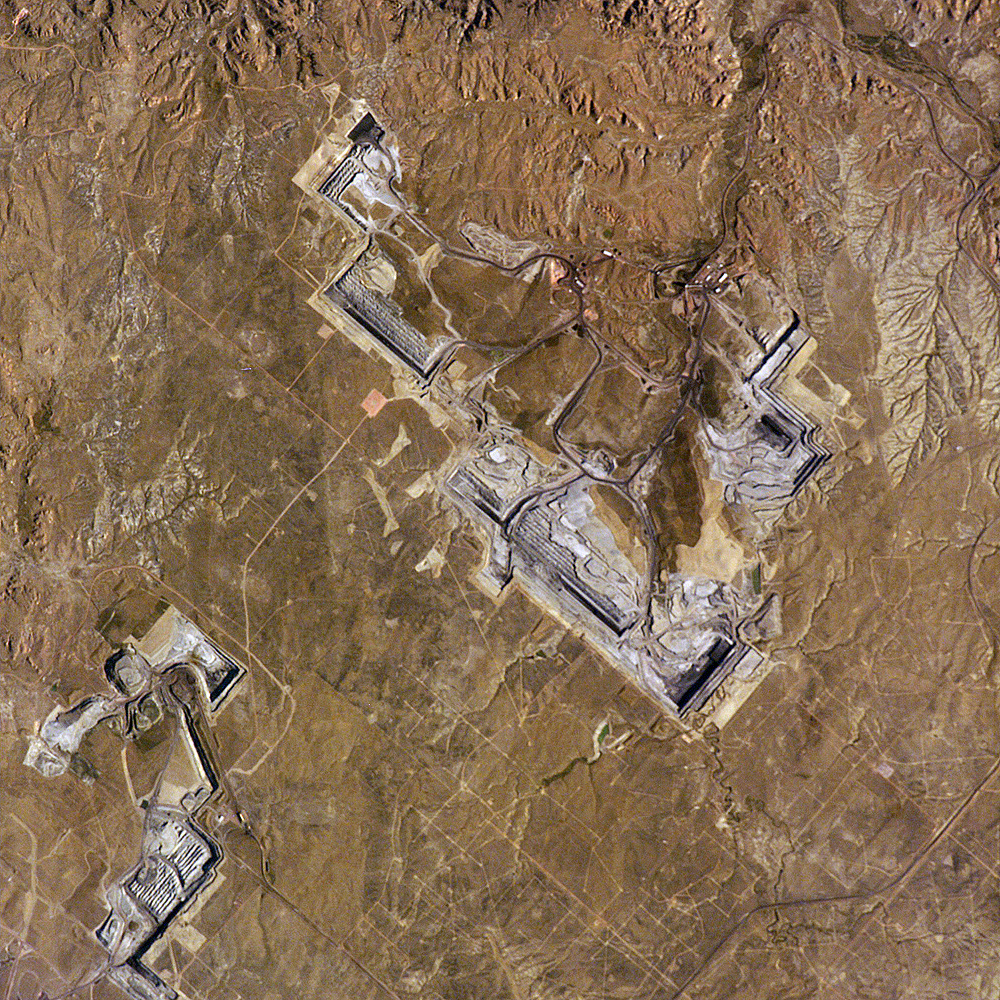
US production peaked many years ago and has declined as gas and renewables displaced coal in power generation, though Wyoming’s Powder River Basin remains one of the biggest mining areas. Australia is a leading exporter of both thermal and metallurgical coal from Queensland and New South Wales. Russia mines mainly in Kuzbass and exports toward Asia, with trade patterns reshaped by sanctions and logistics constraints.
Other notable producers
Kazakhstan mines mostly for domestic power and for export to neighbours. Colombia is a significant thermal coal exporter from its northern mines, with Europe and the Americas as key markets. Poland and Germany remain notable European producers, and both rely heavily on lignite, a lower-energy fuel that is used close to the mine. Turkey also mines large volumes of lignite for power generation. Mongolia is smaller in total output, but its coking coal exports to China make it a significant player in steel supply chains.
Why These Leaders Dominate
Three factors explain the ranking. First, geology: large, shallow, accessible seams allow low-cost open-pit mining. Second, demand: China and India have huge power and steel sectors that consume local coal. Third, policy: energy security is a priority, and coal is a domestic resource that avoids import dependence.
Cost and logistics matter just as much. Rail and port capacity determine whether coal can reach buyers at a competitive price, which is why Indonesia, Australia and Russia invest heavily in export infrastructure. Landlocked producers such as Mongolia depend on cross-border rail and road links.
Regional Trends and Surprises
Asia dominates both production and consumption. Europe and North America have fallen sharply from their historic levels, as coal plants closed and gas and renewables expanded. Yet the decline is not uniform: some European countries increased coal use temporarily when gas supply tightened, showing that coal remains a backup option.
Another surprise is the rise of mid-sized producers such as Mongolia, which supplies coking coal to China, and Mozambique, with growing metallurgical output. Indonesia’s rise has also changed the seaborne market, where a handful of countries account for most trade.
Production versus exports
The biggest coal producers are not the biggest exporters. China and India consume nearly all their own output. Indonesia and Australia lead the export trade, followed by Russia, the United States, South Africa and Colombia. This distinction matters for price benchmarks, which are set mainly in the seaborne market.
What the Numbers Mean for Energy Markets
Because China dominates volume, small changes in its output or imports move global coal prices. Weather, hydropower levels and industrial demand in China and India are therefore watched closely by traders. At the same time, coal remains the largest single source of energy-related carbon dioxide emissions in the power sector, so production trends are closely linked to climate policy.
Investors and policymakers also track the split between thermal coal for power and metallurgical coal for steel. Thermal demand faces long-term pressure from renewables, while metallurgical coal depends on steel production and the pace at which alternative steelmaking routes mature.
Frequently Asked Questions About the Biggest Coal Producers
Which country produces the most coal?
China, by a wide margin, with production several times higher than the next largest producer.
Which country exports the most coal?
Indonesia leads in thermal coal exports, while Australia is among the largest overall exporters and the leader in metallurgical coal.
Is global coal production still growing?
Global output has reached record levels in recent years, driven by Asia, even as Europe and North America cut back. Check the latest IEA or Energy Institute data for the current direction.
What is the difference between thermal and metallurgical coal?
Thermal coal is burned for electricity and heat. Metallurgical or coking coal is used to make coke for steel production.
Where do the data come from?
Mainly from the Energy Institute, the IEA, the EIA and national statistics agencies.
Conclusion
The biggest coal producers are concentrated in Asia, with China far ahead and India, Indonesia, the United States, Australia and Russia following. Ranking by output is only part of the story: exports, coal type and energy content change the picture. For reliable analysis, always cite the year, the unit and the source, and consult the latest editions of the major data compilations.
Sources and further reading
- Energy Institute, Statistical Review of World Energy: energyinst.org
- International Energy Agency, Coal Mid-Year Update and Coal reports: iea.org
- US Energy Information Administration, International Energy Statistics: eia.gov
- Ember, electricity and coal data: ember-energy.org
- Global Energy Monitor, coal mine tracker: globalenergymonitor.org