


What Is Rosneft and Who Owns It?

Last updated: November 27, 2026
What Is Rosneft?
Rosneft (PJSC Rosneft Oil Company) is Russia’s largest oil producer and the country’s dominant integrated oil and gas company, run by a state-controlled majority shareholder and led since 2012 by CEO Igor Sechin. It produced around 3.69 million barrels per day of liquid hydrocarbons in 2025, alongside substantial natural gas output, making it one of the largest single oil producers in the world by volume (Rosneft FY2025 results, rosneft.com, 2026).
Ownership
Rosneft’s shareholder register has not been formally updated in its public disclosures since 2021, and the company states it has no further information on holders above 5%. According to that register — still cited by Rosneft and reproduced in 2025-2026 reporting on its dividend decisions — ownership breaks down as:
- Rosneftegaz — approximately 40.4% (itself 100% owned by the Russian federal government)
- BP Russian Investments Limited — approximately 19.75%
- QH Oil Investments LLC (a Qatari-linked vehicle) — approximately 18.46%
- RN-NeftKapitalInvest — approximately 9.6%
- Remaining shares held via the National Settlement Depository (free float) and other minority holders
Estimates vary slightly between sources on the exact split — some secondary aggregators cite a higher Rosneftegaz figure closer to 45% and a correspondingly higher BP figure — likely reflecting different treatment of treasury or depositary shares rather than a new disclosure (Rosneft shareholder structure page; Interfax, 2025 dividend coverage).
BP’s position is a notable complication: in February 2022, following Russia’s invasion of Ukraine, BP announced it would exit its roughly 19.75% stake and took non-cash charges of up to $25 billion tied to the decision. As of the most recent trade and industry reporting available (2025), BP had not completed a sale — talks with Middle Eastern buyers reportedly stalled amid sanctions complications — and BP’s board representatives had already resigned from Rosneft’s board in 2022. Whether the stake has since changed hands has not been confirmed in Tier 1 disclosures as of this update.
Leadership
Igor Sechin has served as Chief Executive Officer (Chairman of the Management Board) of Rosneft since 23 May 2012, and as Deputy Chairman of the Board of Directors since June 2013. He previously chaired Rosneft’s board (2004–2011) while concurrently serving in the Russian government, including as Deputy Prime Minister from 2008 to 2012. In late 2024, Rosneft’s board confirmed Sechin would continue leading the company for a further term. See the full profile: Who Is Igor Sechin?
History
Rosneft traces its modern corporate form to 1993, when it was established as a state oil enterprise consolidating assets left over from the Soviet oil ministry. It expanded sharply through the 2000s, most consequentially in 2004 when it acquired Yuganskneftegaz — the core production unit of the dismantled Yukos — in a forced auction, and again from 2012 with its roughly $55 billion acquisition of TNK-BP, which made it the world’s largest listed oil producer by output at the time. It listed a minority stake on the London and Moscow stock exchanges in 2006; that London listing was later cancelled following the 2022 sanctions regime.
Main Business
Rosneft is a fully integrated oil and gas company spanning upstream exploration and production, refining, petrochemicals, and fuel marketing, with a growing gas segment. Its upstream base is concentrated in West Siberia (Yugansk, Samotlor), East Siberia, the Russian Arctic shelf and Sakhalin, together with international exposure (including a stake in Venezuela’s Orinoco Belt projects and, historically, Iraqi Kurdistan infrastructure). Downstream, it operates one of the largest refining networks in Russia and holds a 49% stake in India’s Nayara Energy.
Production and Capacity
| Metric | Value | Period | Source |
|---|---|---|---|
| Liquid hydrocarbon output | ~3.69 million b/d (181.1 million tonnes) | FY2025 | Rosneft press release, rosneft.com, 2026 |
| Total hydrocarbon output | ~5.02 million boe/d (246.6 million toe) | FY2025 | Rosneft press release, rosneft.com, 2026 |
| Total hydrocarbon output | 5,214 thousand boe/d (+0.9% q/q) | Q1 2026 | Rosneft Q1 2026 IFRS results |
| 2P reserves (PRMS/SEC basis) | 11.5 billion toe; 49-year reserve life; 122% replacement ratio | Year-end 2025 | Rosneft FY2025 results release |
| Reserves (Russian classification, ABC1+C2) | 21.7 billion toe | Year-end 2025 | Rosneft FY2025 results release |
| Rosneftegaz ownership | ~40.4% | Last formal disclosure, 2021; repeated in 2025 dividend reporting | Rosneft Shareholder Structure; Interfax, 2025 |
Note: 2P reserves measure commercially recoverable volumes under independent reserve-reporting standards and are not the same as Russia’s own ABC1+C2 reserve classification, which uses different, generally less conservative, criteria — the two figures above are not additive or directly comparable.
Major Assets
- Yuganskneftegaz — West Siberia’s largest single production unit, acquired from the former Yukos in 2004
- Samotlor field — one of Russia’s largest legacy oil fields, in long-term decline but still a major contributor
- Vankor cluster — East Siberian/Arctic production hub developed largely since the 2010s
- Sakhalin-1 project — Rosneft took over as operator after ExxonMobil exited in 2022
- Vostok Oil (Vostok Oil Company) — a large-scale Arctic development program on the Taymyr Peninsula, intended to open a new production and export province toward the Northern Sea Route
- Refining assets including the Angarsk, Komsomolsk, Ryazan, Syzran and Tuapse refineries, among others
Countries of Operation
Rosneft’s production base is overwhelmingly domestic, inside Russia. Its most significant disclosed international exposure is a 49% stake in India’s Nayara Energy (refining and fuel retail) and participation in upstream projects in Venezuela. Western sanctions imposed from 2014 and sharply expanded from 2022 have constrained Rosneft’s access to Western capital markets, oilfield technology and, for much of its crude, traditional European buyers — shifting exports toward Asia, chiefly India and China.
Major Projects
The flagship current project is Vostok Oil, envisioned as one of the largest new oil developments globally, intended to leverage Arctic fields and new export infrastructure via the Northern Sea Route; the project’s pace has been affected by sanctions on equipment, financing and, in some cases, project partners. Rosneft has also taken on a larger gas role, targeting stable gas output as part of a diversification push, including development tied to the Rospan and Kharampur gas-condensate assets.
Subsidiaries
Key subsidiaries and affiliates include Yuganskneftegaz and Samotlorneftegaz (upstream), RN-Vostok Oil Company (Vostok Oil project), Bashneft (acquired 2016, upstream and refining in the Volga-Urals region), and a 49% holding in Nayara Energy (India, downstream). Rosneft’s own controlling shareholder, Rosneftegaz, is a separate Russian state holding company and not a Rosneft subsidiary.
Recent Developments
Rosneft’s 2025 results reflected what Sechin described as a “perfect storm” of weak oil prices, a difficult domestic macroeconomic environment and sanctions pressure, with the company citing government-mandated production quotas as a driver of lower year-on-year liquids output (Rigzone, April 2026, citing Rosneft management commentary). Q1 2026 results showed a modest sequential recovery in total hydrocarbon output. The company has continued to prioritize holding gas production steady and progressing the Vostok Oil program despite financing and sanctions constraints.
Related The Daily Energy Pages
FAQ
Who owns Rosneft?
Rosneft is majority state-controlled through Rosneftegaz (~40.4%), a wholly state-owned holding company, with BP Russian Investments Limited (~19.75%) and QH Oil Investments LLC (~18.46%, Qatari-linked) as the largest minority shareholders, based on Rosneft’s last formal disclosure (2021), still cited in 2025 reporting.
Who is the CEO of Rosneft?
Igor Sechin has been Rosneft’s CEO since May 2012.
How much oil does Rosneft produce?
Rosneft produced approximately 3.69 million barrels per day of liquid hydrocarbons in 2025, with total hydrocarbon output (including gas) of about 5.02 million boe/d (Rosneft FY2025 results).
Is Rosneft under sanctions?
Rosneft itself and senior executives, including Igor Sechin, have been subject to Western sanctions since 2014, significantly expanded after 2022, restricting access to Western financing, technology and, for much of its output, traditional European export markets.
Does BP still own part of Rosneft?
BP announced its intention to exit its roughly 19.75% stake in February 2022, but as of the most recent available reporting (2025), had not completed a sale due to sanctions-related complications in finding a buyer.
Sources
- Rosneft, FY2025 and Q1 2026 results press releases, rosneft.com (2026)
- Rosneft, “Shareholder Structure,” rosneft.com (accessed 2026; data as disclosed 2021)
- Interfax, coverage of Rosneft 2025 final dividend shareholder resolution (2026)
- Rigzone, reporting on Rosneft FY2025 results and management commentary (April 2026)
- Petroleum Economist, “BP’s Long Stay in Russia” (2025)
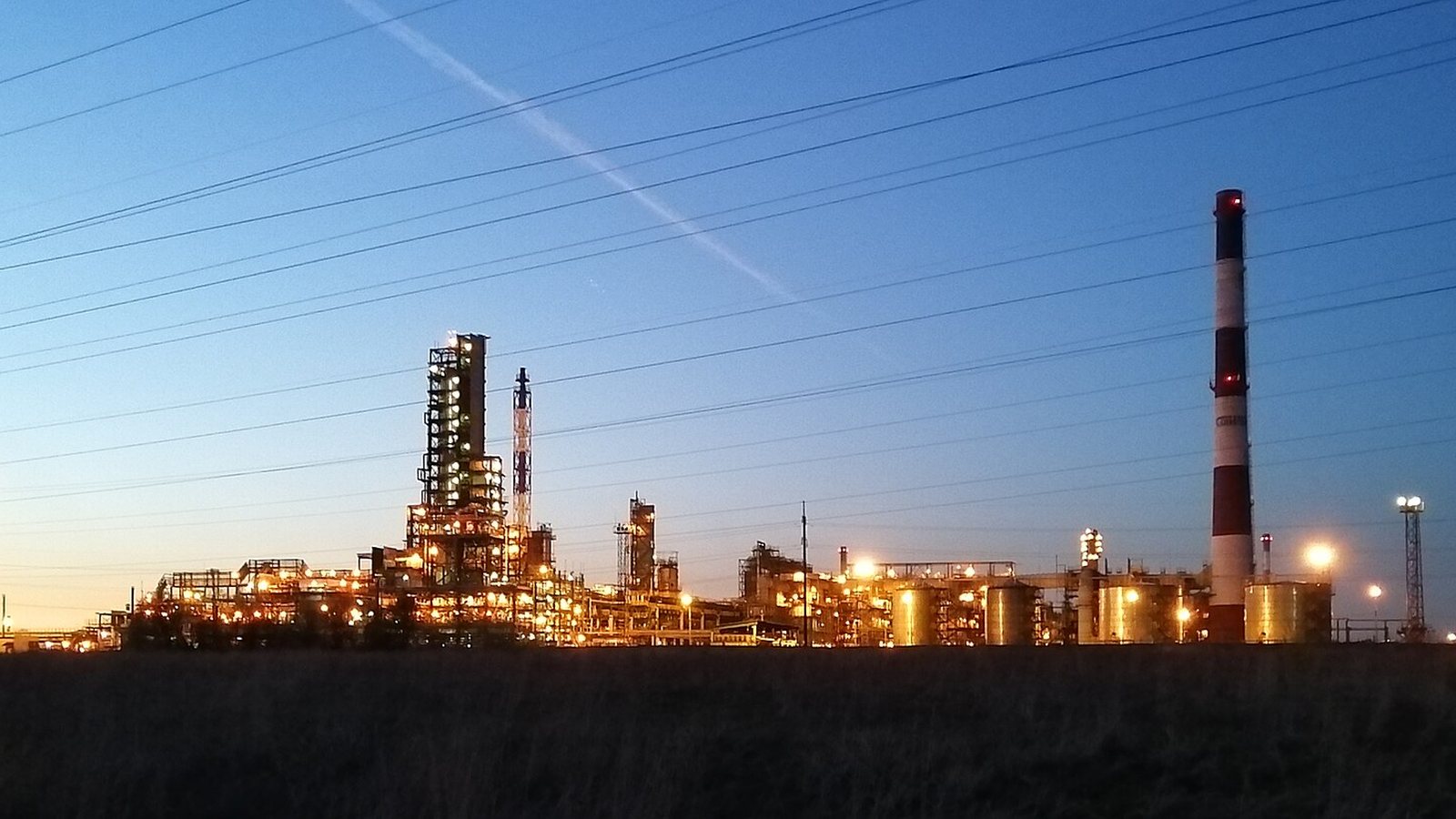
Illustrative image. Photo: Svtk44, CC BY-SA 4.0, via Wikimedia Commons — source

[…] Ivanovich Sechin is the Chief Executive Officer of Rosneft, Russia’s largest oil producer, a position he has held since May 2012. A longtime associate […]