Oil Prices Extend Losses as Traders Bet the Market Is Sliding Back Into Oversupply

Oil prices fell again on November 15, extending a run of losses as traders focused on signs that the global crude market is tipping back toward oversupply, according to a report from Oilprice.com. The move is notable because it is happening even as tanker attacks continue in the Strait of Hormuz, a chokepoint that normally pushes prices higher on supply-risk fears rather than lower — a sign that, for now, expectations about how much oil is actually reaching the market are outweighing anxiety about how it gets there.
Supply fears are beating chokepoint fears
The Strait of Hormuz has been a recurring flashpoint through November, with Iran reporting on November 13 that a gas tanker struck a mine in the waterway. In an ordinary market, that kind of incident tends to add a geopolitical risk premium to prices. Instead, oil has kept falling, which traders and analysts covering the move have linked to a broader reassessment of how much spare supply is sitting on the market regardless of chokepoint tensions. One sign of that: Iraq’s own oil production climbed to its highest level since 2019 in the same week, according to an earlier Oilprice.com report citing International Energy Agency (IEA) figures, even as Hormuz-linked disruptions were making headlines — evidence that individual producers have kept pushing barrels out despite the risk environment around the strait.
A surplus forecast that keeps getting revised
The “oversupply” framing traders are reacting to has a paper trail. In its November 2025 monthly oil market report, the IEA projected a global surplus of as much as 4.09 million barrels per day for 2026, among the largest gluts the agency had forecast in years. By its December 2025 report, the IEA trimmed that figure to roughly 3.84 million bpd, citing faster-than-expected demand growth of about 860,000 bpd for 2026. OPEC’s own demand outlook has consistently run more bullish than the IEA’s across this period, putting next year’s surplus far lower than the IEA’s estimate — a gap between the two forecasters that has persisted for over a year and that traders have had to weigh alongside whichever headline is moving the market on a given day.
What’s different about this leg down
Earlier bouts of Hormuz-linked tension this year, including attacks on tankers transiting the strait, were followed by sharp but short-lived price spikes before markets refocused on supply fundamentals. This week’s move suggests that pattern is repeating in reverse: the risk event is still there, but the market’s attention has shifted back to inventory and production data faster than in previous flare-ups. That shift matters for producers inside OPEC and its OPEC+ partners, who have spent much of 2026 managing output policy around the assumption that geopolitical risk would provide a price floor; a market that shrugs off a mine strike in the Strait of Hormuz is one where that floor looks less reliable heading into 2027 output discussions — a reversal of the dynamics that had been pushing oil prices higher earlier this year.
Where this leaves the 2027 outlook
Neither the IEA nor OPEC has yet published a full 2027 balance in the reports captured so far, but the direction of travel in their 2026 revisions — the IEA cutting its glut estimate as demand came in stronger, OPEC holding a tighter view throughout — suggests the surplus itself is not in dispute, only its size. For now, that is enough to keep sellers in control: Oilprice.com’s report describes the November 15 session as adding to losses already recorded earlier in the week, with no catalyst in sight to reverse the trend before the next round of monthly balances resets the conversation.
Sources
- Oilprice.com, “Oil Prices Fall as Fears of a Global Supply Glut Return,” November 15, 2026 — price move, Hormuz context, market framing. oilprice.com
- Oilprice.com, “Iraq’s Oil Production Soars to 2019 High as Hormuz Flows Surge,” November 13, 2026 — Iraqi output data, Hormuz flow context. oilprice.com
- International Energy Agency, Oil Market Report, November and December 2025 editions — 2026 global oil surplus forecasts (4.09 and 3.84 million bpd). iea.org
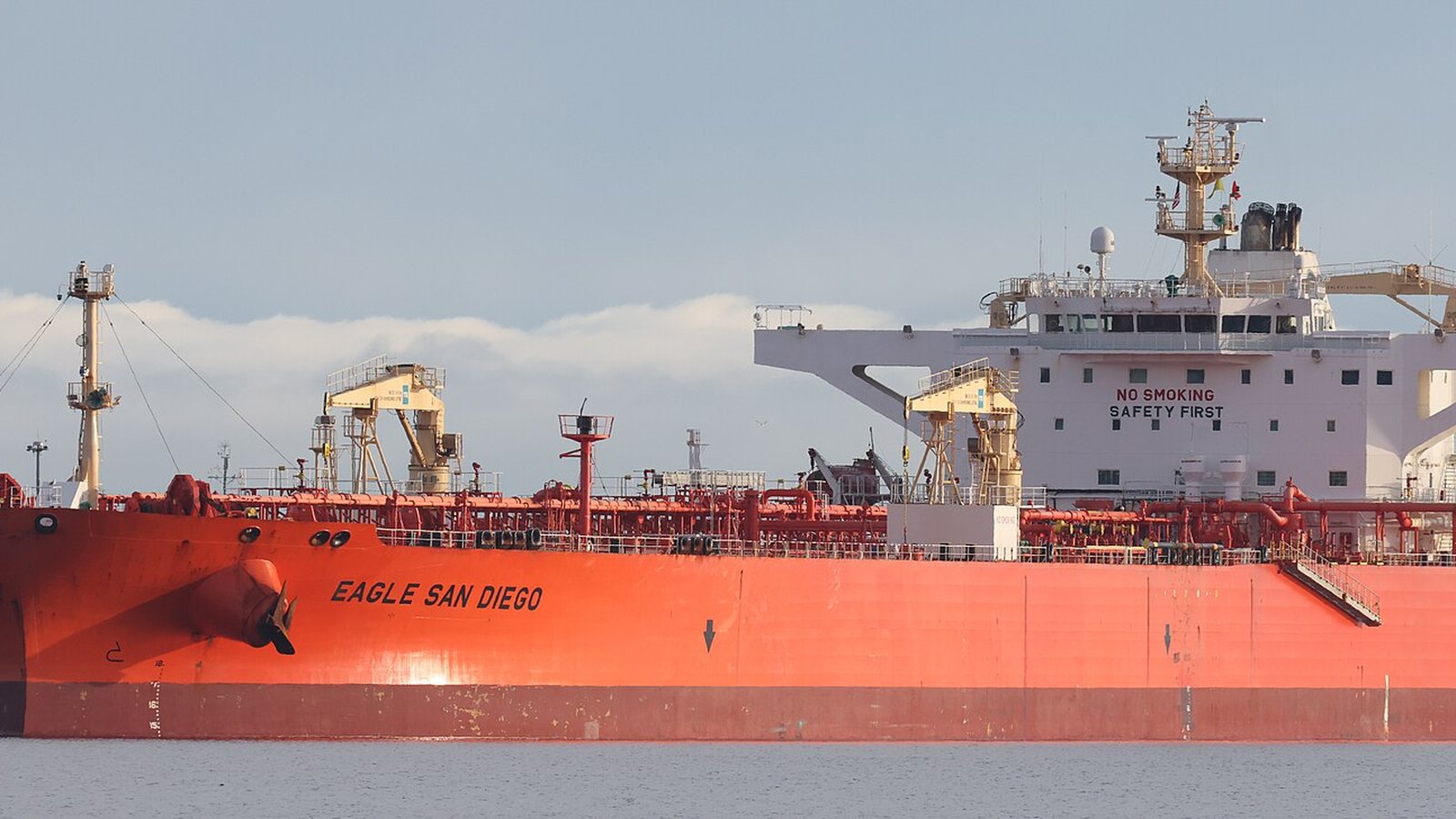
Illustrative image. Photo: Jordanroderick, CC0, via Wikimedia Commons — source