China’s Energy Mix: Coal, Solar, Wind and Nuclear

The China energy mix is still built on coal, but it is changing faster than that of any other major economy, because China also installs more solar, wind, hydro and nuclear capacity than any other country. China is the world’s largest energy consumer, largest coal producer and consumer, largest oil importer, and the leading manufacturer of solar panels, batteries and wind turbines. This article sets out the key figures, the main sources, the companies and projects behind them, and the risks that shape the outlook.
China Energy Mix: Overview and Key Figures
China’s energy system has two layers that are easy to confuse: primary energy, which counts all fuels used, and electricity generation, which counts only power. Coal dominates both, but its share is far larger in primary energy for industry and heating than it is in new power capacity.
| Source | Role in the system | Direction of travel |
|---|---|---|
| Coal | Largest single source of power and industrial energy | Share falling slowly, volumes still high |
| Hydropower | Large, long-established clean source | Growing slowly; best sites already used |
| Wind | Large onshore fleet, growing offshore | Rapid growth |
| Solar | World’s largest installed base | Fastest growth of any source |
| Nuclear | Small share, large build programme | Steady growth |
| Oil and gas | Transport, chemicals, heating, some power | Heavily import-dependent |
Think tanks such as Ember and the Energy Institute publish annual figures, and the shares shift every year, so use their latest releases for exact percentages.
Energy Mix and Resources
Coal
China has large domestic coal reserves, and coal has been the backbone of its industrial rise. Coal supplies a majority of electricity generation in most recent datasets, plus steel, cement and chemicals. Regulators have approved new coal plants in recent years, often described as a security measure for peak demand and dry years, even as renewables grow faster.
Solar and wind
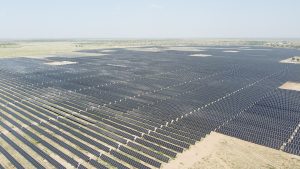
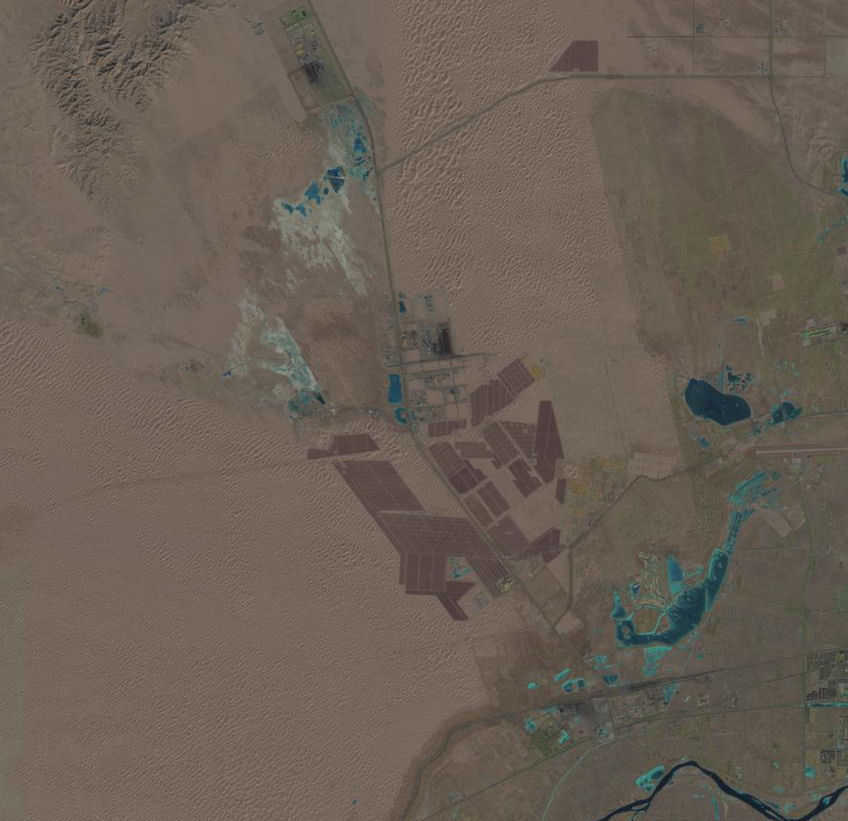
China reached its target of 1,200 gigawatts of combined wind and solar capacity in 2024, years ahead of the original goal set for 2030. Large desert and plateau bases in the north and west supply much of this, alongside distributed rooftop solar in eastern provinces. Growth in output is high, but capacity factors vary, and curtailment in resource-rich regions has been a recurring issue.
Hydropower
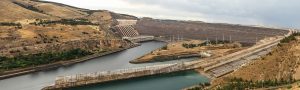
China has the world’s largest hydropower fleet, with the Three Gorges Dam on the Yangtze among the largest power stations of any kind. New projects now focus on the upper reaches of rivers in the south-west.
Nuclear
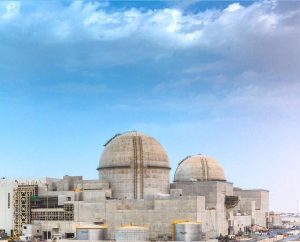
China operates dozens of reactors and has many more under construction, according to the International Atomic Energy Agency. Nuclear still supplies a small share of electricity, but that share is rising as new units join. Designs include imported technology and the domestic Hualong One.
Major Companies and Projects
State-owned groups dominate the China energy mix. The main names include:
- State Grid and China Southern Power Grid: run transmission and distribution.
- China Energy Investment, Huaneng, Datang, Huadian and SPIC: large generators with coal, gas and renewable fleets.
- China Three Gorges Corporation: hydropower and a growing wind and solar portfolio.
- CNPC, Sinopec and CNOOC: oil and gas.
- CGN and CNNC: nuclear power.
- LONGi, JinkoSolar, Trina, CATL and BYD: manufacturing leaders in solar modules and batteries.
Notable project types include giant solar and wind bases in desert regions, pumped-storage hydropower, offshore wind clusters off the east coast, and nuclear sites along the coast.
Imports, Exports and Infrastructure
China imports most of the crude oil it uses, and a large share of its natural gas, through pipelines from Central Asia and Russia and as liquefied natural gas (LNG) from suppliers such as Australia, Qatar and the United States. Coal imports from Indonesia, Russia and Mongolia supplement domestic output.
On the electricity side, the main infrastructure challenge is distance: the best wind and solar resources lie in the north and west, while the biggest demand is in the east and south. China has built a network of ultra-high-voltage transmission lines to move power across thousands of kilometres. Grid operators also invest in storage, from pumped hydro to fast-growing battery fleets.
On the export side, China sells solar modules, batteries, electric vehicles and wind equipment to markets worldwide, which affects costs everywhere.
Policy and Investment Outlook
China has pledged to bring carbon dioxide emissions to a peak before 2030 and to reach carbon neutrality before 2060. Policy tools include five-year plans, renewable targets, a national emissions trading scheme for the power sector, and industrial policy supporting clean-technology manufacturing.
Investment in clean energy is very large, and it has become a leading pillar of the economy. Analysts watch three signals for the outlook of the China energy mix:
- Whether new coal approvals translate into higher or just backup generation.
- How quickly grid and storage investment keeps up with solar and wind additions.
- Whether electricity demand growth, driven by industry, data centres and electric vehicles, outpaces clean supply.
Risks and Challenges
- Energy security: import dependence for oil and gas leaves China exposed to shipping routes and price shocks.
- Grid integration: variable renewables need flexible grids, markets and storage; curtailment wastes clean power.
- Coal lock-in: new coal plants and mines can remain in use for decades unless used less.
- Overcapacity and price pressure: manufacturers of solar equipment have faced sharp price competition and thin margins.
- Weather and water: droughts reduce hydropower, and heat waves push up demand, which has caused power shortages in some regions.
- Trade friction: tariffs and export controls on clean-technology goods and critical minerals can disrupt supply chains.
What China’s Energy Mix Means for Global Energy Markets
China’s choices move global markets. Its demand for coal, oil, LNG and metals affects prices from Australia to the Gulf. Its manufacturing scale has pushed down the cost of solar panels and batteries for buyers everywhere. Its emissions trajectory is central to global climate outcomes, since China accounts for roughly a third of global energy-related carbon dioxide emissions by most estimates.
For energy exporters, slower growth in Chinese oil demand, driven by electric vehicles and efficiency, would matter greatly. For equipment makers and developers outside China, Chinese competition sets the price benchmark.
Frequently Asked Questions About the China Energy Mix
What is China’s main source of energy?
Coal remains the largest single source of both primary energy and electricity, although renewables supply an increasing share of new capacity.
Does China lead the world in renewables?
Yes, in installed solar and wind capacity and in clean-technology manufacturing, according to agencies such as the IEA and IRENA.
Is China still building coal plants?
Yes, it has continued to approve and build coal plants while also adding renewable capacity at a record pace.
How much nuclear power does China have?
China has one of the largest nuclear build programmes in the world, but nuclear still provides a small share of its electricity.
Where can I find current figures?
Use the Energy Institute Statistical Review, Ember, the IEA’s China profile and China’s National Energy Administration.
Conclusion
The China energy mix is best described as a large coal base with the world’s fastest clean-energy expansion on top of it. Coal still carries the system, but solar, wind, hydro and nuclear are taking a growing share of new supply. The main questions ahead are grid flexibility, energy security and the speed at which coal use falls. Anyone following global energy should track China’s data closely, since its decisions affect fuel prices, equipment costs and emissions worldwide.
Sources and further reading
- Energy Institute, Statistical Review of World Energy (energyinst.org)
- Ember, electricity data and China analysis (ember-energy.org)
- International Energy Agency, China country profile (iea.org)
- International Renewable Energy Agency, renewable capacity statistics (irena.org)
- International Atomic Energy Agency, Power Reactor Information System (iaea.org)
- National Energy Administration of China (nea.gov.cn)