


Eni: Ownership, Leadership and Major Projects

Last updated: November 2, 2026
Eni S.p.A. is Italy’s state-linked integrated energy major, built from the 1953 nationalization of the country’s hydrocarbons industry under Enrico Mattei. More than seventy years later, Eni remains part-owned by the Italian government and ranks among Europe’s largest oil and gas producers, with roughly 1.73 million barrels of oil equivalent per day (boe/d) of 2025 hydrocarbon output spread across 62 countries, alongside a fast-growing renewables, biofuels and low-carbon technology arm.
What Is Eni and Who Owns It?
Eni was created by Italian law on February 10, 1953, consolidating the state’s hydrocarbon interests — including the 1926-founded Agip — into a single national energy champion under its first chairman, Enrico Mattei. The company began privatizing in the 1990s and has traded as a joint-stock company ever since, but the Italian state never fully let go.
As of its May 2026 annual shareholders’ meeting, the Italian government controlled Eni through a combined direct and indirect stake of just over 33%, split between the Ministry of Economy and Finance (Treasury) and the state-owned lender Cassa Depositi e Prestiti (CDP), which has historically held roughly 28% of Eni’s share capital on its own. The remainder trades as free float on the Borsa Italiana in Milan (ticker: ENI) and as American Depositary Shares on the New York Stock Exchange (ticker: E).
Leadership
Eni’s board renewed both of its top posts in May 2026:
| Role | Name | Since | Notes |
|---|---|---|---|
| Chief Executive Officer & General Manager | Claudio Descalzi | May 2014 (reappointed May 7, 2026) | Serving a record fifth term, through 2029 |
| Chair of the Board | Giuseppina Di Foggia | May 2026 | Former CEO of grid operator Terna; succeeded Giuseppe Zafarana |
The board approved for the 2026-2028 term also includes Stefano Cappiello, Carolyn Adele Dittmeier, Benedetta Fiorini, Emma Marcegaglia, Matteo Petrella, Cristina Sgubin and Raphael Louis L. Vermeir. The government-backed board slate was approved by 51.38% of shareholders participating in the May 6, 2026 meeting, which also cleared a sharp increase in Descalzi’s 2026 pay package despite proxy adviser ISS recommending a vote against it.
Subsidiaries and Business Structure
Eni organizes its operations around an integrated upstream-to-transition model:
- Upstream (Exploration & Production): Eni’s core oil, gas and LNG production business across Africa, the Middle East, the Americas, Asia-Pacific and Europe.
- Versalis: Eni’s chemicals subsidiary, covering plastics, elastomers and petrochemical feedstocks; reported an adjusted operating loss in 2025 as the company works through a chemicals restructuring.
- Enilive: Biofuels, biorefining and retail mobility (fuel stations, EV charging). Enilive is expanding biorefining capacity at its Sannazzaro and Priolo hubs in Italy and has brought in private capital, including a reported non-controlling stake taken by KKR.
- Plenitude: Renewable power generation (about 5.8 GW of installed capacity) and retail energy/gas supply. Eni announced a demerger of Plenitude to unlock value, and as of mid-2026 the business was classified as a discontinued operation pending completion; a private equity investor (reported as Ares) has taken a minority stake.
- Eni Trade & Biofuels (ETB): Commodity trading and biofuels feedstock supply.
- EniProgetti: Engineering and project-delivery arm for major upstream and industrial projects.
- Regional operating subsidiaries: including Nigerian Agip Oil Company (NAOC), Eni México and country units across Eni’s 62-country footprint.
Eni also runs an early-stage magnetic-confinement fusion research program, pursued in part through its investment in Commonwealth Fusion Systems, as part of a long-range decarbonization and technology bet alongside carbon capture and sustainable chemistry.
Countries of Operation
Eni operates upstream, refining, chemicals or retail activities in 62 countries. Its upstream portfolio is weighted toward Africa (Algeria, Libya, Egypt, Nigeria, Republic of the Congo, Angola, Côte d’Ivoire, Mozambique), with additional production in the Middle East, Kazakhstan, Indonesia, Mexico, the United States (Gulf of Mexico) and the North Sea (Norway, UK). Downstream refining and chemicals are concentrated in Italy, with retail energy operations across Italy and other European markets through Plenitude.
Production and Reserves
| Metric | 2025 Figure | Notes |
|---|---|---|
| Hydrocarbon production | ~1.73 million boe/d | Up about 4% underlying year-on-year; Q4 2025 output reached 1,839 kboe/d |
| Net proved reserves | 6,885 mmboe (year-end 2025) | Up from 6,497 mmboe at year-end 2024 |
| Reserve life index | 10.9 years | Reserves divided by annual production |
| Organic reserve replacement ratio | 167% | New reserves booked relative to production |
| Plenitude installed renewable capacity | ~5.8 GW | As of year-end 2025, ahead of planned demerger |
| Enilive biorefining capacity | 1.65 million tonnes/year | Being expanded via Sannazzaro and Priolo projects |
Major Assets and Projects
- Coral Sul FLNG and Coral North (Mozambique, Area 4, Rovuma Basin): Eni’s floating LNG platform Coral Sul has shipped more than 5 million tonnes of LNG; a second vessel, Coral North, began producing gas from the northern part of the Coral field, targeted around early 2026.
- Baleine (Côte d’Ivoire): Eni’s first development in the country and Africa’s first carbon-neutral upstream project. Partners took a final investment decision on Phase 3 (Baleine 3.0) in May 2026 to roughly double output. Eni sold a 10% stake in the project to Azerbaijan’s SOCAR, with the deal completing in September 2026, as part of a broader portfolio-optimization strategy.
- Congo LNG (Republic of the Congo): Phase 2 started up in December 2025, adding a second floating LNG vessel and lifting overall capacity toward roughly 3 million tonnes per year.
- Zohr (Egypt): The supergiant gas field Eni discovered in 2015 remains a core Mediterranean production hub, part of a planned Eni investment of up to €24 billion across Algeria, Libya and Egypt over the following four years.
- Indonesia-Malaysia upstream alliance: Eni and Petronas agreed to combine upstream positions across Indonesia and Malaysia into a jointly controlled venture, targeting a combined gas-weighted portfolio starting above 300,000 boe/d.
Employees
Eni’s group headcount stood at 32,349 at the end of 2025 according to its annual report’s key figures table, down slightly from 32,492 a year earlier; Eni’s own corporate materials separately cite 31,523 people across fully consolidated companies. Roughly 5,950 employees sit within corporate and other central activities outside the core operating segments.
Careers at Eni
Eni recruits internationally through its own careers portal, covering roles across upstream engineering, trading, digital/AI, legal, sustainability and the Enilive and Plenitude transition businesses, with a dedicated unit (Eni International Resources Ltd) coordinating overseas postings for group companies. Recent listings span Milan and San Donato Milanese in Italy, London, and country units including Eni México. See TDE’s energy careers coverage for how peer majors are hiring; a dedicated Eni careers hub will be added here once a verified pipeline of open roles is confirmed.
Recent News
Eni’s adjusted profit roughly doubled to €2.8 billion in the third quarter of 2026 as refining margins recovered — see TDE’s coverage: Eni’s Adjusted Profit Doubles to €2.8 Billion as Refining Rebounds.
Related Entities
- Claudio Descalzi — Eni’s CEO
- TotalEnergies — fellow European integrated major
- Shell — fellow European integrated major
- Chevron — US integrated major
- Equinor — Norwegian state-linked major, comparable ownership structure
- ADNOC — Gulf state oil company and LNG partner on competing projects
Frequently Asked Questions
Who owns Eni?
The Italian government controls Eni through a combined direct and indirect stake of just over 33%, held via the Treasury and the state-owned lender Cassa Depositi e Prestiti (CDP). The rest trades publicly on the Borsa Italiana (ENI) and the NYSE (E).
Who is Eni’s CEO?
Claudio Descalzi has been Eni’s CEO and General Manager since May 2014 and was reappointed in May 2026 for a fifth term running through 2029.
How many countries does Eni operate in?
Eni operates in 62 countries, with its largest upstream positions in Africa (Algeria, Libya, Egypt, Nigeria, Congo, Angola, Côte d’Ivoire, Mozambique) plus Kazakhstan, Indonesia, Mexico, the US and the North Sea.
What are Eni’s biggest current projects?
Eni’s largest active projects include the Coral Sul and Coral North floating LNG facilities in Mozambique, the Baleine development in Côte d’Ivoire, Congo LNG Phase 2, and the Zohr gas field in Egypt.
Sources
- Eni — Company overview
- Eni press release — Board confirms Claudio Descalzi as CEO (May 2026)
- Eni Annual Report 2025 — Key Figures
- Eni press release — Sale of 10% stake in Baleine to SOCAR
- MarketScreener — Eni shareholders back board, clear way for CEO’s fifth term
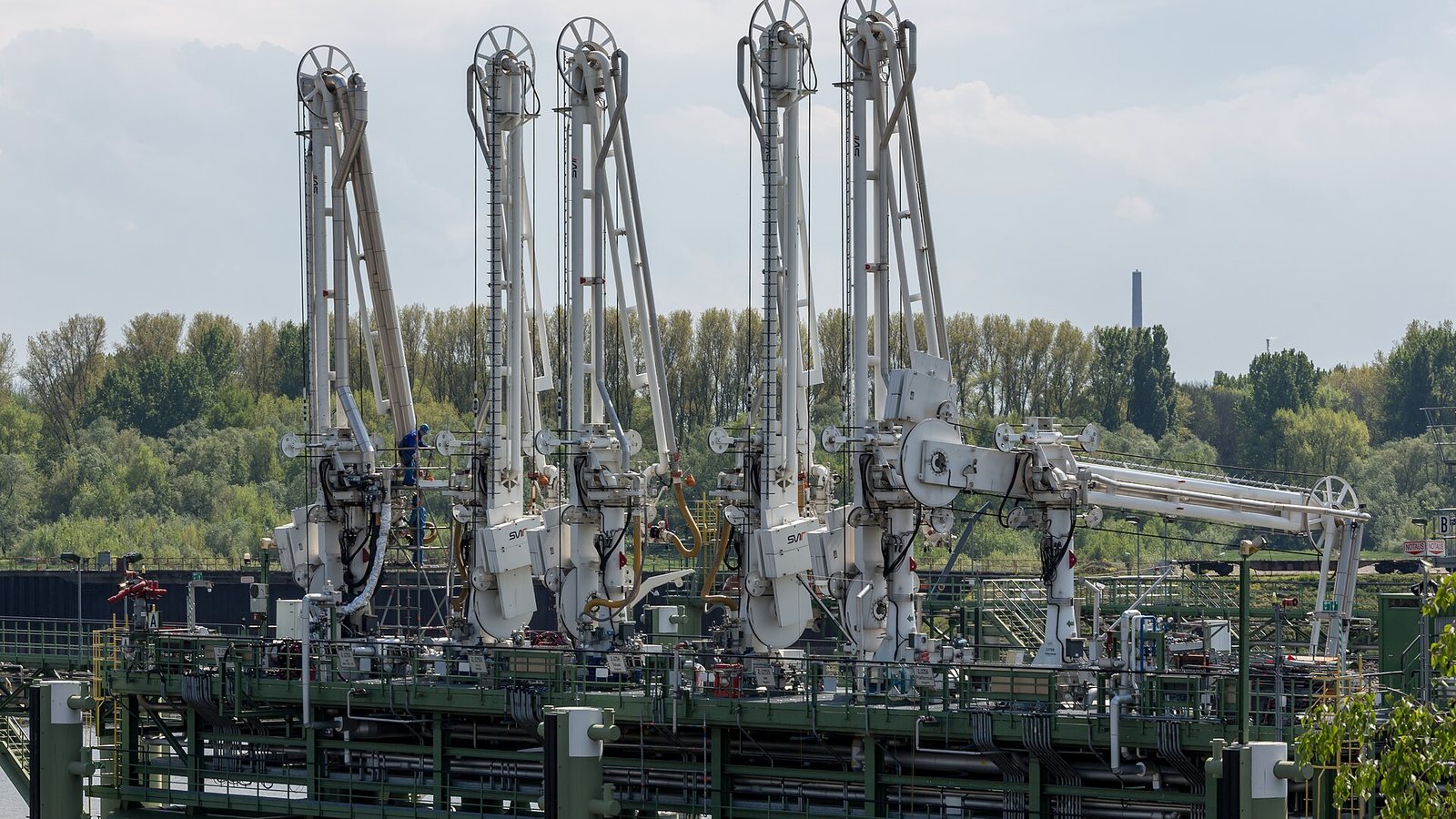
Illustrative image. Photo: CEphoto, Uwe Aranas, CC BY-SA 3.0, via Wikimedia Commons — source



[…] Eni: Ownership, Leadership and Major Projects […]