


ScottishPower Completes Record-Length Cable Landfall at East Anglia Two Wind Farm

ScottishPower Renewables has finished drilling two record-length cable ducts beneath the Suffolk coastline for its 960 megawatt (MW) East Anglia Two offshore wind farm, the Iberdrola-owned developer said this week, as construction advances on one of the next wave of North Sea projects headed toward commercial operation in late 2028.
Threading Cable Under the Coast, Not Through It
Rather than trenching across the beach, ScottishPower Renewables used horizontal directional drilling (HDD) to bore an underground passage for the export-cable ducts, avoiding disturbance to the Suffolk coastline and seabed. Each of the two ducts measures 800 millimetres in diameter and roughly 1,793 metres — about 1.8 kilometres — in length, manufactured by Norway-based Pipelife as single, uninterrupted extruded polyethylene sections with no welded joints. OCU Group, supported by its subsidiary Peter McCormack & Sons, acted as principal contractor on the drilling operation.
Ross Ovens, ScottishPower Renewables’ managing director for offshore, said the completed drilling was “three times the length of our other East Anglia projects,” underscoring the scale of the engineering work needed to land East Anglia Two’s export cables onshore.
A Bigger Reach Than Its Sister Projects
East Anglia Two sits roughly 33 kilometres off the Suffolk coast at its nearest point and will have a capacity of 960 MW once complete, part of a cluster of East Anglia wind farms ScottishPower Renewables is developing in the southern North Sea. The company has separately been advancing cable landfall work for East Anglia Three, a larger project in the same area, giving Suffolk’s coastline two concurrent sets of offshore wind cabling works. For East Anglia Two, the company expects to install the first export cable in summer 2027, with commercial operation targeted for late 2028.
Why Drill Instead of Dig
Horizontal directional drilling has become the preferred method for landing export cables on UK beaches precisely because it avoids the alternative: open-cut trenching across the foreshore, which disrupts beach access, coastal habitats and, in many cases, requires more extensive seasonal permitting tied to protected species and tourism. By boring beneath the beach and emerging further inland, developers can keep construction traffic and excavation away from the shoreline itself. The trade-off is technical difficulty and cost, since a single uninterrupted duct nearly 1.8 kilometres long has to be steered underground with limited room for error — which is why ScottishPower Renewables and its contractors are highlighting the length of this particular drive as a record for the company’s projects.
Part of the UK’s Next Offshore Wind Wave
East Anglia Two is one of several large offshore wind farms moving through construction in UK waters as developers work through projects awarded capacity in earlier Contracts for Difference rounds. The UK’s offshore wind pipeline has also been generating activity beyond the turbines themselves: the model Ofgem uses to auction off transmission assets to independent owners, separate from wind farm developers, is about to see its largest-ever competition for a different North Sea project, Ørsted’s Hornsea 3. The UK’s offshore energy infrastructure buildout extends well beyond wind, too — Eni recently installed what it called the world’s first dedicated CO2 injection platform for its Liverpool Bay carbon storage project, part of a broader expansion of offshore engineering work around the UK coast.
For East Anglia Two specifically, the completed landfall work removes one of the more complex onshore-connection milestones from the project’s critical path, clearing the way for cable pull-in and, eventually, grid connection work inland.
The East Anglia Hub Keeps Growing
East Anglia Two is the latest addition to what ScottishPower Renewables calls its East Anglia Hub, a cluster of offshore wind farms in the southern North Sea that began generating with East Anglia One, a 714 MW project that has been feeding the UK grid since 2020. Layering East Anglia Two and East Anglia Three onto that existing hub lets the developer reuse onshore grid connection corridors and some shared marine infrastructure, an approach increasingly common among UK offshore wind developers as they build out successive phases in the same stretch of coastline rather than starting each project’s onshore works from scratch.
Sources
- offshoreWIND.biz, “ScottishPower Renewables Completes Record-Breaking Cable Landfall Operation for East Anglia Two,” October 15, 2026 — for the HDD method, duct dimensions, contractors and the quote from Ross Ovens.
- The Scotsman, coverage of the East Anglia Two cable landfall operation, October 2026 — for independent corroboration of the record claim and project description.
- Energy-Pedia and EnergyGlobal, additional trade coverage of the East Anglia Two landfall, October 2026 — for further corroboration of project scope and timeline.
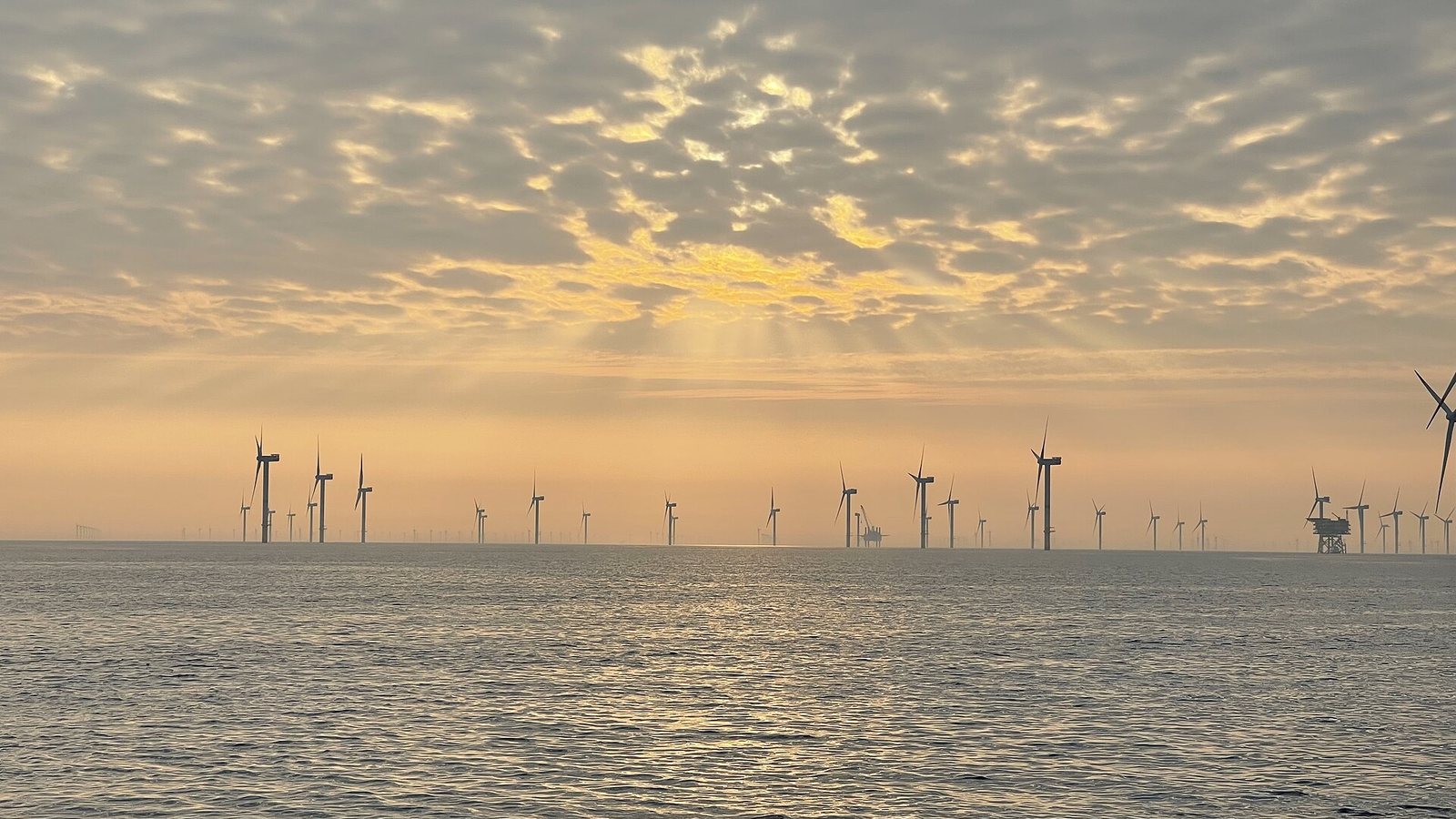
Illustrative image. Photo: Capmat007, CC BY-SA 4.0, via Wikimedia Commons — source



[…] like Ørsted to carry the full capital cost of both the turbines and the grid connection. Elsewhere in the southern North Sea, that same connection infrastructure is also where much of the r…, as seen in the engineering work ScottishPower Renewables has been carrying out to land export […]