Asian Refiners Abandon US Gulf Crude as Supertanker Rates Hit $82 Million

Asian refiners are turning away from US Gulf Coast crude as supertanker freight costs hit record levels, with one vessel reportedly offered at $82 million for a single US Gulf-to-Japan voyage, up 50% in three weeks, according to Bloomberg. Reuters reported shipbrokers and traders saying the economics of US-to-Asia crude shipments have broken down entirely, pushing refiners in China and Japan toward Middle Eastern and South American barrels instead.
Freight costs that no longer pencil out
Commodity trader Trafigura reportedly chartered a supertanker from the US Gulf Coast to China for a lump-sum fee of $76 million, CNBC reported on October 7, citing a source familiar with the deal. A day later, Bloomberg reported a $82 million offer for a comparable US Gulf-to-Japan run. Oilprice.com, which compiled the reporting, noted the $76 million figure is roughly ten times the $7 million-to-$10 million rates that prevailed before the current round of Middle East hostilities, implying a shipping cost of around $38 a barrel on a very large crude carrier. “The economics of paying $80 million to have a cargo of crude oil shipped from the US Gulf Coast simply don’t work,” the report concluded, a view echoed by multiple shipbrokers.
Why tankers are suddenly this expensive
The spike traces back to disruption around the Strait of Hormuz, where attacks on tankers have pushed Brent crude back above $102 a barrel and tied up vessels in slow, inefficient routing to avoid the chokepoint. With many ships either avoiding the Gulf or engaged in ship-to-ship transfers outside it, the pool of supertankers available for long-haul US-to-Asia runs has shrunk sharply, and rates for the ones still willing to make the trip have followed freight markets elsewhere to record highs. A separate weather-driven supply hit, Tropical Storm Isaias shutting in roughly a quarter of US Gulf of Mexico oil output this week, has added further strain to US Gulf loadings even as it has not been the primary driver of the freight spike.
Asia reroutes toward the Gulf and South America
With the US arbitrage closed, Reuters reports that Asian refiners are shifting toward Middle Eastern grades, with buyers in China and Japan said to be eyeing more purchases of UAE Murban crude, whose premium over benchmark Dubai quotes rose above $11 a barrel on Thursday as demand for non-Hormuz-exposed barrels increases. The shift comes as Gulf exporters themselves have been working to keep supply flowing; Saudi Aramco has cut its November Arab Light price for Asian buyers, and Saudi Arabia separately restarted the East-West pipeline to resume crude exports from its Red Sea terminal at Yanbu, a route that bypasses the Gulf and the Strait of Hormuz entirely.
A tightening global picture
The freight squeeze adds to warnings about thin spare capacity across the oil supply chain. Aramco’s own chief executive said last week that global oil inventories are “scarily thin”, a comment that has taken on added weight as the shipping bottleneck makes it harder and more expensive to move whatever spare barrels do exist from one region to another. For Asian buyers, the net effect is a rerouting of crude flows away from the US Gulf Coast toward suppliers that do not require weeks-long, multimillion-dollar tanker charters, even if it means paying more for alternative grades such as Murban.
Sources
Oilprice.com, “Asian Refiners Ditch U.S. Oil as Supertanker Rates Hit $82 Million,” October 9, 2026, citing Reuters (freight costs and shift to Middle East/South America grades), CNBC (Trafigura’s $76 million charter, reported October 7) and Bloomberg (the $82 million US Gulf-to-Japan offer, reported October 8).
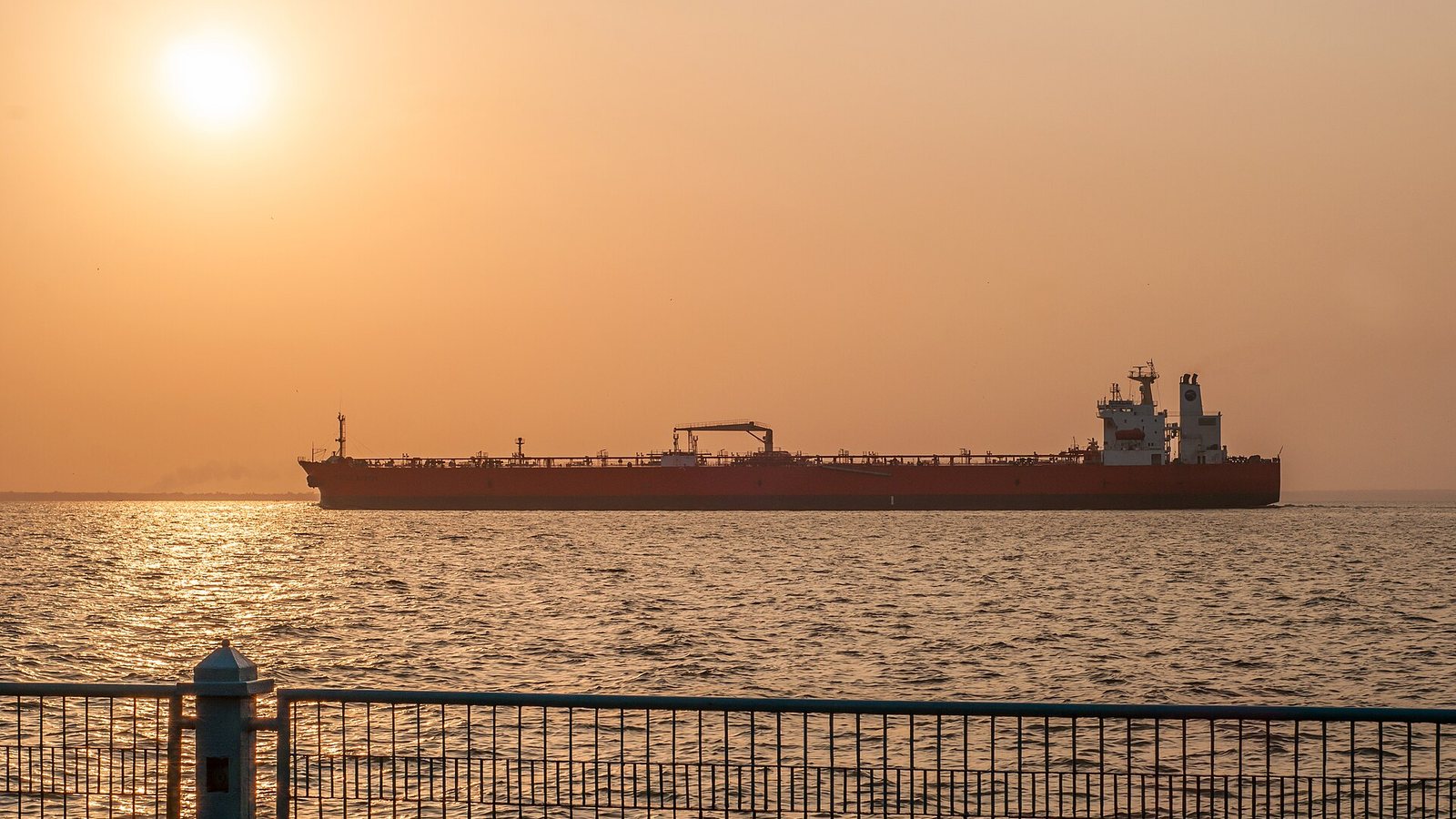
Illustrative image. Photo: Wilfredor, CC0, via Wikimedia Commons — source