Qatar Extends LNG Force Majeure Into December as Hormuz Blockage Persists

QatarEnergy has extended force majeure notices covering liquefied natural gas cargoes to Pakistan and Bangladesh through the end of November, and to Italy’s Edison until early December, according to Bloomberg, as the six-month closure of the Strait of Hormuz continues to keep the country’s LNG fleet away from its main export route. The rollover is the latest in a string of monthly extensions that began after Qatar’s Ras Laffan export complex was attacked in March, and it means Qatar’s core LNG customers in Europe and South Asia will go a seventh or eighth consecutive month without contracted volumes arriving on schedule.
A near-total halt in a market built on schedule reliability
The scale of the disruption is unusual for a supplier that, before the war, was the world’s second-largest LNG exporter behind the United States. Qatar loaded just 18 LNG cargoes over the past six months, against 509 over the same period a year earlier, according to Reuters reporting that cites ship-tracking data from ICIS — a decline of roughly 96%. Reuters put the resulting lost sales at approximately $24 billion. QatarEnergy has not said publicly how many cargoes remain stranded or cancelled under the latest extension, and did not immediately respond to a request for comment reported in regional coverage.
The bottleneck is specific to LNG’s physical handling requirements. Crude oil has, at times, moved through ship-to-ship transfers staged off the coast of Oman to bypass the most contested stretch of the strait; LNG carriers, which keep cargo cryogenically cooled to around minus 162°C, are far harder to transfer at sea, so Qatari cargoes have had comparatively few workarounds available while the shipping lanes remain closed.
Winter exposure for buyers already short of supply
The extension lands as European buyers head into the heating season with storage levels below the five-year seasonal average, a gap The Daily Energy has tracked through the summer injection season, and as European gas prices have climbed on the back of tightening supply. Edison, one of QatarEnergy’s largest term customers in Italy, has had deliveries suspended since the spring and has been sourcing replacement US cargoes in the interim, according to earlier Bloomberg reporting; the new notice pushes any resumption of Qatari volumes to Edison back to early December at the earliest. In Asia, buyers in Pakistan and Bangladesh — two of the more price-sensitive LNG markets globally — face a similar wait through November, adding pressure on economies that were already drawing down alternative supply and, in some cases, curtailing gas-fired power generation.
The Strait of Hormuz historically carries close to a fifth of the world’s seaborne LNG trade, so the closure’s effects have not been confined to Qatari contracts: spot LNG prices in both Europe and Asia have traded near their highest levels since late 2022, according to Bloomberg, as buyers compete for non-Qatari cargoes to cover the shortfall.
Ras Laffan idled but not dismantled
QatarEnergy has kept the Ras Laffan complex in a state its executives have described as ready for a rapid ramp-up once shipping through Hormuz resumes, rather than shutting production down entirely. That matters for the scale of what remains offline: Qatar’s nameplate LNG capacity currently stands at roughly 77 million tonnes a year, and the North Field expansion project underway before the war was designed to lift that figure toward the 126–142 million-tonne range by the end of the decade, which would put Qatar back in contention for the title of the world’s largest LNG exporter. None of that expansion capacity is under threat from the current disruption, but the extension underscores that the timeline for Qatar to resume normal exports — let alone bring new expansion trains online — now depends entirely on developments in the Hormuz standoff rather than on anything within QatarEnergy’s own operational control.
Iran has said it will not soften the conditions it has attached to reopening the strait, and a broader US-Iran settlement remains unresolved, according to Bloomberg’s reporting; QatarEnergy’s monthly force majeure cycle has effectively become a running indicator of how that diplomatic track is progressing.
Sources
- Bloomberg, “Qatar Extends LNG Force Majeure as Hormuz Disruptions Drag On,” September 28, 2026 — force majeure extension dates, Edison and South Asian buyer details, Ras Laffan operational status, Hormuz diplomatic context. bloomberg.com
- OilPrice.com, “Qatar Extends LNG Force Majeure as Hormuz Crisis Drags On,” September 28, 2026 — cargo count (18 vs. 509), Reuters/ICIS-sourced loss estimate of $24 billion, independent confirmation of extension. oilprice.com
- The National, “Qatar extends LNG force majeure as Hormuz disruption threatens winter supply,” September 28, 2026 — independent regional reporting confirming the extension and winter-demand context. thenationalnews.com
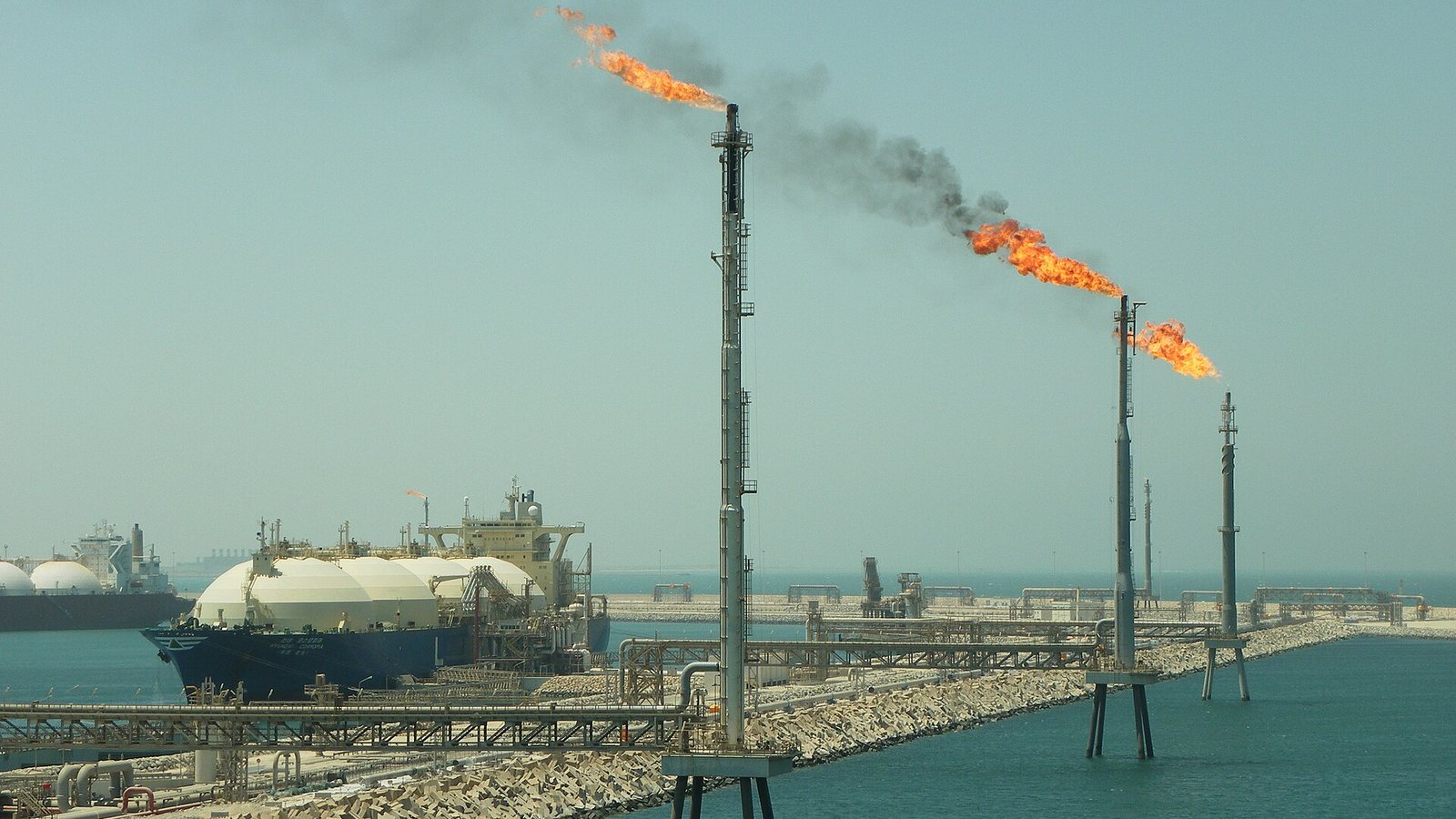
Illustrative image. Photo: Matthew Smith @ Flickr, CC BY 2.0, via Wikimedia Commons — source