How Do Solar Panels Work?
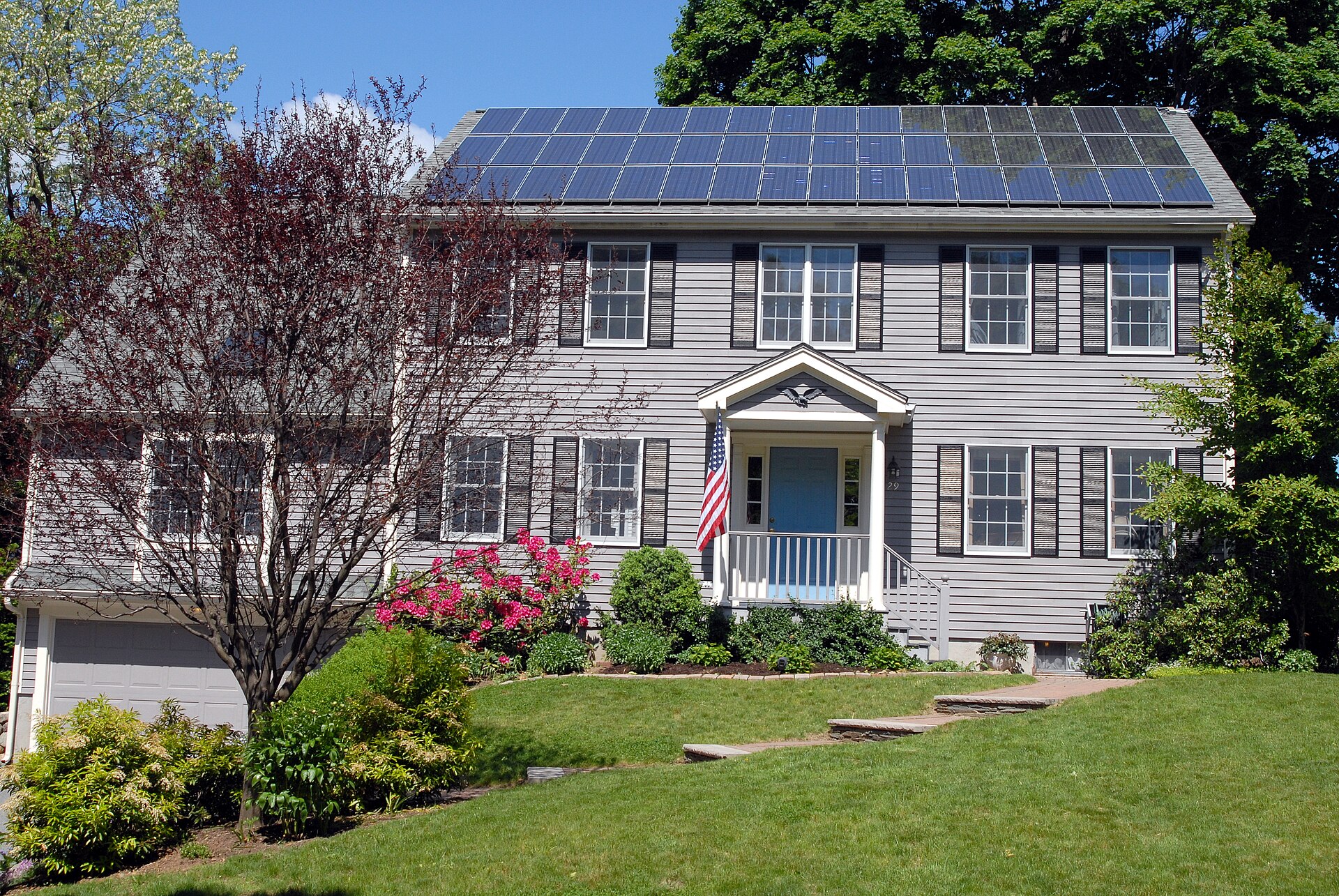

How do solar panels work? Each panel contains solar cells made mostly of silicon, and when sunlight hits them the light knocks electrons loose, which creates a flow of direct current (DC). An inverter then converts that DC into the alternating current (AC) used in homes and on the grid. This process is called the photovoltaic effect. It has no moving parts, which is why panels are quiet, durable and cheap to operate.
What Is a Solar Panel? A Simple Definition
A solar panel, also called a photovoltaic (PV) module, is a flat, sealed unit that holds many solar cells wired together. A typical rooftop panel has several dozen cells under a glass front, with a polymer back sheet or second glass layer and an aluminium frame. A junction box on the back connects the panel to the rest of the system.
Do not confuse a PV panel with a solar thermal collector. Thermal collectors use sunlight to heat water or air, while PV panels generate electricity directly.
How Do Solar Panels Work Step by Step
- Sunlight arrives as photons. Light is made of tiny packets of energy called photons. Only photons with enough energy can free an electron in silicon.
- Photons free electrons. When a photon is absorbed in the silicon, it moves an electron from a bound state into a free state and leaves a gap, called a hole, behind.
- The internal electric field separates the charges. A solar cell has two layers of silicon treated with different impurities. The boundary between them, the p-n junction, creates an electric field that pushes electrons one way and holes the other.
- Metal contacts collect the current. Thin lines on the front and a layer at the back gather the electrons and send them into an external circuit, where they do useful work.
- The inverter changes DC to AC. Panels produce DC. A string inverter, a microinverter or a hybrid inverter converts it to AC at grid frequency.
- Electricity is used, stored or exported. The power runs household loads first. Surplus can charge a battery or be sent to the grid, depending on local rules.
The effect itself was first observed by Edmond Becquerel in 1839, and the first practical silicon solar cell was demonstrated at Bell Laboratories in 1954. Since then the technology has improved in efficiency and fallen sharply in price.
What a single cell produces
A single silicon cell produces only about half a volt, which is why dozens are connected in series inside each panel. Panels are then wired in strings to reach the voltage the inverter needs. The current depends on cell area and sunlight intensity, so output rises on a bright day and falls under cloud.
Key Types and Technologies
| Technology | Main material | Typical use | Notes |
|---|---|---|---|
| Monocrystalline silicon | Single-crystal silicon | Rooftops, utility plants | Dominates the market today; high efficiency |
| Polycrystalline silicon | Multi-crystal silicon | Older installations | Lower cost historically, now largely replaced |
| Thin film (CdTe, CIGS) | Cadmium telluride or copper indium gallium selenide | Utility-scale plants, flexible products | First Solar is the best-known CdTe producer |
| Perovskite and tandem cells | Perovskite layers, often on silicon | Mostly laboratory and pilot lines | Promising efficiency, durability still being proven |
Within silicon, manufacturers have introduced several cell designs, such as PERC, TOPCon and heterojunction, each of which reduces energy losses at the surface of the cell. Bifacial panels also collect light that reflects onto the rear side, which can raise output in places with bright ground, for example sand or snow.
Main Advantages and Limitations
Advantages
- No fuel and no direct emissions while operating.
- Few moving parts, so maintenance is limited mainly to cleaning and inspection.
- Modular design: the same technology works on a house roof or in a multi-gigawatt plant.
- Long service life, with manufacturers typically offering performance warranties of 25 years or more.
Limitations
- Output varies with the time of day, weather and season, and is zero at night.
- Performance falls slightly as cells heat up, so very hot climates see lower efficiency at midday.
- Large systems need land, grid connection and often storage to match demand.
- Dust, shading and snow can cut production if panels are not kept clean and well placed.
- Panels degrade slowly, usually by a fraction of a percent per year.
How Do Solar Panels Work in Practice: Costs, Efficiency and Market Role
Efficiency is the share of sunlight that a panel converts into electricity. Commercial silicon modules are generally in the high teens to low twenties in percent. Theory sets a ceiling: for a single-junction cell the limit is about 33 percent, known as the Shockley-Queisser limit, and silicon’s practical limit is a little lower. Tandem designs aim to go beyond that by stacking materials that capture different parts of the spectrum.
Cost is where solar changed most. According to the International Renewable Energy Agency (IRENA), the global average cost of electricity from utility-scale solar PV fell by close to 90 percent over the decade after 2010, which made it one of the cheapest sources of new electricity in many countries. The International Energy Agency (IEA) reports that solar PV now accounts for a large share of new generating capacity added worldwide each year.
A few practical points help when you compare systems:
- Panel efficiency matters most when roof space is limited.
- Total system cost includes the inverter, mounting, wiring, installation and permits, not only the panels.
- Yield depends on location, tilt and orientation. In the northern hemisphere, south-facing panels usually produce the most.
- Batteries raise self-consumption but add cost, so the choice depends on local tariffs and export rules.
Leading Countries and Companies
China leads the industry in both installations and manufacturing, and the IEA has noted that it holds the largest share of nearly every stage of the solar supply chain, from polysilicon to modules. Large Chinese manufacturers such as LONGi, JinkoSolar, Trina Solar and JA Solar are among the biggest module suppliers. The United States, India, the European Union and Brazil are also major markets, and the Middle East has built some of the world’s lowest-cost solar plants. In thin film, First Solar in the United States is a leading producer.
Future Outlook
Growth will probably continue as costs stay low and grids adapt. Several trends are worth watching:
- Perovskite-silicon tandem cells moving from the laboratory to commercial production.
- Pairing solar with batteries so that daytime output can serve evening demand.
- Better recycling of glass, silicon, silver and aluminium from old panels.
- Diversification of manufacturing beyond a single region, driven by energy-security policy.
Frequently Asked Questions About How Solar Panels Work
Do solar panels work on cloudy days?
Yes, but at reduced output. Diffuse light still produces electricity, though usually much less than direct sun.
Do solar panels work at night?
No. Without light there is no photovoltaic effect. Night-time supply comes from the grid or a battery.
How long do solar panels last?
Many panels keep working for decades. Manufacturers commonly guarantee a high share of original output after 25 years, and real performance depends on quality and conditions.
Do solar panels need direct sunlight?
They produce most with direct light, but they also use scattered light, so they can work in cooler and cloudier climates.
What happens to excess electricity?
It can charge a battery or flow to the grid, where rules may provide credits or payments. Policies differ by country and utility.
Conclusion
So, how do solar panels work? They use the photovoltaic effect in semiconductor cells to turn light into DC electricity, and an inverter makes it usable. The simple physics, combined with falling costs and long lifetimes, explains the technology’s rapid growth. Before installing, compare efficiency, warranty terms, total system cost and local grid rules, and ask installers for a yield estimate based on your roof and climate.
Sources and further reading
- International Energy Agency (iea.org)
- International Renewable Energy Agency (irena.org)
- US Energy Information Administration (eia.gov)
- National Renewable Energy Laboratory (nrel.gov)
- Fraunhofer Institute for Solar Energy Systems (ise.fraunhofer.de)