Tunisia Closes Bidding for 300 MW Solar-Plus-Storage Plant in Kebili

Tunisia’s Ministry of Industry, Mines and Energy closed bidding on Wednesday for a 300-megawatt solar photovoltaic plant paired with a 150 MW/540 MWh battery storage system, to be built on roughly 440 hectares near Bazma, in the southern Kebili governorate. Offers under Invitation to Tender No. 01-2026 were due by noon local time at the ministry’s offices in Tunis, according to the tender documents published by Tunisia’s public-private partnership unit, IGPPP.
The project is being developed as a build-own-operate concession rather than through the state utility, Société Tunisienne de l’Électricité et du Gaz (STEG), which has historically built and run almost all of the country’s power generation. Promoters wishing to bid had to register with the ministry by May 8 to receive the full tender package; the scope was trimmed from an initially discussed 350 MW to the 300 MW now on offer, according to Africa Energy Portal and trade outlet SolarQuarter, which have tracked the process since it was first floated in March.
A battery mandate built into the tender
Unlike most of Tunisia’s earlier solar auctions, which awarded capacity on a pure generation basis, the Kebili tender requires bidders to co-locate 150 MW of battery storage with four hours of duration — 540 MWh in total. That is roughly ten times the size of the 50 MWac solar-plus-10MW/20MWh-battery plant STEG is separately building nearby at Beni M’Hira, in Tataouine governorate, with financing from the European Bank for Reconstruction and Development and the Clean Technology Fund. The EBRD has described that smaller Tataouine project as Tunisia’s first utility-scale battery installation; Kebili, if awarded and built, would be substantially larger.
The storage requirement reflects a problem familiar to grid operators across North Africa: solar output is concentrated in daylight hours, while demand on a grid still dominated by gas-fired generation peaks later in the day. Pairing storage with new solar capacity lets a developer shift some output into the evening, easing the curtailment and grid-stability concerns that have slowed Tunisia’s renewable rollout in the past.
A renewable target Tunisia has struggled to hit
Tunisia’s 2016 renewable energy law set a target of 30% of electricity from renewables by 2030; the government later raised that figure, with a 2022 announcement putting it at 35% by the same date, according to Oxford Business Group’s reporting on the sector. Progress has lagged. Installed renewable capacity stood at roughly 472 MW as of March 2022 — mostly wind, with only a small share of utility-scale solar — against a 2030 goal that analysts estimated would require several gigawatts of new renewable capacity this decade. Earlier competitive solar and wind auctions, some dating to 2019, have been slowed by permitting delays and gaps in transmission capacity, according to multiple reports on the sector.
STEG has been reinforcing transmission lines to absorb new renewable generation, and the ministry’s shift toward PPP concessions — of which the Kebili project is one of several now in the pipeline — is intended to bring in private capital and operating expertise that the state utility’s own capital programme has struggled to match on its own.
What happens next
The ministry has not said when it expects to name a preferred bidder for the Kebili project, and the reporting reviewed for this article does not name the companies or consortia that submitted offers by Wednesday’s deadline. Tunisia’s tender processes have in the past taken many months to move from a bid deadline to financial close; the comparable Beni M’Hira project took several years from its initial announcement to EBRD board approval, suggesting construction at Kebili — if the project proceeds — is unlikely before 2027 at the earliest.
Sources
- Ministry of Industry, Mines and Energy / IGPPP, Invitation to Tender No. 01-2026 — tender terms, bid deadline, site location.
- Africa Energy Portal, “Tunisia invites bids for 300 MW solar project with 150 MW/540 MWh battery storage in Kebili” — project scope and registration deadline.
- SolarQuarter, March 2026 — tender announcement and background.
- EBRD board report, Project 56916 (Tataouine BESS and Solar) — Beni M’Hira comparison project details.
- Oxford Business Group, “Sun, wind and water: Renewable sources work to diversify electricity generation” — Tunisia renewable targets and installed-capacity context.
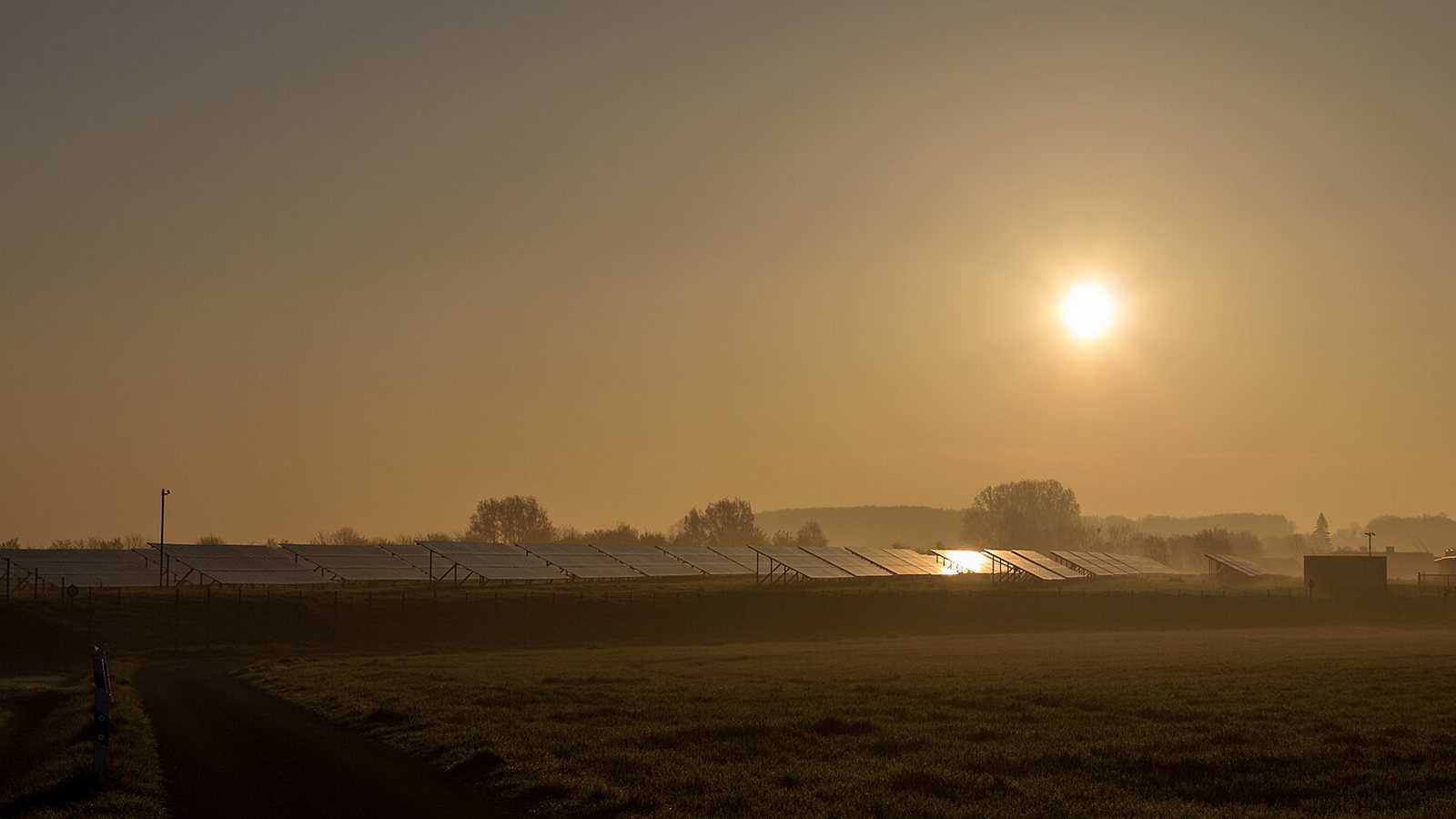
Illustrative image. Photo: Dietmar Rabich, CC BY-SA 4.0, via Wikimedia Commons — source