


Australia to Introduce Bill Forcing LNG Exporters to Reserve Up to 20% of Gas

Australia’s government will introduce legislation next week setting the final rules of its Domestic Gas Reservation Scheme, requiring east coast LNG exporters to hold back up to 20% of their output for the domestic market from July 1, 2027, Bloomberg reported on October 9, citing people directly involved in drafting the bill. The move finalizes a policy the government first floated in December 2025 and softened last month after intense industry lobbying.
From a flat mandate to a flexible ceiling
The original December 2025 proposal set a reservation requirement of 15% to 25% of east coast LNG export volumes, later fixed at a flat 20% in a May 2026 policy design. Under the bill to be introduced next week, that hardens into “up to 20%,” with Australia’s Department of Industry, Science and Resources setting the exact volume each year based on a rolling five-year demand forecast rather than a fixed percentage. No exporter will receive a full exemption from the scheme, and contracts signed before December 22, 2025 remain grandfathered out of the requirement.
Why Canberra is pressing ahead
The government says the scheme is meant to protect east coast gas supply security later this decade, even though the department’s own current outlook points to a “healthy surplus” across the east coast market in the near term; its forecast for the January-to-March 2027 quarter shows ample supply to meet demand. Major gas producers and exporters have pushed back hard, arguing a reservation mandate could undermine Australia’s reliability as a global LNG supplier and distort competition, lobbying that led directly to the easing from a flat 20% mandate to a flexible “up to 20%” ceiling last month.
A supplier racing to defend its position
The policy lands as Australia’s LNG sector is riding a wave of favorable market conditions. The country overtook Qatar earlier this year to become the world’s second-largest LNG exporter after the United States, following disruption that stranded Qatari cargoes at the Strait of Hormuz. Australian volumes have been in demand from buyers seeking supply outside the Gulf, even as new capacity comes online elsewhere: Shell and its partners sanctioned LNG Canada Phase 2, doubling the Kitimat terminal’s export capacity, and MidOcean Energy has more than doubled its fundraising target to bank over $4 billion for LNG stakes globally, underscoring how much capital is still chasing LNG supply even as reservation rules tighten in one of the market’s biggest exporting countries.
What is still unsettled
Key mechanics remain open. Law firm Allens has noted uncertainty persists around how obligations will be measured and priced beyond the headline reservation level, the commencement date and grandfathering rules, with further detail expected only after the bill goes through parliamentary consultation. Government officials describe the legislation as establishing Australia’s first national Domestic Gas Reservation Scheme, but have not said whether the July 2027 start date in earlier policy documents will survive unchanged once the bill is finalized and debated.
Sources
S&P Global Commodity Insights, “Australia’s exposure draft softens gas reservation rule for LNG exporters,” reporting the September 2026 exposure draft and consultation timeline. Bloomberg, cited by Oilprice.com, “Australia Close to Finalizing Gas Reservation Plan for LNG Exporters,” October 9, 2026, for the bill’s introduction timing and the “up to 20%” mechanism. Allens, “Australia’s gas reservation scheme,” for the May 2026 policy design and the December 22, 2025 grandfathering cutoff. Australian Department of Industry, Science and Resources, published gas supply and demand outlook, for the near-term surplus forecast.
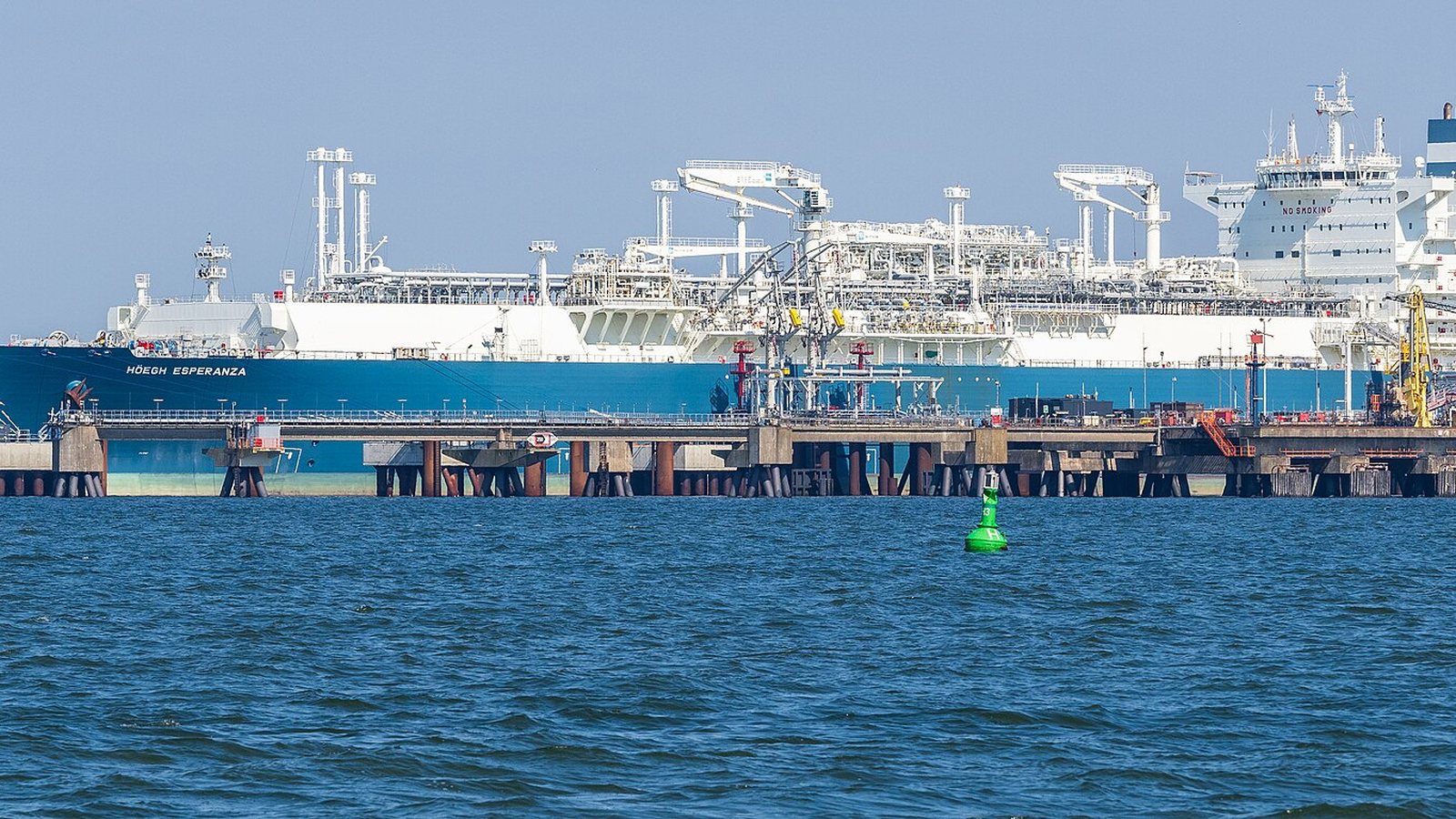
Illustrative image. Photo: JoachimKohler-HB, CC BY-SA 4.0, via Wikimedia Commons — source



[…] Australia’s government said on 9 October 2026 that it will introduce legislation the following week to finalise a Domestic Gas Reservation Scheme requiring east-coast LNG exporters to hold back up to 20% of export volumes for the domestic market, with the exact share recalculated annually by the Department of Industry, Science and Resources against a rolling five-year demand forecast. The scheme applies only to the three east-coast LNG projects run by Origin Energy, Shell and Santos; it does not cover the Western Australia ventures — North West Shelf, Gorgon, Wheatstone and Pluto — that supply most of Australia’s LNG exports to Japan, including the Oceania volumes in the supply-mix table above. Contracts signed before 22 December 2025 are grandfathered, and the obligation is currently slated to start 1 July 2027, though the government has not confirmed that start date will hold once the bill is introduced. As of this writing the bill has not yet gone before parliament, and no official source has said whether or how the scheme would affect cargoes bound for Japan specifically. The Daily Energy is tracking the bill itself on Australia to Introduce Bill Forcing LNG Exporters to Reserve Up to 20% of Gas. […]