Equinor Raises Snøhvit Future Cost Estimate to NOK 26.5 Billion

Equinor has raised the cost estimate for Snøhvit Future, the onshore compression and electrification upgrade at its Hammerfest LNG plant in Arctic Norway, to NOK 26.5 billion in 2026 money, the Norwegian company said on 7 October. That is the second increase in less than a year and roughly 74% above the plan’s original budget once inflation is accounted for, although Equinor said the project’s 2029–2030 timetable has not changed.
Three estimates in four years
When the partners submitted the plan for development and operation (PDO) in 2022, they put the investment at NOK 13.2 billion, equivalent to NOK 15.2 billion in today’s money, according to Equinor. In December 2025 the estimate rose to just over NOK 20 billion in 2025 value, an update in which the schedule was also pushed back, as Rigzone reported at the time. The latest figure, submitted to Norway’s Ministry of Energy alongside the government’s proposed 2027 national budget, adds roughly another NOK 6 billion. The comparison with the PDO estimate is The Daily Energy’s calculation from Equinor’s own figures.
Equinor attributed the overrun to the complexity of building at an operating facility, unforeseen problems, operational challenges at Hammerfest LNG itself, weather, and difficult rock conditions in the power-cable tunnel. “We take the cost development of Snøhvit Future seriously,” Trond Bokn, Equinor’s senior vice president for project development, said in the statement, adding that the project remains profitable.
What is being built on Melkøya
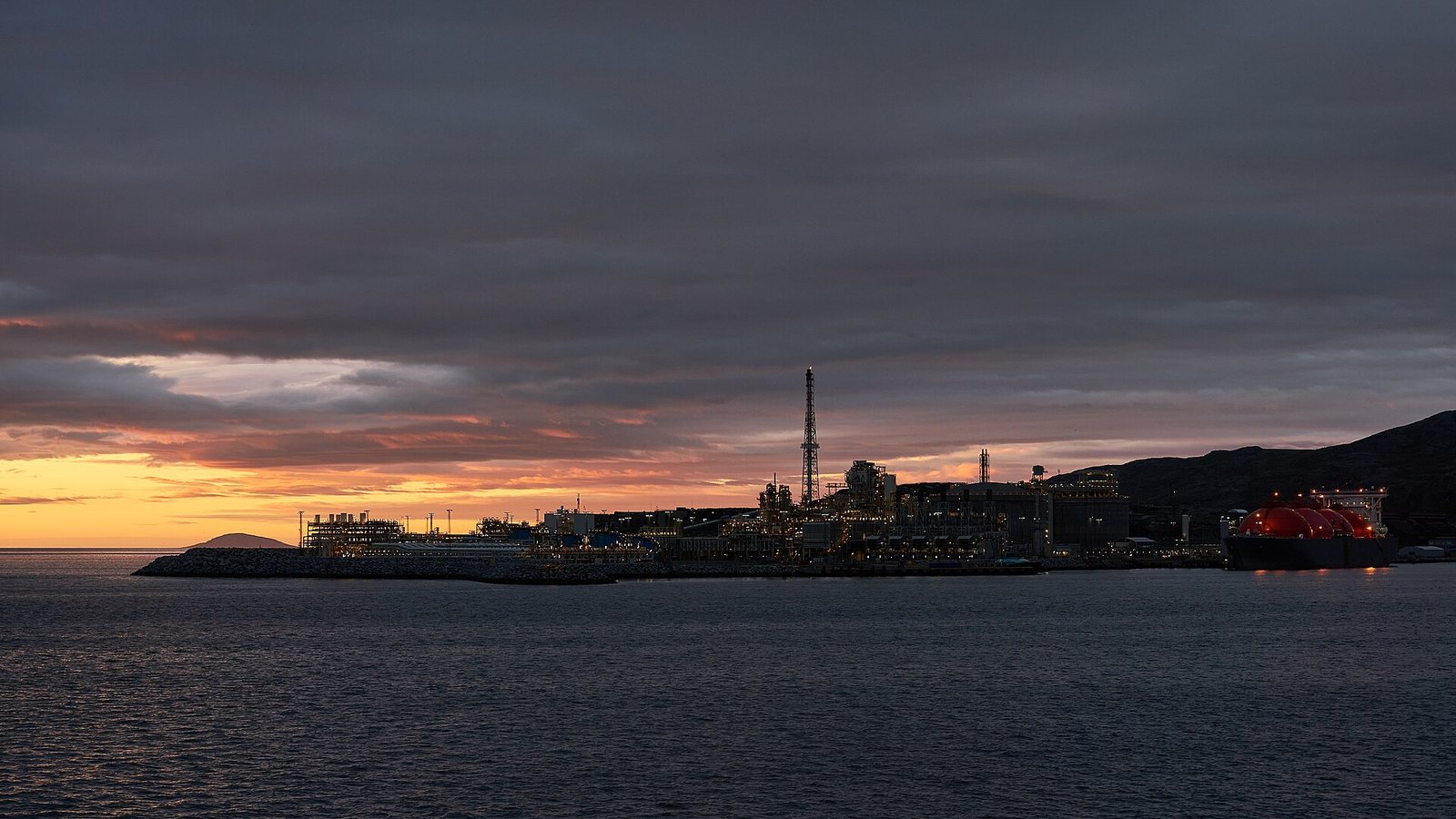
Hammerfest LNG, on the island of Melkøya, is a 4.3-million-tonnes-per-year export plant fed by the Snøhvit gas field in the Barents Sea, according to LNG Prime. Snøhvit was the first field developed in the Barents Sea, and the plant has shipped cargoes since 2007; as the reservoir matures, pressure from the wells alone is no longer enough to keep the liquefaction trains full. Snøhvit Future has two parts. Onshore compression is meant to keep the plant at plateau output as reservoir pressure declines, and is scheduled to start in 2029. Electrification, due in 2030, will replace on-site gas-fired power with electricity from the grid and cut CO2 emissions by about 850,000 tonnes a year, roughly 2% of Norway’s annual emissions, according to Equinor.
The scope includes a new substation on Melkøya, a subsea power cable to the island and a 3.2-kilometre power-cable tunnel between Meland and Hyggevatn with a cross-section of nearly 40 square metres. Grid operator Statnett is separately building a substation at Hyggevatn and a power line from Skaidi. Equinor says the project is about 60% complete: the compressor module arrived at Melkøya in August 2026, and a steam-boiler module is expected in spring 2027.
Five partners behind the upgrade
Equinor issued the new estimate on behalf of the Snøhvit licence partners. Equinor Energy holds 36.79%, state-owned Petoro 30%, TotalEnergies EP Norge 18.4%, Vår Energi 12% and Harbour Energy Norge 2.81%. Bloomberg also reported the revision on 7 October.
Equinor framed the project around local and European benefits: Hammerfest LNG employs about 750 people in normal operations and supports about 1,450 jobs including indirect effects, and the company expects more than 70% of the development-phase value creation to go to Norwegian suppliers, more than a third of that in Northern Norway.
Why Norwegian LNG matters more this winter
The cost news comes as European buyers lean harder on non-Gulf supply. QatarEnergy has extended force majeure on LNG deliveries to Asia and Europe through the end of November, and LNG flows through the Strait of Hormuz remain more than 75% below pre-war levels, OilPrice.com reported this week. Keeping Hammerfest at plateau through the 2030s therefore matters for European supply security, even if the plant is small next to Qatar’s North Field expansion. Background on Qatar’s role is in our QatarEnergy profile.
The update was published on the same day as Equinor’s quarterly pre-results note, ahead of third-quarter results due on 28 October. Equinor is also one of the bidders that have lined up for Germany’s Uniper, a deal that would deepen its exposure to European gas markets.
Sources
- Equinor, “Updated cost estimate for the Snøhvit Future project”, 7 October 2026 — equinor.com — primary source for all cost estimates, schedule, causes, scope, progress, emissions, jobs, partner stakes and quotes.
- Equinor, “Quarterly update prior to financial reporting”, 7 October 2026 — equinor.com — Q3 results date.
- LNG Prime, “Equinor says Hammerfest LNG upgrade costs climb further”, 7 October 2026 — lngprime.com — Hammerfest LNG capacity (4.3 mtpa), independent report of the revision.
- Bloomberg, “Equinor Hikes Norway LNG Plant Upgrade Cost Amid Project Hurdles”, 7 October 2026 — bloomberg.com — independent report of the revision (headline only accessed).
- Rigzone, “Equinor Delays Hammerfest LNG Upgrade as Costs Rise”, 23 December 2025 — rigzone.com — December 2025 delay and cost increase.
- OilPrice.com, “QatarEnergy Secures $3 Billion Loan From Chinese Banks as LNG Exports Stall”, 7 October 2026 — oilprice.com — Qatari force majeure and Hormuz LNG flows.
Illustrative image. Photo: Virtual-Pano, CC BY-SA 4.0, via Wikimedia Commons — source