What Is Carbon Capture and Storage (CCS)?
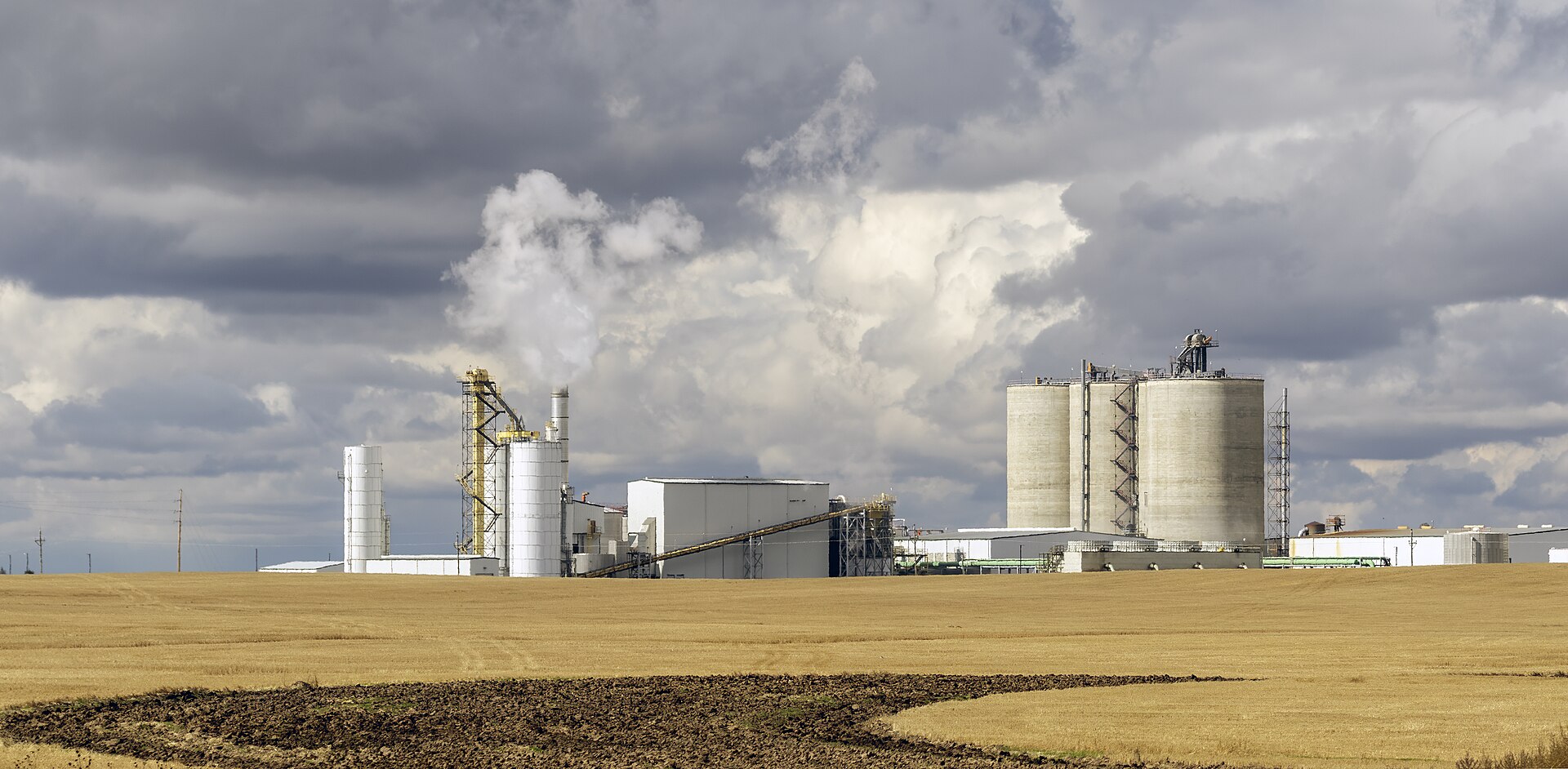

Carbon capture and storage (CCS) is a set of technologies that capture carbon dioxide from industrial plants or power stations, move it to a storage site and inject it deep underground so it stays out of the atmosphere. It is used mostly on large point sources such as gas processing plants, cement works, steel mills and power stations. This guide explains how carbon capture and storage works step by step, which technologies exist, what it costs and where it fits in the energy transition.
What Is Carbon Capture and Storage? A Simple Definition
Burning fossil fuels and making products such as cement and steel release carbon dioxide (CO2). Carbon capture and storage intercepts that CO2 before it leaves the chimney, separates it from other gases, compresses it and stores it permanently in rock formations. The aim is to cut emissions from sectors where switching fuel is difficult or slow.
You will often see the term CCUS, which adds “utilisation”. It covers cases where captured CO2 is used, for example in chemicals, building materials or, historically, to push more oil out of ageing fields. Pure storage and utilisation are different outcomes, and only permanent geological storage is counted as a long-term removal from the atmosphere.
How Carbon Capture and Storage Works Step by Step
- Capture: CO2 is separated from the gas stream of a factory or power plant using a solvent, a solid sorbent, a membrane or a change in the combustion process.
- Compression and conditioning: the gas is dried, cleaned and compressed into a dense form that is easier to transport.
- Transport: CO2 moves by pipeline, ship, rail or truck. Pipelines are the cheapest option for large volumes, while ships suit coastal clusters and cross-border projects.
- Injection: the CO2 is pumped through a well into a porous rock layer, usually at depths of around 800 metres or more, where pressure keeps it in a dense state.
- Monitoring: operators track the stored plume with seismic surveys, pressure sensors and wells to check that the CO2 stays in place.
A caprock of impermeable rock sits above the storage layer and acts as a seal. Over time, part of the CO2 dissolves in formation water and some may react with minerals, which further reduces the risk of leakage.
Key Types and Technologies
Post-combustion capture
This is the most common approach and the one easiest to retrofit. Flue gas passes through a liquid solvent, often an amine, that absorbs CO2. Heat then releases the CO2 from the solvent so it can be compressed. The Boundary Dam power station in Canada used this method to become the first coal-fired power plant with large-scale post-combustion capture.
Pre-combustion capture
The fuel is first converted into hydrogen and CO2 through gasification or reforming. The CO2 is removed, and hydrogen is burned or used as a feedstock. This route is also relevant to hydrogen production from natural gas.
Oxy-fuel combustion
Fuel is burned in nearly pure oxygen, producing a flue gas of mostly CO2 and water vapour, which makes separation simpler. It needs an air separation unit, which adds cost and energy use.
Direct air capture and bioenergy with CCS
Direct air capture pulls CO2 from ambient air, while bioenergy with CCS captures CO2 from burning or processing biomass. Both are intended to remove CO2 rather than just avoid emissions, but both remain costly and small in scale.
Main Advantages and Limitations of CCS
| Advantages | Limitations |
|---|---|
| Cuts emissions from hard-to-abate industry such as cement and steel | High upfront and operating costs |
| Can be added to existing plants | Capture uses extra energy, reducing plant efficiency |
| Uses skills and infrastructure from the oil and gas sector | Needs suitable geology, pipelines and long-term monitoring |
| Supports low-carbon hydrogen from natural gas | Does not remove upstream methane emissions |
| Can deliver negative emissions when paired with biomass | Public acceptance and liability questions |
Capture units can typically remove somewhere around 85 to 95 percent of the CO2 in the treated gas stream, but that is not the same as removing 90 percent of a plant’s total footprint, because some emissions fall outside the captured stream. Independent assessment of the full lifecycle is therefore important.
Costs, Efficiency and Market Role
The cost of carbon capture and storage varies enormously by source. Streams that are already rich in CO2, such as natural gas processing, ethanol and ammonia production, are the cheapest to capture because the separation step is simpler. Power stations and cement plants have more dilute exhaust gas and so cost more per tonne. Transport and storage add further costs, and they fall sharply when many emitters share a pipeline and storage hub.
Policy makes the difference between a technical option and a bankable project. Carbon prices, tax credits such as the United States’ 45Q, grants and contracts for difference help close the gap. Without a price or incentive on emissions, most capture projects would not be economic.
According to the Global CCS Institute’s status report for 2023, operating capture capacity was on the order of 50 million tonnes of CO2 per year, which is small against roughly 37 billion tonnes of energy-related CO2 emissions reported by the IEA for the same year. That gap shows how far deployment must grow if CCS is to play the role projected in many climate scenarios.
Leading Countries and Companies in CCS
- United States: the largest number of projects, supported by tax credits and a long history of CO2 pipelines for enhanced oil recovery.
- Canada: early projects such as Boundary Dam and Shell’s Quest facility, plus new industrial hubs in Alberta.
- Norway: Sleipner, which has injected CO2 under the North Sea since the 1990s, and Northern Lights, a transport and storage service built to receive CO2 from other countries.
- United Kingdom and Netherlands: industrial clusters and offshore storage plans along the North Sea.
- Middle East: Abu Dhabi’s Habshan facility and projects in Saudi Arabia and Qatar linked to gas and hydrogen.
- Australia and China: large-scale demonstration and commercial projects, with China building experience through oil recovery and coal-related capture.
Prominent company names include Equinor, Shell, TotalEnergies, ExxonMobil, Chevron, Occidental and technology suppliers such as Mitsubishi Heavy Industries and Aker Carbon Capture. In the European Union, the Net-Zero Industry Act sets an injection capacity goal for CO2 storage by 2030, signalling that storage rather than capture is becoming the bottleneck.
Future Outlook for CCS
Most climate pathways assessed by the IPCC and the IEA include some CCS, particularly for cement, chemicals, steel and negative-emission needs. The pace of deployment depends on three practical points: whether storage sites are licensed and built quickly, whether shared pipeline and shipping networks emerge, and whether policy support remains predictable.
Projects that capture CO2 and use it for oil recovery remain controversial, because additional oil produced can offset the benefit. Newer projects increasingly emphasise dedicated storage with strict monitoring and reporting. Public trust will depend on transparent data from operators and regulators.
Frequently Asked Questions About Carbon Capture and Storage
Is carbon capture and storage the same as CCUS?
Not exactly. CCUS includes the use of captured CO2 in products or processes, while CCS refers to permanent storage underground.
How safe is underground CO2 storage?
Risks are managed through site selection, sealed wells and monitoring. Properly chosen and monitored formations have kept CO2 in place at projects like Sleipner for decades, but long-term liability rules differ by country.
Does CCS stop climate change?
No technology does that alone. CCS is one tool among efficiency, renewables, electrification and nuclear power, aimed at emissions that are hard to avoid.
Where is the captured CO2 stored?
Mainly in deep saline formations and depleted oil and gas fields, where rock layers can hold large volumes beneath a sealing caprock.
Why is CCS expensive?
Separating CO2, compressing it and building transport and storage systems requires capital and energy, and unit costs are highest for dilute exhaust gases.
Conclusion
Carbon capture and storage is a proven but expensive technology that works best on concentrated CO2 streams and in industries with few alternatives. Its success will depend on shared infrastructure, credible monitoring and consistent policy rather than on technical feasibility alone. Anyone assessing a specific project should look for measured capture rates, independent verification and a clear storage plan.
Sources and further reading
- International Energy Agency (IEA), CCUS reports and emissions data: iea.org
- Global CCS Institute, Global Status of CCS: globalccsinstitute.com
- Intergovernmental Panel on Climate Change (IPCC): ipcc.ch
- Equinor, Sleipner and Northern Lights project information: equinor.com
- US Department of Energy, carbon management: energy.gov